
Plants
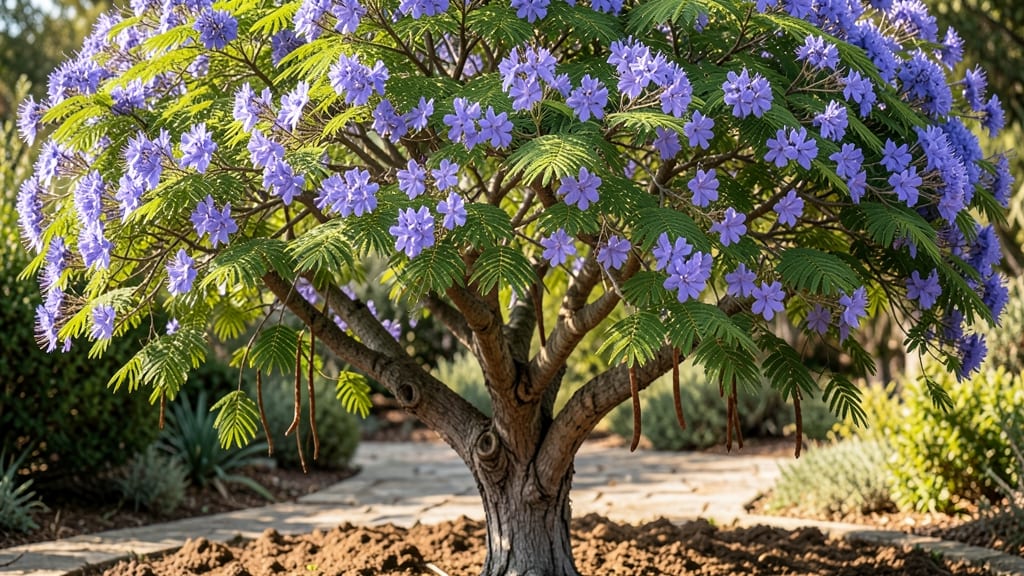
A jacaranda tree looks like a stunning tropical beauty with fern-like, feathery green leaves and clusters of vibrant purple-blue, trumpet-shaped flowers that bloom in spring, creating a dramatic canopy. Its smooth gray bark and sprawling branches add to its iconic silhouette.
A jacaranda tree's most striking feature is its lavender-blue flower clusters, which can cover the entire tree in spring, resembling a waterfall of blooms.
The flowers grow in dense, drooping racemes that create a breathtaking visual effect, often drawing crowds in parks and urban landscapes. 🌸 Beyond its flowers, the tree's pinnate leaves (with 5-9 leaflets) give it a lush, tropical appearance, while its sprawling, rounded canopy can reach heights of 30-50 feet, making it a standout feature in warm climates.
What makes this tree instantly recognizable is its seasonal transformation—when in bloom, it's nearly impossible to miss. The flowers' color can vary from deep purple to soft lavender, and in some varieties, even white.
The smooth gray bark provides a nice contrast to the vibrant foliage, while the tree's wide-spreading branches create an inviting shade canopy perfect for outdoor gatherings.
💡 In This Article
- Jacaranda Tree Flower and Leaf Characteristics
- How to Spot a Jacaranda Tree in Landscapes
Jacaranda tree flower and leaf characteristics
The jacaranda's flowers are its signature feature, with each bloom shaped like a delicate 5-inch trumpet that grows in dense, drooping clusters called racemes. These flowers hang in cascading bunches that can reach 12-18 inches long, creating a breathtaking waterfall effect when the tree is in full bloom.
The petals are typically purple-blue, though some varieties produce soft lavender or even white flowers, which are less common but equally stunning. 🌸
What makes these flowers unique is their fragile yet resilient structure—each bloom lasts only 2-3 days, but the tree produces so many that the entire canopy appears covered for weeks. The flowers also emit a faint, sweet fragrance that's most noticeable in the early morning, adding to their allure.
Meanwhile, the tree's leaves are compound and pinnate, with 5-9 oval-shaped leaflets arranged along a central stem, giving them that signature fern-like appearance.
The leaflets are typically 2-4 inches long and have a smooth, slightly waxy texture that helps them retain moisture in dry climates. During the blooming season, the tree often sheds its leaves briefly to focus all its energy on producing flowers, a phenomenon called marcescence.
This creates a striking contrast between the bare branches and the vibrant floral display, making identification even easier. 💛
Color variations in the flowers can help distinguish between species. The Jacaranda mimosifolia (the most common variety) typically has deep purple blooms, while Jacaranda acutifolia produces lighter lavender flowers. Some hybrid varieties even feature bi-colored petals with white edges.
The flowers' color intensity also fades as they age, starting as a rich violet and gradually lightening to a pale lavender before dropping.
The tree's leaves play a crucial role in its identification too. When not in bloom, the dark green, compound foliage provides a lush backdrop that makes the flowers stand out even more.
The leaf arrangement is alternate along the branches, with each leaflet having a slightly pointed tip and smooth edges. In some cases, you might spot new growth with a slight reddish tint, which adds another layer of visual interest. ✨
What most people don't realize is how the tree's growth pattern affects its appearance. Jacarandas grow at a moderate rate of 1-2 feet per year, but their wide-spreading branches create that iconic rounded canopy.
This growth habit means younger trees have a more upright appearance, while mature specimens develop their signature 30-50 foot height with a spread of 25-40 feet, making them perfect shade trees for parks and large properties. 🌿