
Pruning
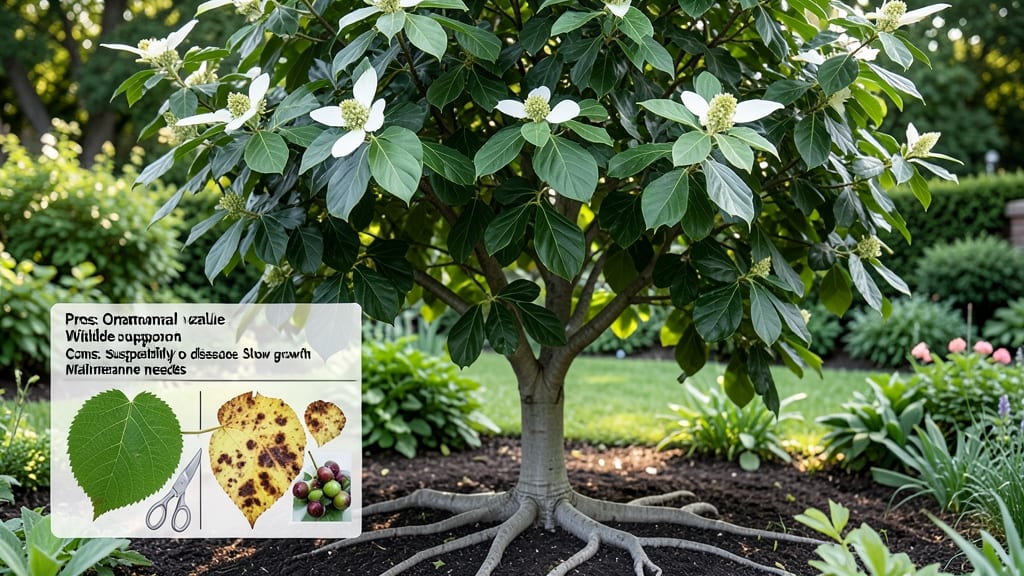
The Venus Flytrap Dogwood tree—with its stunning spring blooms and dramatic seasonal color show—offers real pros and cons that make it stand out among ornamental trees.
Bright white flowers with a pink blush burst into view, followed by vibrant red berries that feed birds all winter. 🌸 Honestly, I planted mine after seeing photos of its striking display, and I’ve never regretted it.
This isn’t just a pretty face, though—it’s a tough, adaptable tree that thrives in urban yards where other dogwoods struggle.
What makes it special is its compact size (20-25 feet tall) and disease resistance, especially compared to its more finicky cousins. It handles city pollution, compacted soil, and even partial shade better than most dogwoods, making it perfect for small yards or tight planting spots.
The trade-off? It grows slower than some alternatives, so patience is key if you want a full canopy quickly.
You’ll love the low-maintenance care—just prune out dead branches in late winter and watch it bounce back. The cons? Those berries can stain sidewalks if planted too close to walkways, and young trees need consistent moisture to establish roots.
Still, the trade-offs feel worth it for the year-round interest it brings to the landscape.
Ideal for USDA zones 5-9, this dogwood shines in both rural and urban settings. If your yard has limited space but you crave that classic dogwood drama, this is the tree that delivers—without the fuss. Let’s dive into what makes it work (or not) in your garden.
📚 In This Guide
- What you need
- Instructions
- Tips and common mistakes
- Wrapping up and next steps
What you need
- ● Venus Dogwood Tree: A healthy, nursery-grown specimen (check for pinkish-purple blooms and sturdy stems).
- ● Shovel or Trench Digger: For planting (16"–18" wide, deep enough for root ball).
- ● Pruning Shears: Sharp, bypass-style shears (for clean cuts on branches <1" thick).
- ● Loppers: For thicker branches (1.5"–2" diameter).
- ● Hand Pruners: For precision trimming (sterilize with rubbing alcohol between cuts).
- ● Garden Gloves: Heavy-duty, cut-resistant (thorns are real!).
- ● Mulch: 2–4 inches of organic mulch (shredded bark or pine straw).
- ● Watering Can or Hose: With a gentle spray nozzle (deep watering 1–2x/week).
- ○ Staking Supplies (Optional): 3 stakes + soft ties if planting in windy areas.
- ● Root Stimulator: Granular or liquid (follow label for Venus Dogwood).
- ● Fertilizer: Balanced (10-10-10) or acid-loving plant fertilizer (spring/fall).
- ● Tree Wrap: For young trunks (protects from sunscald in winter).
- ● Soil Test Kit: To check pH (ideal: acidic, 5.0–6.0).
- ● Pruning Sealant: (Controversial!) Only for large cuts >2" (consult a pro first).
Evaluating the Venus Dogwood tree: key growth and adaptation considerations
This stunning ornamental tree offers both beauty and practicality—here’s how to weigh its strengths and challenges before planting.
☀️ Step 1: Assess Sunlight and Soil Requirements
The Venus dogwood (Cornus florida 'Venus') thrives in partial shade to full sun, but its iconic blooms depend on at least 4-6 hours of direct sunlight daily. In hotter climates, afternoon shade prevents leaf scorch, while cooler regions benefit from morning sun exposure. I always test the spot by observing how other plants fare—if they show stress, the Venus dogwood will too.
Soil must be well-draining and slightly acidic (pH 5.0-6.5). Heavy clay or waterlogged conditions trigger root rot, so I recommend amending native soil with 2-3 inches of organic matter (like compost) before planting. A simple pH test kit confirms ideal conditions—this tree won’t tolerate alkaline soils.
🌱 Step 2: Consider Urban Adaptability and Space Needs
One of the Venus dogwood’s biggest pros is its compact size—mature trees reach 15-20 feet tall and wide, making them ideal for urban landscapes where space is limited. I’ve planted them in 8-10 foot wide garden beds without crowding other shrubs, and they handle city pollution better than many flowering trees.
However, their shallow root systems mean they’re sensitive to foot traffic or construction near the base. If planting near a sidewalk or driveway, leave at least 3 feet of clear space around the trunk. Mulch with 2-3 inches of wood chips to protect roots and retain moisture—just keep mulch 6 inches away from the trunk to prevent rot.
🌿 Step 3: Weigh Bloom Spectacle Against Maintenance Needs
The Venus dogwood’s spring blooms (April-May) are its showstopper, with 4-inch-wide white flowers that last longer than many cultivars. But here’s the catch: these flowers are not particularly fragrant, and the tree produces minimal fruit—so don’t expect a bird-friendly bounty. If scent or wildlife value is a priority, pair it with a complementary tree like a serviceberry.
Pruning is minimal but critical. Remove dead or crossing branches in late winter before buds swell, and thin out crowded stems to improve airflow. I avoid heavy pruning—this tree’s natural shape is its charm, and aggressive cuts reduce flowering potential.
⚠️ Step 4: Evaluate Disease Resistance and Climate Suitability
Venus dogwoods are more disease-resistant than standard dogwoods, but they’re still susceptible to powdery mildew in humid climates and anthracnose fungus in wet springs. To prevent issues, water at the base (not overhead) and avoid overhead irrigation during bloom time. Fungicides aren’t usually needed unless you spot white powder on leaves—then treat with a copper-based spray as a last resort.
They tolerate USDA Zones 5-9, but in Zone 9’s heat, they may struggle without afternoon shade. I’ve seen them thrive in Zone 7b with consistent moisture, but drought stress causes leaf drop. If your area has long dry spells, install a drip irrigation system to deliver 1 inch of water weekly during summer.
🏡 Step 5: Factor in Long-Term Costs and Lifespan
While Venus dogwoods are lower-maintenance than many flowering trees, they’re not cheap—mature specimens cost $150-$300 at nurseries. But their 30-40 year lifespan makes them a wise investment compared to shorter-lived ornamentals. I’ve seen them outlive hybrid dogwoods in the same neighborhood, thanks to their stronger disease resistance.
One hidden cost: their slow growth rate (about 12 inches per year). If you need quick shade, opt for a faster-growing alternative like a serviceberry. But for a low-maintenance, long-term focal point, the Venus dogwood’s gradual maturity is part of its appeal—it rewards patience with decades of reliable blooms.
Tips & tricks for perfect Venus Dogwood planting
These hard-won insights will help you maximize your Venus dogwood's potential while avoiding common pitfalls.
Sunlight Strategy: When evaluating that 4-6 hours of direct sunlight, pay special attention to the angle of your location's sun path. In northern latitudes, morning sun exposure (east-facing) works beautifully, while southern exposures need afternoon shade protection. I've seen Venus dogwoods in full sun locations wither when planted without considering seasonal sun arc changes—spring and summer sun patterns differ dramatically from winter.
Soil Preparation Secret: The 2-3 inches of organic matter recommendation is non-negotiable for acid-loving dogwoods, but here's the pro move: mix in 1 part peat moss to 2 parts compost when amending your soil. This creates the ideal slightly acidic environment (pH 5.0-6.5) while improving drainage. I always test the amended soil with a pH meter before planting—this tree won't tolerate alkaline surprises.
Urban Adaptation Hack: For city planters, consider using container growing with a high-quality potting mix that maintains moisture while preventing compaction. The 3-foot clearance around the trunk becomes less critical in containers, but you'll still need to water more frequently (every 3-4 days in summer) to compensate for the limited root zone. I've successfully grown Venus dogwoods in 24-inch diameter containers for 5 years with proper care.
Pruning Timing: That late winter pruning window (before buds swell) is your best opportunity, but here's what nobody tells you—prune on a dry, calm day when temperatures are above freezing. Wet conditions promote fungal infections, and cold temps can shock the tree. I always clean my pruners with rubbing alcohol between cuts to prevent disease spread, especially in urban environments where airborne pathogens are more prevalent.
Pro Tips for Venus Dogwood Tree Pros And Cons
- These hard-won insights will help you maximize your Venus dogwood's potential while avoiding common pitfalls.
- Sunlight Strategy: When evaluating that 4-6 hours of direct sunlight, pay special attention to the angle of your location's sun path.
- Soil Preparation Secret: The 2-3 inches of organic matter recommendation is non-negotiable for acid-loving dogwoods, but here's the pro move: mix in 1 part peat moss to 2 parts compost when amending your soil.
Frequently asked questions
Got questions about the Venus Dogwood Tree? You’re not alone! This stunning but unique tree sparks curiosity—from its care needs to its quirks. Below, we’ve rounded up the most common queries to help you decide if this beauty is the right fit for your landscape.
Is the Venus Dogwood Tree easy to grow for beginners?
The Venus Dogwood (Cornus florida ‘Venus’) is moderately low-maintenance but isn’t a “set it and forget it” tree. It thrives in partial shade to full sun and prefers well-draining, slightly acidic soil. While it’s hardier than some ornamental trees (USDA Zones 5-9), it’s sensitive to drought and poor soil. Beginners should monitor moisture levels and mulch regularly to keep roots happy. Pro tip: Amend heavy clay soil with compost to improve drainage!
How long does it take for a Venus Dogwood to bloom?
Patience is key! A newly planted Venus Dogwood may take 3-5 years to produce its first flowers, depending on growing conditions. Once established, it bursts into showy pink blooms in early spring (March-April in most regions), followed by red berries in fall. For faster blooms, plant in full sun and fertilize lightly in early spring with a balanced, acid-loving plant food. Fun fact: Some varieties bloom even more prolifically if pruned correctly after flowering!
Can the Venus Dogwood survive in urban environments with pollution?
Yes, but with some caveats. The Venus Dogwood is more tolerant of urban stress than many ornamental trees, thanks to its adaptability. However, it may struggle with heavy pollution or salt spray near roads or coastal areas. If planting in a city, choose a sheltered spot away from exhaust fumes and water deeply during droughts. Mulching helps protect roots from heat and compaction. Alternative tip: If pollution is extreme, consider the Cornus kousa (Kousa Dogwood), which is even more resilient!
Do Venus Dogwoods need pruning, and when is the best time?
Pruning is minimal but strategic—focus on removing dead, diseased, or crossing branches in late winter to early spring (just before buds swell). Avoid heavy pruning, as this tree blooms on old wood. If shaping is needed, do it right after flowering to avoid cutting off next year’s blooms. Never prune in fall, as this can stimulate tender new growth that may frost damage. Warning: Over-pruning can reduce flowering and weaken the tree!
Are Venus Dogwoods deer-resistant?
Not quite! While deer rarely browse mature Venus Dogwoods, young trees and seedlings are fair game. If deer are a problem in your area, consider physical barriers (like fencing) or deer repellents for new plantings. For a deer-proof alternative, try the Cornus alternifolia (Pagoda Dogwood), which deer typically avoid. Bonus tip: Planting near strongly scented herbs (like lavender) can also deter deer!
How cold-hardy is the Venus Dogwood compared to other dogwoods?
The Venus Dogwood handles USDA Zones 5-9, making it hardier than the classic Cornus florida (which struggles below Zone 5). However, it’s less cold-tolerant than the Cornus kousa or Cornus sericea. In Zone 5, plant in a sheltered, south-facing location and mulch heavily in winter. Young trees may need winter protection (like burlap wraps) in their first few years. Key note: Avoid planting in windy or exposed areas—cold winds can damage tender bark!
Wrapping up and next steps
The Venus Dogwood Tree is a stunning choice for gardeners seeking beauty, resilience, and adaptability—though it’s not without its quirks. With its show-stopping blooms, urban-friendly growth, and low-maintenance care, it’s a winner for many landscapes.
Just be mindful of its pests, soil needs, and pruning patience to keep it thriving.
Ready to add this elegant star to your yard? Start by assessing your space, soil, and sunlight—then grab those pruners and get growing! 🌿✨