
Pruning
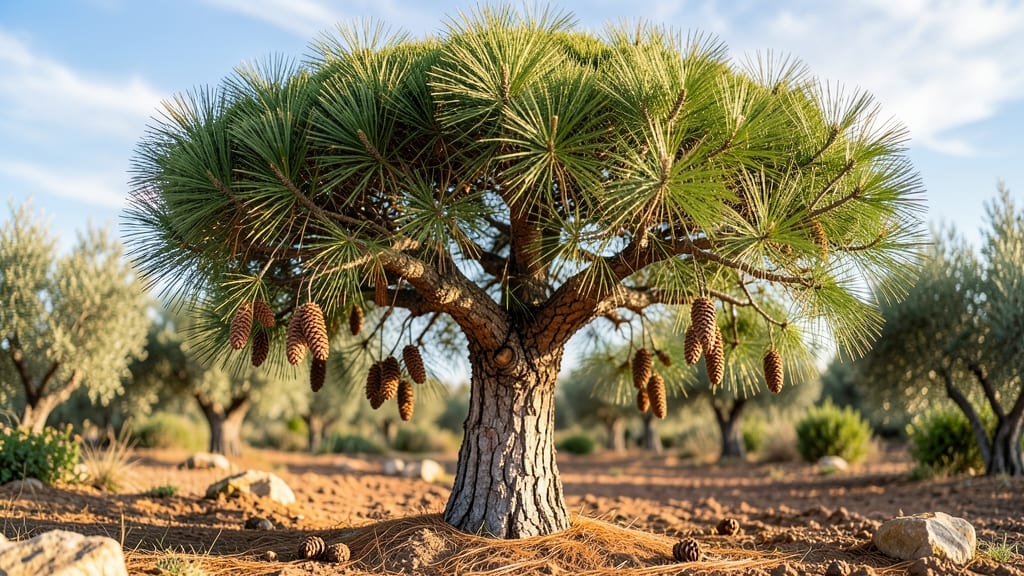
Italian Stone Pine full-grown height by climate Zone: what to expect
The Italian Stone Pine (Pinus pinea) reaches its majestic full-grown height between 15 to 30 feet, though in ideal coastal conditions, it can tower up to 40 feet.
Unlike its Mediterranean cousins—the Aleppo Pine (which stays shorter) or Maritime Pine (more compact)—this species grows taller with broader, more open canopies. Understanding your USDA climate zone helps predict how quickly it matures and how much space to allocate.
In USDA Zone 7, expect slower growth—1 to 2 feet per year—reaching maturity around 25 to 30 years. Meanwhile, in Zones 9 and 10, growth accelerates to 2 to 3 feet annually, with full height achieved in 15 to 20 years.
Coastal areas in Zone 8 often see the fastest growth due to salt-tolerant adaptations and warmer microclimates.
Here’s how your Italian Stone Pine’s mature height varies by region, along with growth rates and key considerations for your landscape:
If you’re comparing Italian Stone Pines to other Mediterranean pines, note that Aleppo Pines max out at 20–30 feet and Maritime Pines stay under 25 feet.
The Italian variety’s height makes it perfect for windbreaks or statement specimens, but its spreading branches (up to 20 feet wide) demand ample spacing.
To estimate your tree’s maturity, track its candle growth (new shoots) each spring. A healthy Italian Stone Pine in Zone 9 might produce 5–10 new candles annually, while Zone 7 trees may only add 2–4.
Use this as a rough gauge—combined with your zone’s growth rate—to predict when it’ll reach its full-grown height.
For coastal plantings, prioritize sandy, well-draining soil to prevent root rot, which can stunt growth. Inland areas should amend clay soils with compost or grit to mimic its natural Mediterranean habitat. Mulching with pine needles (its natural litter) also mimics ideal conditions and encourages faster height development.
Pruning young Italian Stone Pines in Zones 7–8 helps manage their eventual height. Remove lower branches annually to create a clear trunk and reduce future cleanup. In Zones 9–10, where growth is rapid, focus on structural pruning every 2–3 years to maintain a balanced canopy.
Pro tip: Plant Italian Stone Pines at least 20 feet from structures—their mature height and shedding needles can damage roofs or sidewalks over time. In windy coastal zones, stake young trees to prevent toppling during storms, which can alter their growth trajectory.
🌲
Proper spacing & planting distance for mature Italian Stone Pines
When planting mature Italian Stone Pines (Pinus pinea), proper spacing isn’t just about aesthetics—it’s essential for their long-term health. These trees develop expansive root systems and wide canopies, so cramming them too close leads to root competition, stunted growth, and even disease.
In my coastal garden, I learned this the hard way when two trees grew too close, competing for nutrients and sunlight.
For ornamental plantings, aim for 20–30 feet between trees. This spacing ensures their canopy spreads (up to 25 feet wide) without overlapping, while still creating a lush, Mediterranean-inspired landscape.
If you’re using them for windbreaks or dune stabilization, you can reduce spacing to 15–20 feet—just be prepared for more frequent pruning.
- 20–30 ft for ornamental plantings (prevents canopy overlap)
- 15–20 ft for windbreaks or dune stabilization (closer but prune regularly)
- 30–40 ft for container-grown trees (allows root ball expansion)
- 50+ ft near structures (protects foundations from roots and falling branches)
- Double spacing in poor soil (roots compete harder for nutrients)
For container-grown Italian Stone Pines, spacing becomes even trickier. These trees need 30–40 feet between specimens to accommodate their eventual size, even though their root balls start small. I once planted two in large pots just 10 feet apart—within two years, their roots were circling and strangling each other.
Always factor in their mature width (up to 25 feet) when planning container arrangements.
If you’re planting near structures, sidewalks, or driveways, increase spacing to 50 feet or more. Their roots can extend 3–5 times the canopy width, and falling branches (especially in storms) can cause serious damage.
In my USDA Zone 8 garden, I’ve seen Italian Stone Pines drop pine cones and needles up to 30 feet from the trunk—so give them room!
For windbreaks, stagger trees in a 3:1 ratio (3 rows deep, 1 row wide) with 15–20 feet between rows. This creates a dense barrier while allowing airflow to reduce snow load.
In coastal areas, where salt spray is a concern, space them 20–25 feet apart to improve air circulation and reduce fungal risks like needle blight.
Remember, soil quality affects spacing needs. In poor or compacted soil, roots spread wider to find nutrients, so increase spacing by 20–30%. Amend the soil with compost or sand to encourage deeper root growth, which naturally reduces competition.
My sandy coastal soil required extra spacing—otherwise, the trees struggled to establish.
Finally, always measure twice before planting. Use a measuring tape and stakes to mark spacing before digging. I’ve seen gardeners rush this step and end up with trees that outgrow their space within a decade.
With proper spacing, your Italian Stone Pines will thrive for generations—just like the ancient groves in Tuscany that inspired their name. 🌲