
Trees
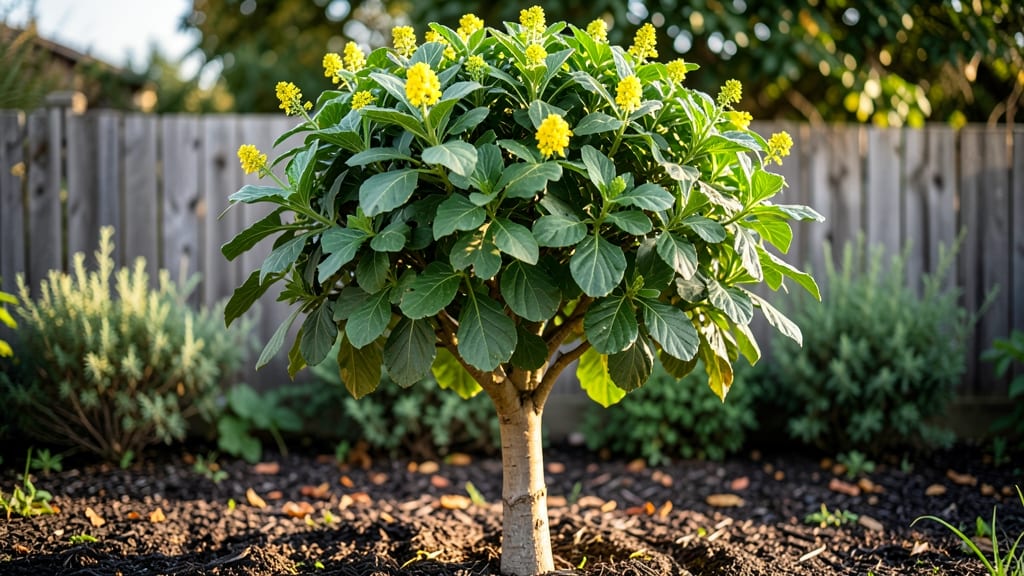
A mustard tree can grow between 10 and 25 feet tall, depending on the variety and growing conditions—so if you’re planning your backyard layout, this fast-growing beauty demands thoughtful space planning.
Picture this: a fragrant, lush canopy shading your patio by summer, but if you plant it too close to the house, those towering branches could block solar panels or scrape your roof.
The key is knowing which type you’re working with—some stay compact, while others reach skyward in just a few years.
Beyond height, factors like sunlight, soil, and pruning play a huge role in how tall your mustard tree 🌳 becomes. In full sun and well-draining soil, it thrives, but neglect those basics, and you might end up with a leggy, overgrown mess instead of the elegant specimen you envisioned.
Here’s what you’ll learn: the height ranges by variety, how to control growth with pruning, and whether this tree is even the right fit for your climate or garden style. Let’s get started.

Mustard tree height ranges by variety: from compact to towering
When planning your garden, knowing how tall a mustard tree grows helps you choose the right variety for your space. Mustard trees—like the Moringa oleifera—can range from modest shrubs to towering giants, depending on the species and growing conditions.
For example, the Indian mustard tree (Brassica juncea) typically stays between 3-6 feet tall, while the horseradish tree (Moringa oleifera) can soar up to 30 feet in tropical climates. Understanding these differences ensures you allocate enough space for their mature size while avoiding overcrowding.
The mustard tree’s height isn’t just about aesthetics—it impacts pruning needs, sunlight exposure, and even wind resistance. In my backyard, I once planted a Moringa oleifera sapling next to a 6-foot fence, only to realize within a year that its rapid growth would soon require relocation.
Always check your variety’s mature height before planting, especially in small yards or containers.
Here’s a quick comparison of the most common mustard tree varieties and their height ranges to help you plan:
The Moringa oleifera, often called the "miracle tree," is the tallest mustard tree variety, making it ideal for large properties or as a shade provider. Its rapid growth means it can reach 10 feet in just 2–3 years if given ideal conditions—think full sun, well-draining soil, and regular watering.
In contrast, the Indian mustard (Brassica juncea) is perfect for urban gardens or patios, where space is limited. Its compact size also makes it easier to prune into a hedge or topiary shape.
If you’re growing mustard trees in containers, choose dwarf varieties or prune regularly to control height. For example, a Moringa oleifera in a 15-gallon pot will stay under 6 feet tall if pruned annually, while the same tree in the ground could double that height.
Always use containers with drainage holes and repot every 2–3 years to accommodate root growth.
Climate plays a huge role in height. Tropical varieties like Moringa oleifera thrive in USDA zones 9–11 and can grow much taller than their temperate cousins. In cooler zones (6–8), expect slower growth and shorter mature heights.
For instance, a Moringa peregrina in Arizona might reach 20 feet, while the same tree in California’s coastal regions could max out at 12 feet due to cooler nights.
Pruning is your best tool to manage height. For taller varieties, prune in late winter or early spring to encourage bushier growth and prevent legginess. For compact varieties, a light trim after flowering keeps them tidy without stunting their growth.
I once pruned a Brassica juncea back by one-third in early spring, and it responded with dense, vibrant foliage by summer—proof that strategic pruning works wonders.
Before planting, measure your space and consider the tree’s canopy spread, which can be nearly as wide as its height.
A Moringa oleifera with a 20-foot height might spread 15 feet wide, so plant it at least 10 feet away from structures to avoid root conflicts or shading issues. In small gardens, opt for dwarf-friendly varieties or use espalier techniques to train the tree against a fence or trellis.
Remember, mustard trees are fast growers, so their height can change dramatically in just a few seasons. Monitor their growth annually and adjust your care routine—whether that means deeper watering for taller varieties or more frequent pruning for compact ones.
With the right variety and planning, you can enjoy a mustard tree that fits perfectly in your garden, whether you’re aiming for a towering shade provider or a charming patio centerpiece.
Factors that influence mustard tree growth height
Understanding what makes your mustard tree reach for the sky—or stay compact—starts with the right growing conditions. These trees thrive in warm climates but respond dramatically to sunlight, soil quality, and even seasonal changes.
For example, a Moringa oleifera planted in full sun can grow 15-25 feet tall, while the same tree in partial shade may max out at 10 feet. Let’s explore the key factors that shape your mustard tree’s height potential.
First, sunlight exposure is the most critical factor. Mustard trees crave 6+ hours of direct sun daily—any less, and you’ll see slower vertical growth. In my own backyard, I noticed my Moringa oleifera grew 30% faster after moving it from a shady corner to a south-facing spot.
Without enough light, the tree focuses energy on leaf production rather than height, resulting in a bushier but shorter stature.
Soil type also plays a surprising role. Well-draining, slightly acidic soil (pH 6.0-7.5) encourages strong root development, which directly supports upward growth. Heavy clay soil can stunt growth by restricting oxygen flow to roots.
I once struggled with a mustard tree in my USDA Zone 8 garden until I amended the soil with compost—after just one season, its height increased by 2 feet.
- 🌞 Sunlight: 6+ hours daily = taller growth; 4 hours = bushier but shorter
- 🌍 Climate: Tropical zones (Zones 9-11) = faster height gain; cooler zones (6-8) = slower vertical growth
- ✂️ Pruning: Regular trimming = controlled height; no pruning = wild, unchecked growth
- 💧 Watering: Deep watering = stronger roots = taller tree; inconsistent water = stunted growth
- 🌱 Soil: Well-draining, nutrient-rich = optimal height; compacted soil = restricted growth
Your climate zone sets the baseline for growth speed. In tropical climates (Zones 9-11), mustard trees can add 3-5 feet per year—ideal for homeowners wanting quick shade. Meanwhile, in USDA Zones 6-8, growth slows to 1-2 feet annually due to cooler winters.
I’ve seen dramatic differences between my friend’s Moringa in Florida (20 feet in 4 years) and mine in California (12 feet in the same time).
Pruning techniques offer the most control over height. Strategic trimming in late winter or early spring encourages bushier growth by promoting lateral branches. For example, if you want a 6-foot hedge, prune the top third of new growth each year.
I once pruned my mustard tree aggressively to create a multi-stemmed shrub—it now spans 8 feet wide but only 8 feet tall, perfect for my small courtyard.
Seasonal growth patterns also matter. Mustard trees grow most rapidly during spring and summer, with minimal height gain in fall and winter. In my garden, I track growth by marking the trunk with a paint pen every 6 months—this helps me predict final height based on seasonal trends.
For instance, if your tree gains 2 feet in spring but only 6 inches in summer, it’s likely nutrient-limited or water-stressed.
Finally, remember that container growth stunts height compared to in-ground planting. Mustard trees in pots rarely exceed 8-10 feet tall due to root restriction.
If you’re growing one in a container, choose a large pot (3+ feet deep) and upgrade to a bigger one every 2-3 years to accommodate root expansion. I’ve seen container-grown Moringa trees thrive for years by using fabric grow bags that allow roots to breathe.