
Trees
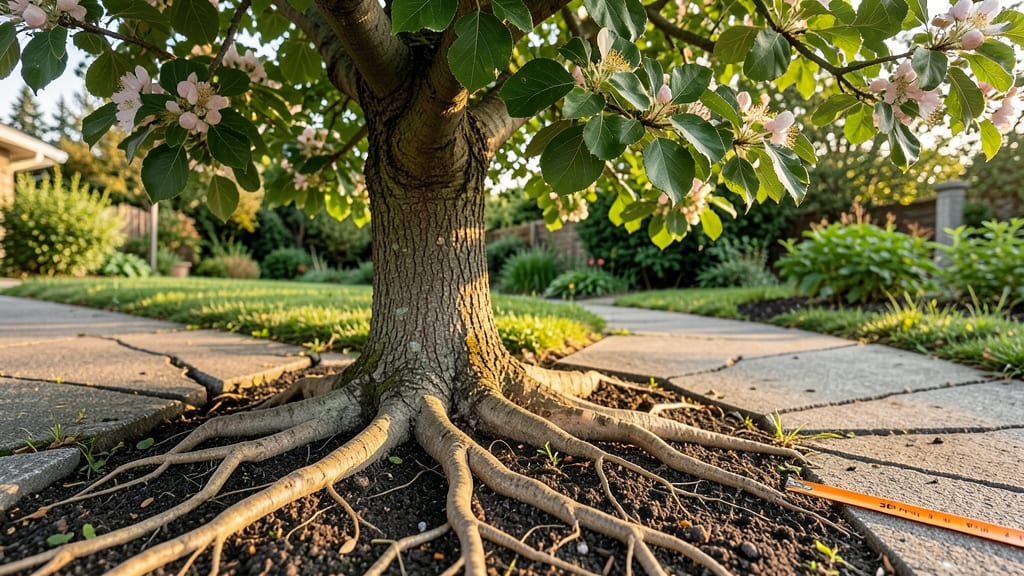
Apple tree roots do cause damage by aggressively spreading up to 3 times the tree’s canopy width, potentially lifting sidewalks, cracking foundations, and disrupting underground utilities when planted too close to structures.
Apple tree roots grow aggressively, especially when young, and can extend far beyond the tree's branches. 🌳 This lateral spread often leads to problems when planted near driveways or foundations, as roots seek moisture and nutrients underground.
The deeper the root system penetrates, the greater the risk of structural damage over time—think cracked concrete or clogged pipes.
What makes this worse is that apple trees have both deep taproots and extensive lateral roots, meaning they don't just grow outward—they also dig downward. Planting them at least 15 feet away from buildings helps minimize risks, but even then, regular monitoring is key to catching issues early.
If you're dealing with existing damage, root barriers or selecting less invasive tree varieties can help. The key is balancing beauty with practicality—apple trees are stunning, but their roots demand respect for your property's integrity.
💡 In This Article
- How Apple Tree Roots Grow and Invade Surroundings
- Preventing Apple Tree Root Damage to Landscaping and Infrastructure
How apple tree roots grow and invade surroundings
Apple trees develop a dual root system that explains their invasive tendencies. The primary taproot anchors the tree deeply—often reaching 4-6 feet or more—while lateral roots spread horizontally up to 3 times the tree’s canopy width.
This means a mature apple tree with a 20-foot canopy could have roots extending 60 feet outward, seeking moisture and nutrients. The lateral roots grow fastest in the first 3-5 years, which is why young trees planted near structures pose immediate risks.
The real damage occurs when these roots encounter obstacles like concrete or pipes. Apple tree roots exert 15-30 pounds of pressure per square inch as they grow, enough to lift sidewalks or crack foundations over time.
Roots also release enzymes that break down organic matter, allowing them to invade small cracks in concrete or mortar joints—essentially "digging" their way through. In urban areas, this often leads to costly repairs when roots collide with underground utilities like sewer lines.
Seasonal growth patterns worsen the problem. Roots grow most aggressively in spring and fall, when soil moisture is high and temperatures are moderate. During droughts, they’ll seek out any available water source, including leaky pipes or irrigation systems.
This explains why damage often appears suddenly—roots may have been quietly growing for years before finally causing visible cracks or heaves in pavement.
Proximity to structures accelerates the damage. Planting an apple tree within 10 feet of a foundation guarantees root intrusion over time, while 15+ feet provides a safer buffer.
The roots’ upward growth—especially in compacted or clay soils—can lift concrete slabs by 1-2 inches annually, creating tripping hazards and structural weaknesses. Even healthy trees can become problematic if not given enough space to spread naturally.
Consider this real-world example: A 10-year-old apple tree planted 8 feet from a driveway caused 3-inch cracks in the concrete after just 5 years. The lateral roots had grown under the driveway, lifting sections and forcing a full replacement.
This case illustrates why planting distance isn’t just a suggestion—it’s a critical safety measure.
What most homeowners don’t realize is that even mature apple trees continue growing roots for decades. Unlike shallow-rooted trees, apple trees have no natural "stopping point," making prevention the only reliable solution. 🌱