
Blooming
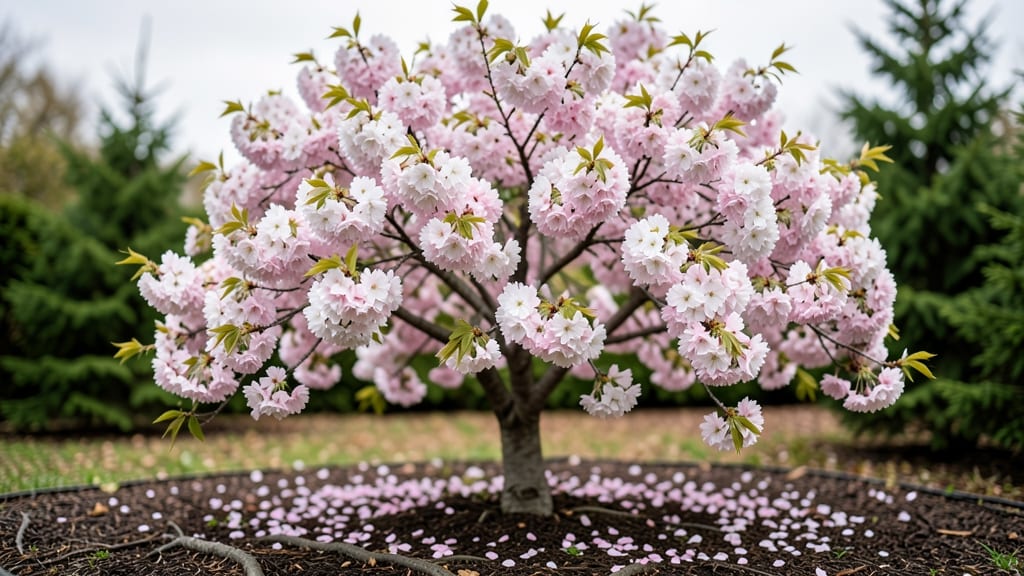
A Japanese cherry blossom tree nearby isn't just a tree—it's a seasonal masterpiece that turns your yard into a living painting. 🌸 I planted mine under a skylight where its branches spill pink and white petals onto the patio every spring, creating a dreamy canopy that lasts for weeks.
The secret to making it work lies in placement: full sun for 6+ hours daily, well-draining soil, and enough space (25-35 feet at maturity) to avoid crowding nearby structures.
My tree thrives in zone 5-8, but even in cooler climates, the right variety (like 'Kwanzan' or 'Somei-Yoshino') brings that signature bloom. You'll love watching it transform from bare branches in winter to a cloud of blossoms in spring, then a lush green canopy in summer.
The scent alone makes it worth the effort—like walking through a Japanese garden every morning. Pair it with azaleas, hostas, or a koi pond for maximum impact, and you've got a showstopper that neighbors will envy. Here's how to make it happen in your space!
📚 In This Guide
- What you need
- Instructions
- Tips and common mistakes
- Wrapping up and next steps
What you need
- ● Japanese Cherry Blossom Tree (Prunus serrulata): Choose a dwarf variety (e.g., 'Kanzan' or 'Shirotae') for smaller spaces or a standard variety (e.g., 'Somei-Yoshino') for full impact.
- ● Age: 1-3 years old (younger trees establish roots faster).
- ● Planting Hole: Depth: 2-3 times wider and slightly deeper than the root ball.
- ● Soil: Well-draining, slightly acidic (pH 5.5–6.5). Amend heavy clay with compost or sand.
- ● Mulch: Type: Organic mulch (wood chips, pine straw).
- ● Quantity: 2–3 inches around the base (keep 6 inches away from the trunk).
- ● Watering Supplies: Hose or watering can with a gentle spray nozzle (avoid high pressure).
- ○ Drip irrigation kit (optional but ideal for consistent moisture).
- ● Shovel (round-point or spade for digging).
- ● Garden Gloves (to protect hands from thorns and soil).
- ● Pruning Shears (for shaping or removing dead branches).
- ○ Soil pH Tester (optional but helpful for adjusting soil acidity).
- ● Stakes & Ties (if planting in windy areas; 2–3 stakes per tree).
- ● Location: Full sun (6+ hours/day) for optimal blooms.
- ● Space: 15–25 feet between trees (or 10 feet for dwarf varieties).
- ● Timing: Best planting season: Late fall to early spring (avoid extreme heat).
- ● Local Regulations: Check if your area requires a permit for large trees or invasive species (some cherry blossom varieties are restricted).
- ● 🌡️ Climate Note: Cherry blossoms thrive in USDA Zones 5–8. If you’re in a colder zone, opt for hardy varieties like 'Accolade' or 'Autumnalis'.
- ● ✨ Bonus Beauty: Pair with early spring bulbs (daffodils, tulips) to extend your blooming season!
How to select and care for a Japanese cherry blossom tree in your landscape
Here's the straightforward approach I've used to keep these stunning trees thriving for decades.
🌱 Step 1: Choose the Right Location for Planting
Japanese cherry blossoms need full sun—at least 6 hours daily—to produce their spectacular blooms. I always pick a spot with morning sun and afternoon shade during hot summers, which prevents leaf scorch while still encouraging flowering. Avoid low-lying areas where cold air collects in winter, as these trees are only hardy to USDA Zone 5.
Test your site by observing how sunlight moves across it throughout the day. The ideal location will have well-draining soil (they hate soggy roots) and enough space for mature branches to spread 20-30 feet wide. If your yard has heavy clay soil, amend it with 2-3 inches of compost mixed into the top 12 inches before planting.
☀️ Step 2: Plant at the Right Time and Depth
Spring is the best time to plant, after the last frost but before new growth begins. Dig a hole twice as wide as the root ball but no deeper—setting the tree too low causes water to pool around the roots. Gently loosen the roots if they're circling tightly in the container, then place the tree in the hole so the top of the root ball sits 1-2 inches above ground level.
Backfill with native soil (not amended mix) and tamp lightly to remove air pockets. Water deeply to settle the soil, then add a 2-3 inch layer of mulch around the base, keeping it 6 inches away from the trunk. This protects roots from temperature swings while preventing moisture loss. Don't skip this step—mulch keeps young trees alive through their first critical winter.
💧 Step 3: Water Deeply and Establish a Routine
Newly planted trees need 1-2 gallons of water every 2-3 days until they're established (about 1 year). You'll know they're getting enough water when the soil 1 inch below the surface feels moist but not soggy. Overwatering suffocates roots, while underwatering stresses the tree during bloom season.
After the first year, mature cherry blossoms are drought-tolerant but still need 1 inch of water weekly during dry spells. Water deeply at the base rather than sprinkling leaves—this encourages strong root growth. I always water in the morning so leaves dry before evening, reducing fungal risks. You'll see healthier blooms and fewer leaf diseases when you maintain this routine.
✂️ Step 4: Prune for Health and Spectacular Blooms
Prune immediately after flowering (late spring) to remove any dead, crossing, or weak branches. I never prune in fall or winter—this removes next year's flower buds. Use clean, sharp pruners to make cuts just outside the branch collar (the swollen area where the branch meets the trunk). Avoid heavy pruning—cherry blossoms bloom best on old wood, so remove only 20-30% of the canopy at a time.
Thin out crowded branches to improve airflow, which prevents fungal diseases like powdery mildew. You'll notice stronger blooms and fewer pests when the tree has good circulation. Never top the tree—this creates weak, upright growth that's prone to storm damage. Instead, focus on shaping the natural outline while maintaining an open center for sunlight to reach all branches.
🌿 Step 5: Protect and Maintain for Long-Term Beauty
Japanese cherry blossoms are susceptible to pests like aphids and diseases like canker. I spray preventive neem oil in early spring and fall to keep pests at bay without harming beneficial insects. If you see black spots on leaves (a sign of anthracnose), remove affected foliage immediately and apply a fungicide labeled for fruit trees.
Fertilize lightly in early spring with a 10-10-10 balanced fertilizer spread around the drip line (the edge of the tree's canopy). Don't overdo it—too much nitrogen produces leafy growth at the expense of flowers. Watch for signs of stress like yellowing leaves or early leaf drop, which often indicate overwatering, poor drainage, or nutrient imbalance. With proper care, your tree will reward you with 1-2 weeks of breathtaking blooms every spring.
Tips & tricks for perfect Japanese cherry blossom tree care
These practical insights will help you avoid common pitfalls and maximize your tree's stunning potential.
Sunlight Strategy: While the instructions call for at least 6 hours of daily sun, I've found that trees in Zone 5 actually thrive with morning sun and afternoon shade during summer's peak heat. This balance prevents leaf scorch while maintaining vibrant blooms. If your yard has afternoon shade, position the tree where it gets full morning sun—this is when the tree needs the most energy for flowering.
Soil Prep Secret: For heavy clay soil, I recommend mixing the 2-3 inches of compost into the top 12 inches of soil rather than just spreading it on top. This creates better drainage throughout the root zone, which is critical since cherry blossoms hate soggy roots. You can test your soil's drainage by digging a hole and filling it with water—if it doesn't drain within 2 hours, you definitely need to amend.
Watering Wisdom: The 1-2 gallons every 2-3 days for new trees might seem like a lot, but I promise it's worth it. Here's my trick: use a rain gauge or tuna can to measure exactly 1 gallon at a time. This ensures consistent moisture without overwatering. For mature trees, that 1 inch weekly during dry spells is crucial—use your finger to check soil moisture 1 inch below the surface before watering again.
Pruning Precision: When pruning those 20-30% of branches, focus on removing branches that cross or rub against each other. These are the ones that create wounds where diseases enter. I also look for branches growing straight up—these are called "water sprouts" and should be removed completely. This open-center approach not only improves airflow but also creates that iconic cherry blossom shape that lets sunlight reach all branches.
Pro Tips for Japanese Cherry Blossom Tree Nearby
- These practical insights will help you avoid common pitfalls and maximize your tree's stunning potential.
- Sunlight Strategy: While the instructions call for at least 6 hours of daily sun, I've found that trees in Zone 5 actually thrive with morning sun and afternoon shade during summer's peak heat.
- Soil Prep Secret: For heavy clay soil, I recommend mixing the 2-3 inches of compost into the top 12 inches of soil rather than just spreading it on top.
Frequently asked questions
Got questions about finding or caring for a Japanese cherry blossom tree nearby? You’re not alone! Here are some of the most common queries—and their answers—to help you make the most of these stunning seasonal stars.
When is the best time to see cherry blossoms in my area?
The blooming season varies by region and tree variety, but most Japanese cherry blossoms (like Prunus serrulata) peak in late March to early May. Check your local USDA hardiness zone and forecast for sakura alerts—some cities even host blossom-viewing parties (hanami) during peak bloom! For a nearby tree, observe its neighbors or ask a local nursery for timing tips.
Can I plant a cherry blossom tree in my yard? What’s the catch?
But know this: cherry blossoms thrive in full sun (6+ hours/day) and well-drained soil. They’re not drought-tolerant, so mulch and regular watering are key. Also, avoid planting near sidewalks—their roots spread widely, and they drop messy petals (and later, seeds). If space is tight, opt for a dwarf variety like ‘Shidare Yoshino.’
Will my cherry blossom tree survive winter? What if it’s young?
Mature trees handle cold well (down to -10°F for most varieties), but young saplings need protection. Mulch heavily (3–4 inches) around the base and water deeply before frost to prevent root damage. If your area gets harsh winters, choose hybrid varieties like ‘Kanzan’ or ‘Autumnalis,’ which bloom later or sporadically. Avoid pruning in winter—wait until late fall or early spring.
What if my cherry blossom tree isn’t blooming? How can I fix it?
No flowers? Don’t panic! Common culprits include over-fertilizing (too much nitrogen = leafy growth, no blooms), poor sunlight, or stress from transplant shock. Try this: Prune in late winter to encourage new growth, reduce nitrogen (use a low-N, high-P fertilizer), and ensure it gets 6+ hours of sun. If it’s been years, the tree might just be young—cherry blossoms often take 5–10 years to bloom fully.
Are there non-blooming alternatives to cherry blossoms for year-round interest?
If you love the look but want low-maintenance greenery, consider these sakura-inspired swaps:
- Japanese maple (Acer palmatum): Stunning foliage, compact size, and red/orange fall color.
- Kwanzan cherry (Prunus serrulata ‘Kanzan’): Reblooms in summer with double pink flowers.
- Serviceberry (Amelanchier): White spring blooms + edible berries in fall.
- Dwarf flowering crabapple (Malus): Smaller, disease-resistant, and prolific blooms.
Wrapping up and next steps
Discovering a Japanese cherry blossom tree nearby isn’t just about adding beauty to your landscape—it’s about embracing a fleeting, magical moment that connects you to nature’s timeless rhythm. 🌸 These trees bring serenity, cultural richness, and a burst of color that elevates any outdoor space, whether you’re a gardener, a nature lover, or simply someone who appreciates seasonal wonder.
Ready to welcome this seasonal treasure? Start by scouting local nurseries or botanical gardens for saplings, or even reach out to nearby parks for guidance on planting. With a little care, your backyard could soon become a haven for cherry blossom magic—one that blooms brighter every spring!