
Diseases
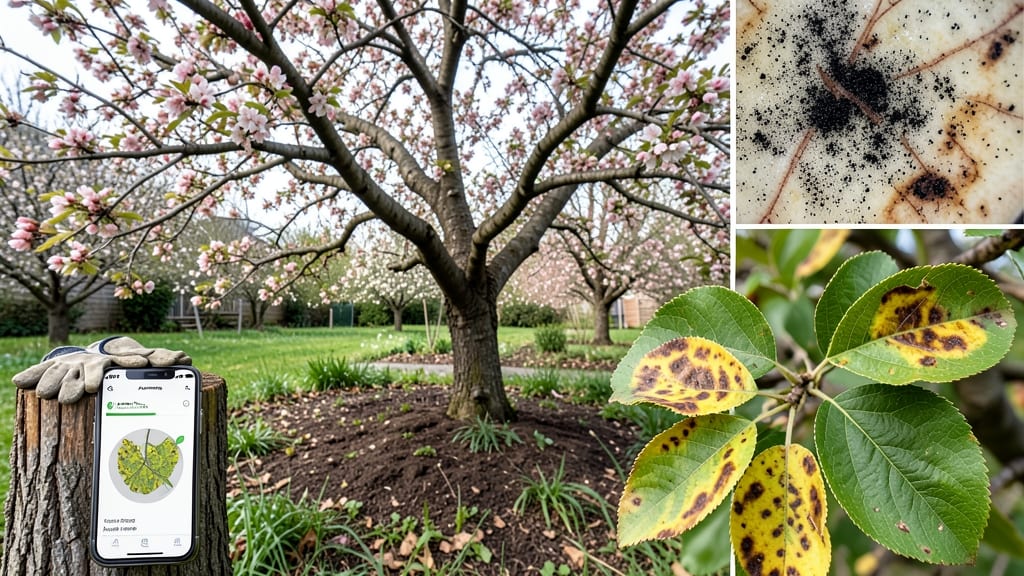
Yellow spots on apple tree 🍏 leaves are almost always a sign of fungal diseases like apple scab or rust, which can spread fast if ignored.
If you’ve ever spotted those telltale yellow patches—sometimes with black or orange splotches—you know how quickly panic sets in. The good news? Most cases are treatable with the right approach, and early action can save your tree’s health (and your harvest).
This guide breaks down the most common fungal culprits, how to tell them apart from nutrient issues or pests, and organic solutions to restore your tree’s vibrancy.
We’ll also cover when to prune, how to dispose of infected leaves safely, and preventive steps to keep your apple tree thriving for years.
By the end, you’ll know exactly what’s wrong with your tree—and how to fix it before the problem worsens. Let’s get started.
Common fungal diseases causing yellow spots on apple tree leaves
Yellow spots on your apple tree leaves often signal fungal infections that, if ignored, can weaken your tree and reduce fruit production. The most common culprits—apple scab, powdery mildew, and cedar apple rust—each leave distinct clues when examined closely.
Unlike nutrient deficiencies (which cause uniform yellowing), these diseases create irregular, discolored patches that spread rapidly in moist conditions.
Identifying the correct disease early is key to treatment success. Apple scab produces olive-green, velvety spots with yellow halos, while powdery mildew coats leaves in a white, powdery film. Cedar apple rust, on the other hand, creates orange-yellow pustules on leaf undersides.
All three thrive in warm, humid weather—making spring and summer critical monitoring periods for apple growers.
Here’s how these diseases compare at a glance, including their unique symptoms and life cycles:
| Disease | Leaf Symptoms | Spot Color/Texture | Life Cycle | Key Season |
|---|---|---|---|---|
| Apple Scab | Yellow halos around olive-green spots; leaves may curl | Velvety, raised spots | Overwinters in fallen leaves; spreads via rain splash | Spring to early summer |
| Powdery Mildew | White powdery coating; leaves yellow and crisp | Chalky white film | Survives on plant debris; spreads via wind | Late spring to fall |
| Cedar Apple Rust | Orange-yellow pustules on undersides; upper leaves yellow | Pustules with orange spores | Requires cedar trees as alternate host; spreads via spores | Summer (peaks June-July) |
Apple scab is the most aggressive of the three, often appearing as olive-green spots with yellow edges that enlarge and merge over time. These spots can crack open in wet weather, releasing spores that infect nearby leaves. The disease thrives in cool, wet springs, making regions with frequent morning dew particularly vulnerable.
To confirm apple scab, check for velvety textures on the leaf surface and look for infected fruit that develops scabby lesions. Unlike powdery mildew, scab doesn’t create a surface film—it penetrates leaf tissue, causing premature leaf drop if untreated.
Early detection is critical, as spores can overwinter in fallen leaves and reinfect the tree the following spring.
Powdery mildew, while less destructive to fruit, can still stress your tree by reducing photosynthesis. This disease creates a white, powdery coating on leaf surfaces, often starting on the upper leaves in shaded or crowded areas. Unlike scab, mildew spreads rapidly in dry, humid conditions—think of it as the fungal equivalent of a heat rash. The key difference? Mildew leaves a residue you can brush off with your finger.
For cedar apple rust, focus on the leaf undersides where you’ll find orange-yellow pustules (spore sacs) that rupture to release spores. These pustules are a dead giveaway, as they don’t appear on other common apple diseases.
Rust requires both apple trees and cedar trees to complete its life cycle, which is why you might see it flare up near cedar windbreaks or hedges.
One common mistake is confusing yellow spots for nutrient deficiencies like iron chlorosis (which causes uniform yellowing between leaf veins). However, fungal spots are irregular in shape and often appear on older leaves first, while deficiencies start on new growth.
Always check the leaf undersides and examine the spot texture—fungal diseases leave distinct physical clues.
If you’re unsure whether your apple tree’s yellow spots are fungal, consider these quick identification steps: 1. Examine spot texture (velvety = scab; powdery = mildew; pustules = rust).
2. Check leaf undersides for hidden signs like orange spores. 3. Note the season—scab peaks in spring, rust in summer, and mildew in fall.
Early intervention is your best defense. Once you’ve identified the disease, you can tailor treatments to target its specific life cycle—whether that means removing cedar trees for rust, improving airflow for mildew, or applying copper fungicides for scab. Don’t let those yellow spots become a full-blown crisis! 🌿
Organic treatment methods to eliminate yellow spots and prevent recurrence
If you’ve identified apple scab, cedar apple rust, or powdery mildew as the culprit behind your tree’s yellowing leaves, don’t panic—organic treatments can effectively eliminate the problem. Start with neem oil, a natural fungicide that disrupts fungal spores while being safe for beneficial insects.
Mix 1 tablespoon of neem oil with 1 quart of water and a few drops of dish soap as an emulsifier, then spray thoroughly on both leaf surfaces and branches.
For stubborn infections like apple scab, apply a copper fungicide spray (like Bordeaux mixture) every 7–14 days during wet conditions. Copper creates an unfavorable environment for fungal spores, but avoid overuse—stick to 3–4 applications per season to prevent soil or leaf burn.
Always spray in the early morning or late afternoon to minimize stress on the tree.
⚠️ callout-warning
Overhead irrigation spreads fungal spores like apple scab and powdery mildew by keeping leaves wet. Switch to drip irrigation or water at the base of the tree in the morning to allow foliage to dry quickly. Wet leaves for more than 6 hours create ideal conditions for fungal growth.
Action Step: Install a soaker hose or adjust your sprinkler system immediately to prevent further spread.
Baking soda spray is another gentle but effective remedy for powdery mildew and early-stage infections. Combine 1 teaspoon of baking soda, 1 quart of water, and a drop of soapy water to help the mixture stick.
Spray leaves every 7–10 days until symptoms disappear, focusing on the undersides of leaves where spores often hide.
Prevent recurrence by improving your tree’s air circulation and soil health. Prune out dense, overlapping branches to reduce humidity in the canopy, and apply a 2–3 inch layer of organic mulch (like wood chips) around the base to regulate soil moisture.
Avoid nitrogen-heavy fertilizers, which promote lush growth but weaken disease resistance.
Companion planting with garlic, chives, or marigolds around your apple tree can deter fungal spores naturally. These plants release antifungal compounds into the soil and repel pests that spread disease.
Pair this with seasonal copper applications in early spring (before buds swell) and late fall (after leaf drop) to create a multi-layered defense.
Finally, monitor your tree’s watering schedule—overwatering is a common trigger for yellow spots. Apple trees need 1–1.5 inches of water per week, but ensure the soil drains well to prevent root rot, which stresses the tree and invites fungal infections.
If your tree is already infected, reduce watering slightly to help leaves recover faster.