
Trees
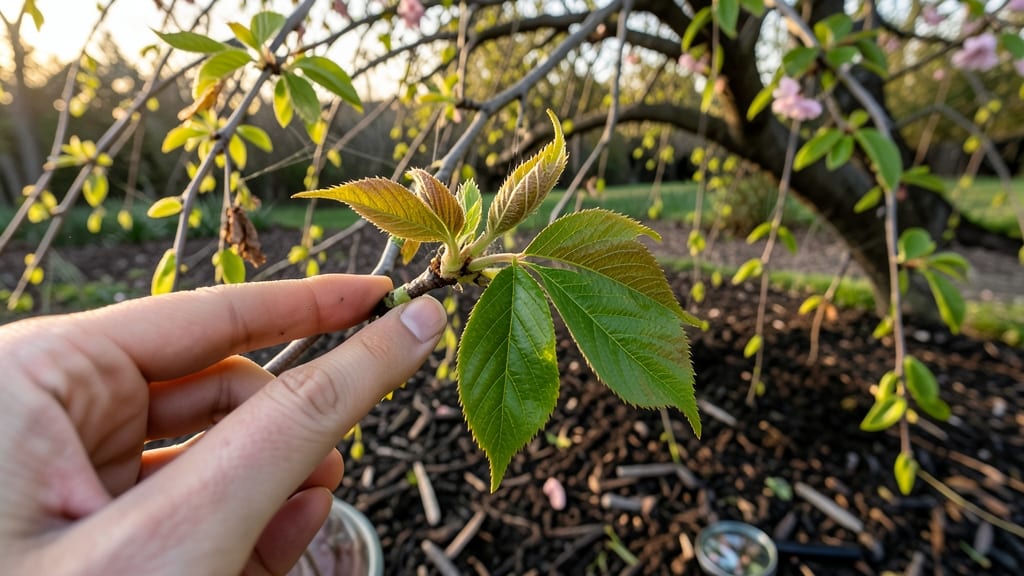
Your weeping cherry tree’s leaves curling could mean fungal spot is spreading—and we can stop it fast before it ruins the whole canopy. 🌿 I’ve seen this disease turn lush branches into sad, brown skeletons, but with the right moves, you can nurse your tree back to health in weeks.
First, check for those telltale dark spots with yellow halos on the undersides of leaves—classic fungal spot. Spider mites or drought stress can mimic these symptoms, but fungal spot spreads like wildfire if you ignore it.
Grab some pruners and start by removing every infected leaf you see, even if it’s just a few. Once you’ve cut out the worst, hit the tree with a copper fungicide spray (or a baking soda mix for a budget fix) every 7–10 days until new growth appears.
Water at the base—not overhead—to keep the leaves dry, and mulch to lock in moisture without feeding the fungus. This isn’t just about saving leaves—it’s about protecting that graceful weeping shape and next year’s blossoms.
If the spots keep coming back after two treatments, call an arborist before the disease moves deeper into the wood.
Root Causes Behind Curling Leaves
When your weeping cherry tree’s leaves start curling, it’s often a distress signal from the plant. Understanding the why behind this symptom is the first step toward restoring its health. Below, we break down the most common culprits—from environmental stressors to hidden pests—with clear, actionable explanations.
Weeping cherry trees (Prunus serrulata) are hardy but sensitive to sudden temperature fluctuations. When nights dip below 20°F (-7°C) or days spike above 90°F (32°C), leaves may curl as a protective response.
Cold damage disrupts cell membranes, while heat stress causes transpiration rates to exceed water uptake, leading to dehydration and curling.
How to Spot It:
- Leaves curl upward or inward, often with a silvery or bronze tint.
- New growth may appear stunted or brittle.
- Symptoms worsen after frost or heatwaves.
Actionable Fixes:
- Mulch properly: Apply 3–4 inches of organic mulch (wood chips, bark) to regulate soil temperature.
- Water deeply during heatwaves—1–1.5 inches per week—early in the morning to reduce evaporation.
- Avoid late-season fertilizing, which can stress roots when temps drop.
Pests like Japanese beetles, spider mites, and aphids suck sap from leaves, causing curling as the tree’s defense mechanism. Their saliva also introduces toxins that distort growth. Look for:
| Pest | Signs | Leaf Damage |
|---|---|---|
| Japanese Beetles | Skeletons of chewed leaves; orange larvae in soil | Leaves curl downward, brown edges |
| Spider Mites | Fine webbing on undersides; stippling | Leaves cup upward, yellowing |
| Aphids | Sticky honeydew; curled new growth | Leaves twist and pucker |
How to Combat Them:
- Blast pests off with a strong stream of water (early morning).
- Use insecticidal soap (for mites/aphids) or neem oil (for beetles).
- Introduce natural predators: Ladybugs (aphids) or parasitic wasps (beetles).
Weeping cherries hate "wet feet." Overwatering or compacted soil leads to root suffocation, cutting off oxygen and nutrients. Curling leaves often signal:
- Root rot (fungal infection from soggy roots).
- Nutrient starvation (roots can’t absorb water properly).
Diagnostic Tips:
- Check soil 1–2 inches down—if it’s cold and muddy, drainage is poor.
- Leaves may yellow at edges before curling.
- Mushroom growth at the base = fungal rot.
Solutions:
- Improve drainage: Amend soil with perlite or compost (20% mix).
- Water only when top 2 inches are dry—deep and infrequent is key.
- Raise beds if planting new trees to prevent water pooling.
Fungal diseases like powdery mildew, anthracnose, or leaf spot thrive in humid, shaded conditions. They clog stomata (leaf pores), forcing leaves to curl as a survival tactic. Common fungal culprits:
- Powdery Mildew: White, powdery patches on upper leaf surfaces.
- Anthracnose: Dark spots with yellow halos; leaves curl and drop.
- Leaf Spot: Brown/black spots that enlarge, causing distortion.
Prevention & Treatment:
- Prune for airflow: Remove crossing branches and thin canopy.
- Apply fungicide (baking soda spray for mildew: 1 tsp baking soda + 1 quart water + few drops soap).
- Water at the base, not overhead, to keep leaves dry.
Curling can also stem from imbalanced soil. Too much salt (from fertilizers), boron, or manganese causes toxic buildup, while deficiencies in magnesium (yellow between veins) or nitrogen (pale green leaves) stress the tree.
Quick Soil Test Fixes:
| Symptom | Likely Cause | Solution |
|---|---|---|
| Yellow edges | Salt buildup | Flush soil with water + Epsom salt (1 tbsp/gallon) |
| Purple stems | Phosphorus deficiency | Apply bone meal in early spring |
| Small, dark green leaves | Nitrogen deficiency | Use balanced fertilizer (10-10-10) |
If your weeping cherry was recently moved or physically damaged (e.g., lawnmower cuts, hail), leaves may curl as the tree conserves energy to heal roots or branches.
Recovery Steps:
- Prune damaged limbs with sterilized shears (cut at a 45° angle).
- Avoid fertilizing for 6–8 weeks post-transplant.
- Stake young trees to prevent wind stress on new roots.
Quick Fixes for Curling Cherry Leaves
If your weeping cherry tree’s leaves are curling like a sad paper crane, don’t panic—most issues are fixable with the right approach. Below, we’ve mapped the most common causes to practical, step-by-step solutions, plus prevention tips to keep your tree thriving. 🌿✨
Signs: Yellowing leaves, curling edges, soggy soil, or mushrooms sprouting at the base. Why it happens: Too much water suffocates roots, leading to fungal infections (like Botrytis or Phytophthora) that cause leaf curl.
How to fix it:
- 🚰 Stop watering immediately—let the top 2–3 inches of soil dry out before watering again.
- 🏗️ Improve drainage:
- Dig a shallow trench around the tree (1–2 feet from the trunk) to redirect excess water.
- Mix compost or perlite into the top 6 inches of soil to aerate it.
- 🌧️ Adjust your watering routine:
- Water deeply but infrequently (1–2 times per week, depending on climate).
- Use a soaker hose or drip irrigation to deliver water slowly at the roots.
- 🍄 Fungal infection? Treat with a copper fungicide (follow label instructions) or a baking soda spray (1 tbsp baking soda + 1 quart water + a drop of dish soap).
💡 Pro Tip: If your tree is in a pot, ensure it has drainage holes and use a well-draining potting mix.
Signs: Leaves curling upward (like a "fishhook"), crispy edges, or wilting in hot afternoons. Why it happens: Weeping cherries (especially young trees) can get sunburned or dehydrated in intense heat.
How to fix it:
- 🌳 Provide afternoon shade:
- Use a lightweight shade cloth (30–50% coverage) during peak sun (11 AM–3 PM).
- Plant fast-growing shade trees (like silver maple) nearby for long-term relief.
- 💦 Increase watering frequency:
- Water early in the morning to reduce evaporation.
- Mulch heavily (3–4 inches of wood chips) to retain moisture.
- 🌿 Trim damaged leaves:
- Remove only the most severely curled or browned leaves to reduce stress on the tree.
💡 Pro Tip: If your tree is in a windy or exposed area, consider a windbreak (like a fence or hedge) to protect it.
Signs: Dark spots with yellow halos, curling leaves, or white powdery residue (like powdery mildew). Why it happens: Fungal spores thrive in humid, wet conditions, attacking weeping cherries’ soft leaves.
How to fix it:
- 🧹 Prune infected branches:
- Cut off any leaves or stems with spots using sterilized pruners (wipe with rubbing alcohol between cuts).
- Dispose of clippings in the trash (not compost) to prevent spread.
- 🧴 Apply fungicide:
- Neem oil (natural option): Mix 1 tbsp neem oil + 1 tsp mild soap + 1 quart water. Spray every 7–10 days until new growth appears.
- Copper fungicide (for severe cases): Follow label rates for best results.
- 🌬️ Improve airflow:
- Thin out dense branches to reduce humidity around the tree.
- Space trees 8–10 feet apart if replanting.
💡 Pro Tip: Prevent future infections by watering at the base (not overhead) and avoiding late-season fertilization (which encourages new growth vulnerable to fungi).
Signs: Curling leaves with tiny holes, webbing, or sawdust-like frass (pest droppings). Why it happens: Aphids, mites, or Japanese beetles suck sap, causing leaves to curl and distort.
How to fix it:
- 🕷️ Identify the pest:
- Aphids/mites: Tiny, clustered on undersides of leaves.
- Japanese beetles: Copper-colored, chewing leaves in groups.
- 💦 Blast them off:
- Spray leaves with a strong stream of water to dislodge pests.
- 🧴 Use organic pesticides:
- Insecticidal soap (for aphids/mites): Spray every 5–7 days.
- Milky spore powder (for Japanese beetles): Apply to soil in early spring.
- 🌿 Introduce predators:
- Ladybugs or lacewings (natural aphid eaters) can be purchased online.
💡 Pro Tip: Yellow sticky traps can catch flying pests like whiteflies before they land.
Signs: Curling leaves with yellowing between veins (iron deficiency) or purple stems (phosphorus deficiency). Why it happens: Poor soil or over-fertilizing can throw off nutrient balance.
How to fix it:
- 📊 Test your soil:
- Use a home soil test kit (or send a sample to a local extension office).
- 🍄 Choose the right fertilizer:
- Iron deficiency? Use an iron chelate (spray or soil drench).
- General weakness? Apply a balanced fertilizer (10-10-10) in early spring.
- 🌿 Avoid over-fertilizing:
- Too much nitrogen causes soft, sappy growth prone to pests/disease.
💡 Pro Tip: Mulch with compost yearly to slowly improve soil health without shocking the tree.
Signs: Leaves curling after a freeze, brown patches, or split bark. Why it happens: Weeping cherries are sensitive to late frosts or sudden cold snaps.
How to fix it:
- 🌡️ Wait for warm weather:
- New growth is vulnerable—avoid pruning until spring.
- 🌿 Prune dead branches:
- Remove any blackened or brittle wood in late winter/early spring.
- 🛡️ Prevent future damage:
- Wrap the trunk with burlap or tree guard in cold climates.
- Avoid planting in low spots where cold air settles.
💡 Pro Tip: Mulch heavily in fall (6 inches deep) to insulate roots.
✅ Water wisely—deep and infrequent, never soggy. ✅ Monitor humidity—prune for airflow, avoid overhead watering. ✅ Inspect regularly—catch pests/fungus early with weekly leaf checks. ✅ Fertilize smart—test soil first, avoid overdoing nitrogen. ✅ Protect from extremes—shade cloth in summer, winter wraps in cold zones.
Remember: Most curling leaves improve within 2–4 weeks of correct care. If your tree shows no improvement after a month, consult a local arborist to rule out deeper issues like root rot or disease. 🌳💚
Frequently asked questions
Why do weeping cherry tree leaves curl upward instead of downward?
Upward curling often signals heat stress, drought, or fungal issues like powdery mildew. When leaves curl upward (like a "fishhook"), it's typically the tree's way of reducing surface area to conserve moisture during dry spells. Check the undersides for white powdery residue or tiny webs—signs of pests or fungal spores.
Can I prune curled leaves to help my weeping cherry recover?
Yes, but only remove severely damaged leaves—never more than 25% of the canopy at once. Prune in early spring when the tree is dormant, using sterilized shears to cut at a 45° angle. Avoid pruning during active growth or when pests/diseases are present, as this can spread problems.
How quickly should I expect to see improvement after treating my tree?
With proper care, you should see noticeable improvement in 2–4 weeks. New leaves should appear straighter and less curled as you address the root cause (watering, pests, or disease). If symptoms persist beyond 6 weeks despite your efforts, consult an arborist—it may indicate root rot or systemic disease.
Is it safe to use homemade remedies like neem oil or baking soda spray?
Neem oil (1 tbsp + 1 tsp soap per quart of water) works well against pests and mild fungal issues, while baking soda spray (1 tsp baking soda + 1 quart water) is effective for powdery mildew. Always test remedies on a small leaf first to check for sensitivity. For severe infections, opt for copper fungicide instead.
Will my weeping cherry tree recover fully if I fix the curling leaf issue?
Most trees recover fully if you address the problem early! However, severe cases of fungal disease or pest infestations may leave some permanent scarring. Focus on preventative care (proper watering, mulching, and regular inspections) to keep your tree healthy. With time and proper treatment, your weeping cherry should bounce back beautifully.