
Pruning
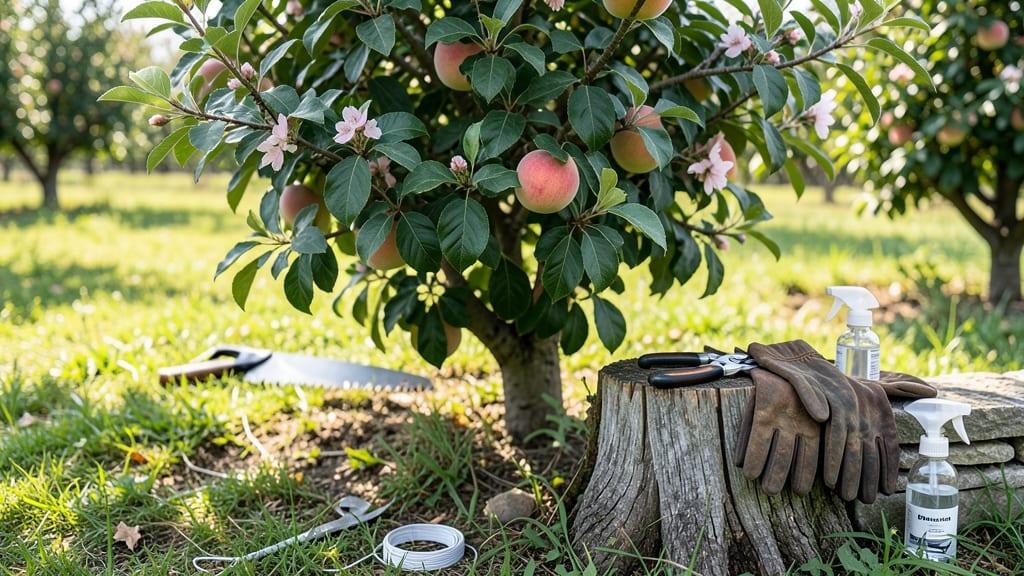
Pruning peach trees in Texas isn’t just about shaping branches—it’s about preparing them to fight back against our brutal summers. 🌵 I’ve learned the hard way that cutting at the wrong time or too aggressively invites disease and weakens fruit production, especially in our heat.
The key is working during dormancy, when the tree’s energy is focused inward, not outward.
You’ll need sharp pruners, a saw for thicker branches, and a clean workspace to prevent spreading fungal spores. Texas Agricultural Extension recommends removing dead wood first, then thinning out crowded branches to improve airflow—a must for our humid springs.
Timing matters too: late winter, just before buds swell, gives your tree the best shot at recovering before the heat hits.
By the time summer rolls around, you’ll see stronger branches, fewer fruit-sapping pests, and a canopy that lets sunlight reach every peach. The tree will reward you with sweeter fruit and fewer rotten spots from overcrowding. It’s not just pruning—it’s setting your peach tree up for Texas-level resilience.
Whether you’re dealing with a young sapling or a mature tree, these cuts create a foundation for years of productive harvests. Just remember: less is more in Texas heat, and patience pays off when the first blush of peach blooms arrive in spring.
📚 In This Guide
- What you need
- Instructions
- Tips and common mistakes
- Wrapping up and next steps
What you need
- ● Pruning shears: Bypass pruners (sharp, 6–8" blades) for small branches.
- ● Loppers: Long-handled (24–36") for thicker branches (up to 2" diameter).
- ● Pruning saw: Curved-tooth for branches thicker than 2.5".
- ● Disinfectant: 70% isopropyl alcohol or bleach solution (1 part bleach:9 parts water) to sterilize tools between cuts.
- ● Heavy-duty gloves: Leather or cut-resistant (Texas thorns are no joke!).
- ● Safety glasses: ANSI-rated to protect against debris.
- ● Ladder: Sturdy, extendable (16–20' tall) for taller trees (or a pruning pole for high branches).
- ● Tarp or drop cloth: 10x12' plastic sheet to collect debris.
- ● Twine or zip ties: For temporary support if needed.
- ● Pruning sealant: Tree wound paint (controversial but useful for large cuts in Texas’s dry climate).
- ● Marking spray: Non-toxic paint to tag branches for removal.
- ● Work boots: Steel-toe or waterproof for uneven terrain.
- ● Extension cord + string trimmer: For clearing underbrush post-prune.
- ● Camera: To document your tree’s progress (because Texas pride!).
- ● Check the USDA Zone 8–10 Texas dormant season (late winter to early spring, ideally Feb–March).
- ● Confirm your peach tree’s age and health—young trees (under 3 years) need lighter cuts.
- ● Review your tree’s growth habits (e.g., upright vs. weeping varieties).
- ● Have a weather forecast—avoid pruning if rain or wind is predicted within 24 hours.
Step-by-step instructions for pruning peach trees in Texas
Here's the method I've used for years to keep peach trees healthy and productive in our brutal summers.
✂️ Step 1: Time Your Cuts for Dormant Season
Prune your peach tree during late winter or very early spring—specifically when the tree is completely dormant but before buds begin to swell. In Texas, this typically falls between mid-February and early March, depending on your region. You'll know it's the right time when the tree has no leaves and the ground isn't yet thawed.
Never prune in fall or summer. Summer cuts invite fungal infections, while fall pruning leaves the tree vulnerable to late-season frost damage. If you miss the dormant window, wait until early spring—better late than never, but timing matters for recovery.
✂️ Step 2: Remove Dead, Diseased, or Crossing Branches First
Start by cutting out any dead, diseased, or damaged branches—these are your top priority. Look for branches with no green tissue inside when you cut a small slit (they should be hollow or brown). Remove any limbs showing signs of fungal infections, like oozing sap or blackened bark. Use clean, sharp pruning shears to make cuts at a 45-degree angle just outside the branch collar.
Next, eliminate any branches that are rubbing against each other or growing inward. These "crossing branches" compete for space and often rub raw spots that invite disease. I always step back to visualize the tree's structure—this helps me spot problem branches I might miss up close. Never leave stubs; clean cuts heal faster.
✂️ Step 3: Thin the Canopy for Better Airflow
Peach trees need good airflow to prevent fungal diseases like brown rot, which thrives in Texas' humid summers. Aim to thin the canopy so light can penetrate to the inner branches. Start at the bottom and work your way up, removing branches that grow straight up or downward—these don’t contribute much to fruit production and create dense shade.
Remove about 20-25% of the tree’s total branches, focusing on the smallest limbs first. You’ll see a more open structure that lets sunlight and air move freely. Avoid cutting more than one-third of the tree’s canopy in a single season—this stresses the tree and can reduce fruit yield. If your tree is overgrown, spread the pruning over two dormant seasons.
✂️ Step 4: Shape the Tree for Optimal Fruit Production
Peach trees thrive with an open-center or modified central leader shape. For young trees, encourage a strong central leader (main trunk) while removing competing vertical branches. For mature trees, aim for a balanced, vase-like shape with branches spaced 12-18 inches apart. This spacing ensures sunlight reaches all fruit and reduces the risk of disease.
Look for suckers—those vigorous shoots growing from the base or trunk—and remove them completely. Suckers drain energy from the tree and don’t produce fruit. If you’re unsure about a cut, ask yourself: Does this branch contribute to fruit production or airflow? If not, it’s likely a candidate for removal.
✂️ Step 5: Clean Up and Apply Protective Measures
After pruning, sterilize your tools with rubbing alcohol to prevent spreading disease. Collect and dispose of all cuttings—don’t leave them on the ground, as they can harbor pests and fungi. If you’re dealing with a tree that had signs of brown rot or other diseases, consider applying a copper fungicide spray in early spring to protect new growth.
Finally, mulch around the base with 2-3 inches of organic mulch (like wood chips or straw) to retain moisture and regulate soil temperature. Keep the mulch 6 inches away from the trunk to prevent rot. Water deeply after pruning to help the tree recover and encourage new growth. You’ll see fresh, vibrant buds within a few weeks—that’s your sign the tree is thriving.
Tips & tricks for pruning peach trees in Texas
Trust me, these small adjustments will make your pruning session more effective—and save your tree from Texas' worst threats.
Seasonal Timing Secret: The mid-February to early March window is non-negotiable for Texas peach trees. I've learned the hard way that even a week late can mean missed bud development. Check for no leaves and firm, unthawed ground—these are your best indicators. If you're in a warmer Texas zone, aim for the earliest possible date within this window to avoid spring rains that can stress fresh cuts.
Branch Cutting Technique: When making those 45-degree cuts in Step 2, position your pruning shears just outside the branch collar—the swollen area where the branch meets the trunk. This ensures the tree can seal the wound properly. I always make a small test cut first to confirm I'm cutting healthy tissue. For larger branches, consider using a pruning saw—it gives you more control and prevents tearing.
Canopy Thinning Strategy: That 20-25% canopy reduction in Step 3 might seem aggressive, but it's essential for Texas' humidity. Focus on removing branches that grow straight up or downward first—they create dense shade where fungal spores love to thrive. I visualize the tree as an open vase shape, with branches spaced 12-18 inches apart. This open structure lets sunlight and air circulate, which is your best defense against brown rot.
Post-Pruning Care: After you've finished, don't just walk away! Sterilizing your tools with rubbing alcohol prevents spreading disease between cuts. I also recommend collecting all cuttings and disposing of them properly—never leave them on the ground. This simple step can prevent fungal spores from reinfecting your tree. The 2-3 inches of organic mulch you apply should stay 6 inches from the trunk to prevent rot, which is especially important in Texas' hot summers.
Pro Tips for Peach Tree Pruning Texas
- Trust me, these small adjustments will make your pruning session more effective—and save your tree from Texas' worst threats.
- Seasonal Timing Secret: The mid-February to early March window is non-negotiable for Texas peach trees.
- Branch Cutting Technique: When making those 45-degree cuts in Step 2, position your pruning shears just outside the branch collar—the swollen area where the branch meets the trunk.
Frequently asked questions
Got questions about peach tree pruning in Texas?
You’re not alone! Whether you're a first-time pruner or a seasoned gardener, timing, techniques, and Texas-specific challenges can be tricky. Below, we’ve answered the most common questions to help you prune like a pro—so your peach tree thrives in the Lone Star State’s heat and humidity.
When is the best time to prune a peach tree in Texas?
In Texas’ hot climate, the ideal time to prune peach trees is late winter to early spring (February–March), right before buds swell but before new growth starts. This aligns with the tree’s dormant season, reducing stress and disease risk. Avoid pruning in summer or fall, as Texas heat and humidity can slow healing and invite pests.
How much can I cut off a peach tree without harming it?
For young peach trees (under 3 years old), you can remove up to 25–30% of the canopy to encourage strong branching. Mature trees should only have 10–20% of their branches pruned per year. Focus on dead, diseased, or crossing branches first—never over-prune, as this weakens the tree’s ability to produce fruit and withstand Texas heat.
What should I do if my peach tree starts bleeding sap after pruning?
Sap bleeding (or “weeping”) is normal in peach trees and usually harmless, especially in Texas’ warm winters. However, to minimize mess and reduce pest attraction, prune on a dry day and seal larger cuts (>½ inch) with pruning sealant. Avoid sealing small cuts, as they air-dry quickly. If bleeding persists or turns dark/bubbly, your tree may have bacterial canker—contact your local Texas A&M AgriLife Extension for help.
Can I prune a peach tree in summer to control size?
While summer pruning is possible, it’s not ideal for Texas peach trees due to the heat and humidity. Pruning in summer can stress the tree, slow fruit production, and increase susceptibility to bacterial or fungal infections. If you must prune in summer, do so early morning, keep cuts small, and water deeply afterward. For size control, focus on winter pruning and consider root pruning or container growth for smaller varieties like ‘Redhaven’ or ‘Elberta.’
How do I prevent pests or diseases after pruning my peach tree?
Texas peach trees are prone to peach tree borers, aphids, and fungal diseases like leaf curl. To protect your tree:
- Sterilize tools with rubbing alcohol between cuts to prevent disease spread.
- Remove and dispose of pruned branches (don’t compost them).
- Apply a copper fungicide or neem oil after pruning to deter pests.
- Water at the base (not overhead) to reduce fungal spores.
- Monitor for peach leaf curl in spring—spray with dormant oil in late winter if needed.
For severe infestations, consult a Texas A&M Extension agent for targeted solutions.
Wrapping up and next steps
Pruning your peach tree in Texas during the dormant season isn’t just about shaping—it’s about setting the stage for bountiful, heat-resistant fruit and long-term tree health. 🌳 With the right tools, timing, and techniques, you’ll boost airflow, reduce disease risk, and encourage stronger growth.
Now that you’re armed with expert tips, grab those pruners and get ready to transform your tree into a thriving Texas powerhouse!
Your next step? Mark your calendar for late winter or early spring—then roll up your sleeves and give your peach tree the care it deserves. Happy pruning! 🌞