
Pruning
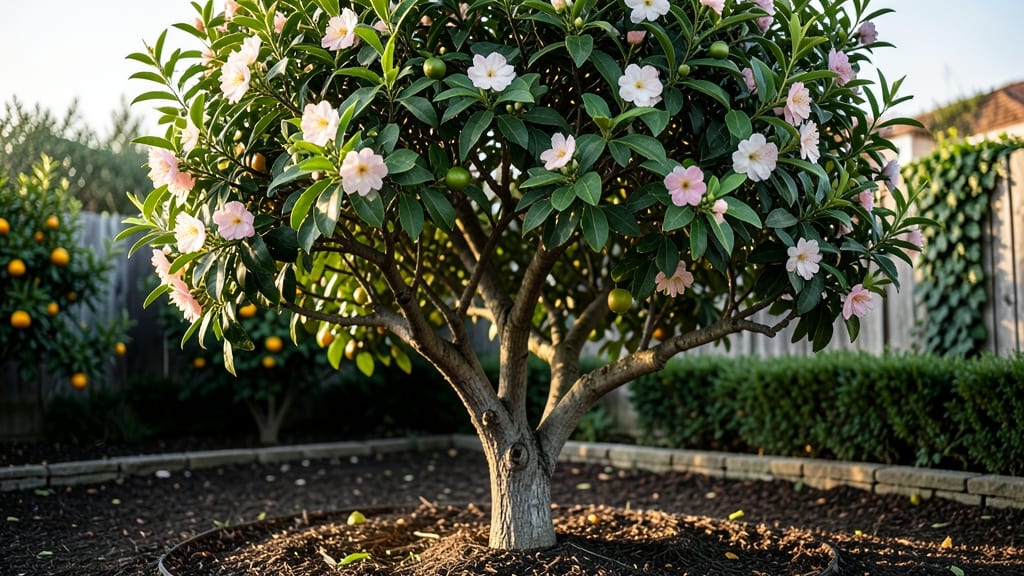
The orange flower tree's name is Citrus aurantium, commonly called bitter orange or sour orange, known for its intensely fragrant white blossoms and tart fruit, while sweet oranges (Citrus sinensis) focus on edible fruit production.
The orange flower tree you're thinking of—with those stunning white blossoms and citrusy scent—is indeed the Citrus aurantium, also known as bitter orange or sour orange. 🌸 This tree isn't grown for its fruit (which is extremely tart and inedible raw), but for its breathtaking springtime blooms that perfume the air.
The confusion often comes from its close relative, the sweet orange tree (Citrus sinensis), which produces our familiar breakfast fruit but lacks the same floral beauty.
While sweet oranges thrive in commercial groves, bitter orange trees excel as ornamental plants in Mediterranean climates or as container plants in colder regions.
What's fascinating is how these two trees represent different priorities in nature: one evolves to attract pollinators with showy flowers, while the other focuses on producing nutrient-rich fruit.
The bitter orange's flowers are so prized that they're even used in perfumes and marmalades, proving that sometimes the most beautiful parts aren't the ones we eat!
💡 In This Article
- Citrus Aurantium vs Sweet Orange: Key Botanical Differences
- How to Identify and Grow Bitter Orange Trees
Citrus aurantium vs sweet orange: key botanical differences
The orange flower tree's scientific name, Citrus aurantium, reveals its botanical distinction from sweet oranges (Citrus sinensis). The bitter orange's fruit contains 10-12% citric acid compared to sweet orange's 0.5-1.5%, making it inedible raw but perfect for preserves like marmalade.
This high acidity comes from the tree's evolutionary adaptation to attract pollinators through its highly aromatic white flowers, which release a jasmine-like fragrance containing linalool and nerolidol compounds.
Growth habits differ dramatically too. Bitter orange trees grow 20-30 feet tall with dense thorny branches, while sweet oranges reach 15-25 feet and have smoother bark.
The bitter orange's leaves are 1-2 inches wide with a distinctive glossy dark green appearance, while sweet orange leaves are slightly broader and lighter. 🌿 What's most striking is their hardiness: bitter oranges thrive in USDA zones 9-11 but can survive brief dips to 20°F, while sweet oranges need constant warmth above 30°F and rarely tolerate frost.
These differences explain why bitter orange dominates ornamental landscapes. Its abundant spring blooms (up to 1,000 flowers per tree) create a 30-foot-wide fragrance cloud that repels pests naturally.
The tree's thorny defense system also makes it ideal for security hedges in Mediterranean climates, where sweet oranges would struggle against wind and cold snaps.
Chemically, the bitter orange's fruit contains limonin (a bitter compound) and auraptene (a phototoxic compound that causes skin sensitivity), while sweet oranges lack these compounds entirely. This explains why bitter orange peels are used in perfumery but never in fresh fruit applications.
The tree's root system also differs—bitter orange develops deep taproots for drought resistance, while sweet orange has shallow lateral roots requiring consistent moisture.
What's fascinating is how these differences manifest in cultivation. Bitter orange trees produce fruit year-round in warm climates, while sweet oranges have one main harvest season.
The bitter orange's self-fertile nature means it can produce flowers and fruit without cross-pollination, while sweet oranges often need multiple varieties planted together for good fruit set. 🍊
For gardeners, this means bitter orange offers low-maintenance beauty with minimal pest issues (thanks to its natural fragrance), while sweet oranges demand more intensive care for optimal fruit production.
The bitter orange's adaptability to container growing makes it perfect for urban settings where sweet oranges would outgrow their space within years.