
Pruning
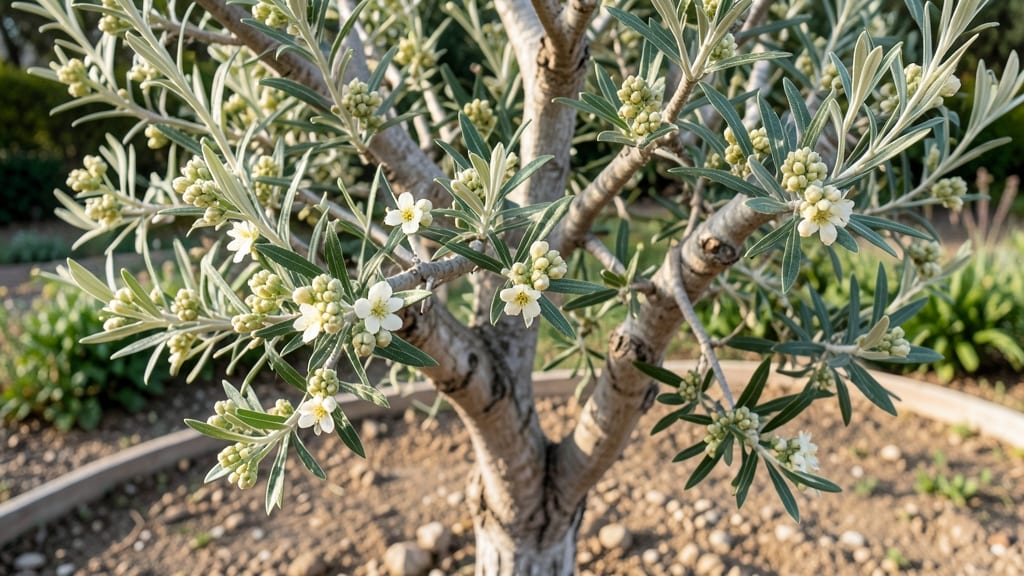
Those tiny olive tree flower buds hold the key to your harvest—nurture them right, and you’ll end up with bountiful fruit this fall. 🌿 I’ve spent years watching olive trees go from bare branches to heavy-laden boughs, and the difference comes down to timing, cuts, and patience.
The buds appear in late winter, but pruning too early or too late can stunt their growth entirely.
First, identify the buds—tiny, fuzzy clusters that form where last year’s growth meets the stem. These need sunlight and air circulation to thrive, so prune in late winter or early spring before new growth starts.
Thin out crowded branches by cutting just above a bud, never leaving stubs. The goal? Let light reach the center of the tree where buds often hide.
With the right cuts, you’ll see buds swell into flowers by spring, then transform into olives by summer. A well-pruned tree produces 30-50% more fruit than one left untrimmed.
The secret isn’t aggressive pruning—it’s strategic cuts that balance shape and bud exposure. Too much pruning stresses the tree; too little means missed harvest potential.
Watch for pests like scale or spider mites, which can sap energy from developing buds. A strong tree with good airflow resists them naturally. If buds fail to form, check for overwatering or nutrient deficiencies—olives prefer dry conditions and well-draining soil.
Patience pays off: a single season of careful pruning sets the stage for years of heavy harvests.
📚 In This Guide
- What you need
- Instructions
- Tips and common mistakes
- Wrapping up and next steps
What you need
- ● Pruning shears – Bypass pruners (sharp, 6-8" blades) for clean cuts on small branches. Anvil pruners (for thicker branches) if needed.
- ● Loppers – 8-12" reach, for branches up to 2" in diameter.
- ● Pruning saw – For stubborn, thick branches (360° blade for precision).
- ● Gloves – Heavy-duty, cut-resistant (olive branches have thorns!).
- ● Disinfectant (70% isopropyl alcohol or bleach solution) – Clean tools between cuts to prevent disease.
- ○ Pruning sealant (optional but recommended) – For large cuts (e.g., tree wound pruning paste) to prevent rot.
- ● Ladder or step stool – Reach high branches safely (extendable 10-12 ft for tall trees).
- ● Buckets or bags – For collecting pruned branches (5-gallon capacity, biodegradable if composting).
- ● Sharpie or masking tape – Mark branches to prune (if planning ahead).
- ● Safety glasses & long sleeves – Protect from debris and thorns!
- ● Pole pruner – For extra-high branches (12-16 ft reach).
- ● Tree climbing spikes (if climbing) – Only for experienced users!
- ● Hose or spray bottle – Rinse tools post-pruning to remove sap.
- ● Pruning guide or ruler – Measure cuts accurately (1/4" above a bud for best regrowth).
- ● Fertilizer (balanced 10-10-10 or olive-specific) – Apply post-pruning to boost flower bud growth.
How to prune olive trees for maximum flower buds
Here's the method I use to boost olive production—timing and technique matter more than you'd think.
⏰ Step 1: Prune at the Right Time of Year
Olives flower best after a late winter pruning—aim for February through early March in most climates. This gives buds enough time to harden before spring growth begins. If you live in a warm-winter zone, wait until buds swell but haven't broken yet. You'll know it's too late when you see tiny green flower clusters already forming.
Never prune in fall or early winter. The tree needs time to heal wounds before cold sets in, and late cuts encourage new growth that won't survive frost. I mark my calendar with the last frost date and prune 6-8 weeks before—this ensures buds have time to set before summer heat arrives.
✂️ Step 2: Remove Dead or Crossing Branches First
Start by cutting out dead wood—it's easy to spot as gray, brittle branches that snap when bent. Next, remove any branches that cross or rub against others. These create wounds that invite disease and block airflow, which olives hate. Use clean, sharp pruners to make 45-degree cuts just above an outward-facing bud.
Don't worry about size here—just clear the clutter. A healthy olive tree has an open vase shape, so prioritize branches that grow inward or downward. These are the ones that crowd the center and reduce airflow, which stresses the tree and cuts flower production.
☀️ Step 3: Thin Out Overly Dense Growth
Now focus on thinning rather than shearing. Look for clusters of branches growing too close together—these compete for sunlight and nutrients. Select 1-2 strong, healthy branches from each cluster and cut the rest back to their origin. You'll see immediate improvement in light penetration to the inner canopy.
Leave at least 6-8 inches between remaining branches. This spacing ensures buds get enough sunlight to develop properly. If you're unsure which branches to keep, choose the ones with the most smooth, green bark—these are the most vigorous and likely to produce flowers.
🌿 Step 4: Shape for Airflow and Light Exposure
Olives need good airflow to prevent fungal issues that can kill flower buds. Step back and visualize the tree as a modified vase shape—open at the bottom, gradually tapering upward. Cut back any branches that grow straight up or block light from reaching the center. These are often the ones that look "bushy" from a distance.
Reduce the length of branches by one-third at most. Over-pruning stresses the tree and can reduce next year's crop. Focus cuts on the outer third of the tree—this opens up the center where most flower buds form. You'll notice buds forming more evenly across the canopy after this step.
💧 Step 5: Post-Pruning Care for Bud Development
Water deeply right after pruning to help the tree recover. Olives are drought-tolerant but need moisture to heal wounds and set buds. Apply 1-2 inches of water weekly for 4-6 weeks post-pruning, then taper to normal maintenance. Avoid overhead watering—keep the soil evenly moist but not soggy.
Apply a balanced fertilizer (10-10-10) in early spring to support new growth. I use about ½ pound per inch of trunk diameter, spread evenly under the canopy. This gives the tree the nutrients it needs to develop strong flower buds. Watch for new growth in 4-6 weeks—this is your signal that the pruning worked.
Tips & tricks for pruning olive trees
These simple strategies will help you maximize flower buds and avoid common pruning mistakes that can reduce your olive harvest.
The Timing Factor: In Step 1, check for bud swelling by gently pressing a finger against the bark—if it feels firm but not hardened, that's your window. I've seen trees in warm climates bloom too early when pruned too late, so don't wait until you see flower clusters forming. The February-March target gives buds time to harden before spring growth begins, which is when they'll need energy for flowering.
Branch Selection Tip: When thinning in Step 3, look for branches with multiple buds along their length rather than just at the tips. These will produce more flowers. I learned this the hard way after pruning too aggressively and ending up with fewer buds than expected. Keep those branches that show signs of vigor—smooth green bark and small leaf buds are good indicators.
Pruning Tool Insight: Always use clean, sharp pruners to make clean cuts in Step 2. Dull tools crush the bark, creating larger wounds that take longer to heal and invite disease. I keep a small bottle of rubbing alcohol handy to wipe down my pruners between cuts—this prevents spreading any potential fungal spores from one branch to another.
Post-Pruning Watering Strategy: After completing all pruning steps, water deeply right away to help the tree recover. In Step 5, the 1-2 inches of water should penetrate at least 6 inches into the soil. I use a soil probe to check moisture levels—if it comes out dry, I water again. This initial hydration helps the tree heal its wounds faster and sets the stage for strong bud development.
Pro Tips for Olive Tree Flower Buds
- These simple strategies will help you maximize flower buds and avoid common pruning mistakes that can reduce your olive harvest.
- The Timing Factor: In Step 1, check for bud swelling by gently pressing a finger against the bark—if it feels firm but not hardened, that's your window.
- Branch Selection Tip: When thinning in Step 3, look for branches with multiple buds along their length rather than just at the tips.
Frequently asked questions
Got questions about olive tree flower buds and pruning? You’re not alone! Here are some of the most common queries—plus straightforward answers to help you maximize your harvest.
When do olive tree flower buds appear, and how do I know they’re ready?
Olive tree flower buds typically emerge in late spring to early summer (May–June in most U.S. growing zones). Look for small, greenish-white clusters at the branch ends—they’ll resemble tiny flowers before developing into fruit. Prune after flowering (late summer) to avoid cutting off potential buds for next year’s harvest.
How often should I prune olive trees to encourage heavy flowering?
Prune once a year, ideally in late winter or early spring (before buds swell) or after harvest (fall/winter). Light annual pruning (removing 10–20% of growth) promotes airflow and sunlight, which boosts flower bud production. Avoid heavy cuts—olive trees are sensitive to over-pruning!
My olive tree isn’t flowering—what could be wrong?
Several factors may inhibit flowering: overwatering (root rot), nutrient deficiencies (lack of zinc or boron), young age (trees <5 years old often focus on growth), or extreme temperatures. Check soil pH (6.0–8.0 is ideal) and fertilize with a balanced formula in early spring. Patience helps—some varieties flower sporadically!
Can I prune olive tree flower buds if they’re already formed?
Yes, but prune strategically! Remove only damaged or crossing buds to improve fruit quality. Avoid heavy cuts to existing buds—this can reduce next year’s yield. Thin buds lightly (1–2 buds per cluster) to encourage larger olives. Use sharp pruners and sterilize tools to prevent disease.
Are there alternative pruning methods for organic olive growers?
Try hedge pruning (shaping trees into walls for easy harvests) or selective thinning (removing inner branches to reduce pests). Use organic copper sprays for disease prevention and mulch with straw to retain moisture. Avoid synthetic chemicals—olive trees thrive with minimal intervention!
Wrapping up and next steps
Pruning olive tree flower buds is your secret weapon for a bountiful harvest—when done right, it boosts fruit production, improves tree health, and even extends your tree’s lifespan. 🌿 Whether you’re a seasoned gardener or just starting, the key is timing, sharp tools, and patience.
With the right techniques, you’ll transform your olive tree into a thriving, high-yielding powerhouse.
Ready to take action? Start small—pick a few branches to practice your cuts, then gradually expand. Before you know it, you’ll be savoring homegrown olives like a pro! 🍃