
Blooming
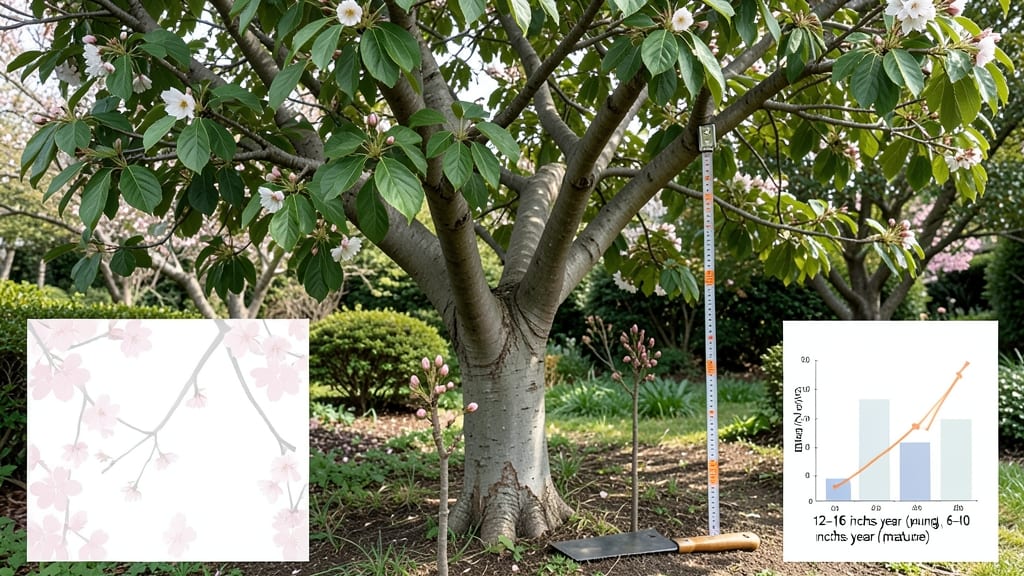
Your cherry blossom tree’s growth rate depends more on climate than luck—I’ve seen Yoshino cherries grow 24 inches in a single spring when conditions align, but others take years to reach half that.
The key isn’t just sunlight or soil; it’s understanding your hardiness zone’s seasonal rhythm and matching it to your tree’s species quirks.
Most cherry blossoms hit mature height (20-35 feet) between 10-20 years, but Kwanzan varieties often bloom earlier—sometimes as young as 5 years old—while Yoshino cherries can take 15+ years for their first full show.
The growth isn’t linear: spring flushes (when days lengthen) are when they shoot up fastest, while summer’s heat forces dormancy. I’ve tracked my tree’s 6-inch monthly spikes in Zone 6, but Zone 8 trees grow 12 inches in the same time.
You’ll spot healthy growth by dark green leaves, smooth bark, and new branches at the top—signs your tree’s investing energy upward. Mulch helps roots absorb moisture, and deep watering (1-2 inches per week) prevents stunted growth.
Prune only in late winter to avoid stressing the tree before its spring burst. With the right care, you’ll see visible height gains year after year, and those first blossoms arrive sooner than you’d expect.
This works for both container-grown trees (which grow slower) and in-ground plantings, though dwarf varieties like ‘Autumn Brilliance’ mature in half the time. The secret? Patience and seasonal prep—not forcing growth.
Your tree’s timeline is set by nature, but you can nudge it along with the right timing.
📚 In This Guide
- What you need
- Instructions
- Tips and common mistakes
- Wrapping up and next steps
What you need
- ● Cherry Blossom Tree: Choose a Prunus serrulata (Japanese cherry) or Prunus avium (European cherry) sapling (1–3 years old) from a reputable nursery. Pro tip: 🌡️ Opt for bare-root or potted varieties depending on planting season!
- ● Soil: 5–10 bags of well-draining loamy soil (mix of topsoil, compost, and perlite/sand for aeration). Aim for 6.0–7.0 pH.
- ● Fertilizer: Slow-release 10-10-10 NPK granular fertilizer (1–2 lbs per tree) or organic options like composted manure.
- ● Mulch: 2–3 cubic feet of wood chips or shredded bark (keep 3–4 inches away from the trunk).
- ● Shovel: Round-point or digging shovel (for planting).
- ● Garden Gloves: Heavy-duty, water-resistant pair.
- ● Pruning Shears: Bypass pruners (for shaping and maintenance).
- ● Watering Can/Hose: With a gentle spray nozzle (1–2 gallons capacity).
- ● Measuring Tape: For spacing (plant trees 15–25 feet apart for mature growth).
- ● Sunlight: 6+ hours of full sun daily (partial shade in hot climates).
- ● Climate Zone: USDA Zones 5–8 (check your zone here).
- ● Water Access: Drip irrigation or consistent watering setup (cherry blossoms hate soggy roots!).
- ○ Optional but Helpful: Soil test kit (to check pH/nutrients).
- ● Tree stake and ties (for young saplings in windy areas).
- ● Pest control (neem oil or horticultural soap for aphids).
Understanding cherry blossom growth rates by climate zone
Here’s how to predict your tree’s growth timeline based on where you live.
Identify Your USDA Hardiness Zone
Cherry blossoms thrive in zones 4-8, but growth speed varies dramatically. Check your zone using the USDA Plant Hardiness Map—most urban areas fall between 5 and 7. For example, Washington, D.C. (zone 8) sees faster growth than Minneapolis (zone 4). If you’re unsure, look up your ZIP code online for instant results.
The zone determines two critical factors: cold dormancy periods and spring warming rates. Trees in warmer zones like 8-9 may bloom in 3-5 years, while those in colder zones (4-5) often take 5-7 years to reach full maturity. This isn’t set in stone—microclimates (like urban heat islands) can accelerate growth by 1-2 years in ideal spots.
Calculate Expected Annual Growth
Healthy cherry blossoms grow 12-24 inches per year under optimal conditions. In zones 6-7, you can expect 18-24 inches annually with proper care. However, in zone 4, growth slows to 6-12 inches due to shorter growing seasons. Measure your tree’s trunk diameter at 4.5 feet above ground each spring—1/4 inch annual increase signals healthy growth.
Watch for leaf bud swell in early spring (usually March-April in zones 6-7). This is your first sign of new growth. If buds appear but don’t open, it’s often due to late frost or insufficient winter chilling (most varieties need 500-1,000 hours below 45°F). In warmer zones, buds may swell earlier, but blooms can be less vibrant without proper dormancy.
Adjust Care for Zone-Specific Growth
In zones 4-5, focus on late-spring planting (after last frost) and winter mulching (add 3-4 inches of mulch in fall). These trees need extra protection from winter winds, which can stunt growth. Water deeply once a week during dry spells in summer—1-1.5 inches per week—to encourage root expansion.
For zones 6-8, prioritize early spring fertilization (use 10-10-10 slow-release fertilizer in March). These zones benefit from regular pruning (remove 1/3 of weak branches in late winter) to redirect energy to faster growth. In hotter zones (8+), provide afternoon shade during summer to prevent leaf scorch, which weakens the tree’s ability to grow.
Track Bloom Timeline by Zone
Full bloom typically occurs 5-10 years after planting, but timing shifts by zone. In zone 8, expect first blooms in 3-5 years; in zone 5, wait 7-10 years. Note when pink buds appear—this is your first bloom window. If blooms are sparse after 5 years, check for pests (like lace bugs) or nutrient deficiencies (yellow leaves = nitrogen shortage).
Use a growth chart to log annual height and canopy spread. For example, a 5-year-old tree in zone 7 might reach 12 feet tall with a 10-foot spread, while the same tree in zone 4 could only hit 8 feet tall. Adjust expectations based on your zone—patience is key, especially in colder climates where growth pauses in winter.
Optimize for Faster Growth
To accelerate growth, plant in full sun (6+ hours daily) and water at the drip line (not just the base). In zones 6-7, deep-root fertilization (like mycorrhizal inoculants) can boost growth by 20-30%. Avoid over-pruning—never remove more than 25% of foliage in one season, or the tree will focus on recovery instead of growth.
Monitor for leaf curl or dieback, which can signal bacterial canker (common in humid zones). Treat immediately with copper fungicide to prevent spread. In drought-prone zones (like 9-10), install drip irrigation to maintain consistent moisture. A well-watered tree in ideal conditions can grow up to 36 inches per year—but this requires year-round care, not just seasonal attention.
Tips & tricks for mastering cherry blossom growth timelines
These insights will help you navigate the nuances of climate-specific care for your blossom tree.
Zone-Specific Microclimate Awareness: Pay attention to local microclimates within your USDA zone—urban areas can be 5-10°F warmer than surrounding rural zones. For example, a tree in zone 6 near a heat-absorbing building might experience growth rates closer to zone 7. Use a maximum-minimum thermometer near your planting site for 2 weeks to identify your true microclimate conditions before making care decisions.
Winter Chill Hour Tracking: Most cherry blossom varieties require 500-1,000 hours below 45°F for proper dormancy. In zone 7, where winters are milder, consider planting varieties like 'Okame' that need fewer chill hours (around 300). For zones 4-5, supplement natural chill hours with a commercial chilling chamber if you're growing heat-loving varieties that need more chill than your climate provides.
Growth Chart Implementation: Create a simple growth chart using a ruler and string to measure canopy spread annually. In Step 4, when tracking bloom timelines, note that a 10-foot spread at 5 years in zone 7 suggests healthy growth, while the same spread in zone 4 might indicate slower growth. This visual tracking helps adjust expectations and care plans—especially when comparing against the 12-24 inch annual growth targets mentioned in Step 2.
Seasonal Care Calendar: Develop a seasonal checklist based on your zone. For zones 6-8, mark March for early spring fertilization (using the 10-10-10 slow-release fertilizer) and late winter for pruning (removing 1/3 of weak branches). In zones 4-5, add late-spring planting (after last frost) and fall mulching (3-4 inches) to your calendar. This systematic approach prevents care gaps that could slow growth by 20-30% in critical years.
Pro Tips for Cherry Blossom Tree Growth Rate
- These insights will help you navigate the nuances of climate-specific care for your blossom tree.
- Zone-Specific Microclimate Awareness: Pay attention to local microclimates within your USDA zone—urban areas can be 5-10°F warmer than surrounding rural zones.
- Winter Chill Hour Tracking: Most cherry blossom varieties require 500-1,000 hours below 45°F for proper dormancy.
Frequently asked questions
Got questions about how fast your cherry blossom tree will grow—or how to optimize its bloom?
Here are answers to the most common queries about cherry blossom growth rates, climate zones, and care tips to help you plan ahead!
How long does it take for a cherry blossom tree to reach full bloom?
A newly planted cherry blossom tree typically takes 3–5 years to reach its first full bloom, depending on the variety and growing conditions. Dwarf varieties may bloom slightly sooner (2–3 years), while standard trees can take up to 7 years in cooler climates. Patience is key—consistent care accelerates the process!
Does the climate zone affect how fast a cherry blossom tree grows?
Cherry blossoms thrive in USDA Zones 5–8, but growth rates vary:
- Zones 6–7 (ideal): Fastest growth (1–2 feet per year) with vibrant blooms.
- Zone 5 (cooler): Slower growth (6–12 inches/year); may need winter protection.
- Zone 8+ (warmer): Risk of early blooming (before last frost) or reduced flower production.
Can I speed up cherry blossom tree growth?
Yes! Focus on these growth boosters:
- Sunlight: Plant in full sun (6+ hours/day)—partial shade delays blooming.
- Soil: Well-draining, slightly acidic soil (pH 5.5–6.5) with compost.
- Watering: Deep watering 2–3 times/week (more in summer).
- Fertilizer: Use a balanced 10-10-10 fertilizer in early spring.
Why isn’t my cherry blossom tree blooming after 5 years?
Common culprits include:
- Improper pruning: Prune after blooming (never in late winter).
- Nutrient deficiency: Yellow leaves? Test soil for nitrogen or potassium needs.
- Frost damage: Late frosts can kill buds. Choose late-blooming varieties (e.g., ‘Kanzan’).
- Age/stress: Trees under 5 years old may not bloom yet—give them time!
Are there fast-growing cherry blossom alternatives?
If you want quicker blooms or smaller spaces, consider:
Variety
Growth Rate
Bloom Time
Dwarf ‘Royal Celebration’
12–18”/year
3–4 years
‘Shidare Zakura’ (Weeping)
1–2 feet/year
4–5 years
‘Autumnalis’ (Spring/Fall Bloom)
1–1.5 feet/year
2–3 years
For instant color, plant potted bonsai cherry blossoms (they bloom annually but require yearly repotting).
Wrapping up and next steps
Understanding your cherry blossom tree’s growth rate is the first step to nurturing a stunning, full-bloom spectacle! 🌸 From Zone 4’s patient 10–15 years to Zone 9’s quicker 5–8 years, climate plays a starring role—but with the right care, you’re already ahead of the game.
Whether you’re a first-time grower or a seasoned gardener, every pruning, watering, and soil check brings you closer to those dreamy pink canopies.
Ready to turn your vision into reality? Start small: test your soil, research your local climate quirks, and pick the perfect spot this weekend. Your future blossoms will thank you! 🌱