
Watering
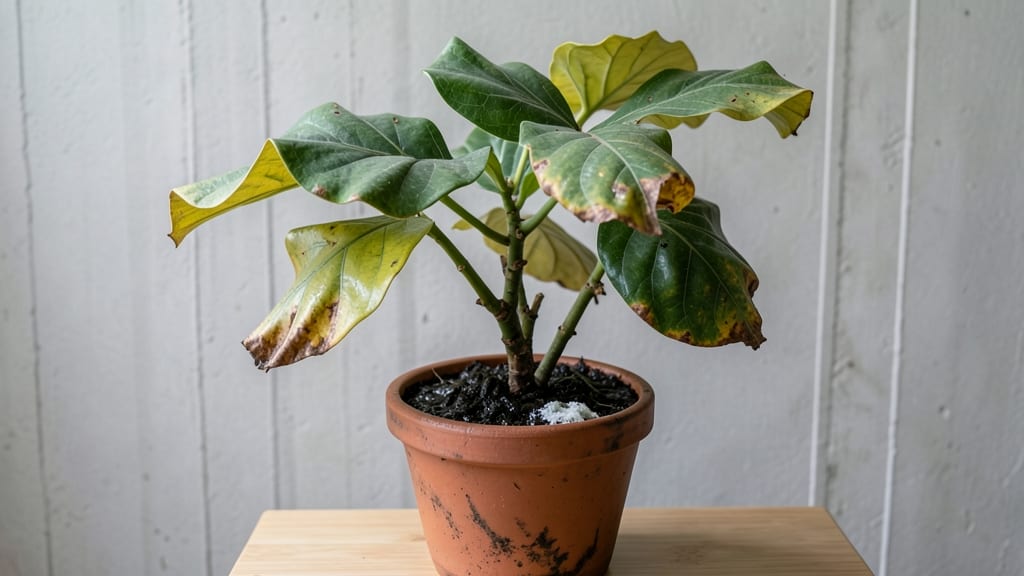
An overwatered ficus tree looks like it’s drowning—not just in water, but in your well-meaning watering schedule. 🌱 The first sign? Soft, mushy stems that collapse when you gently press them, plus leaves that yellow and drop like autumn leaves in July.
I’ve seen this too many times, including that sad ficus in my office that went from lush to limp in just two weeks.
Root rot is the real villain here, turning the soil into a soggy mess where roots can’t breathe. Check the soil—if it smells foul or pulls away from the pot edges, that’s your answer.
The leaves often develop brown edges or crispy spots, even while the soil stays sopping wet. It’s a classic case of too much love, and your ficus is begging for a break.
Here’s the good news: recovery is possible if you catch it early. Let the soil dry out completely between waterings, and consider repotting into fresh, well-draining mix.
Within weeks, you’ll see new growth pushing through, and those stems will firm up again. Trust me, your ficus will thank you—no more sad, droopy drama.
Pro tip: Stick your finger in the soil before watering. If it’s still damp an inch down, wait another day. Ficus trees are tough—they’ll bounce back faster than you think, as long as you give them a chance to breathe.
That’s the lesson we learned the hard way, and it’s one we’re happy to share.
Why it happens
Overwatering your ficus tree—whether it’s a Ficus elastica (rubber plant) or a Ficus benjamina (weeping fig)—can turn your lush green friend into a sad, soggy mess. 🌧️😬 But why does this happen? The issue usually boils down to a mix of human habits, environmental factors, and the tree’s natural responses.
Let’s break down the real culprits behind overwatering, so you can fix the problem at its root.
💧 Overzealous Watering Schedules
One of the most common mistakes is sticking to a rigid watering schedule without checking the plant’s actual needs. Ficus trees are tropical but still prefer their soil to dry out slightly between waterings. If you water every week—rain or shine—you’re likely drowning the roots instead of hydrating them.
Here’s the science: Ficus trees have aeration-dependent roots that need oxygen to respire. When soil stays soggy, oxygen levels drop, and roots suffocate. This triggers anaerobic conditions, where harmful bacteria and fungi thrive, leading to root rot.
Pro Tip: 🌡️ Stick your finger 2-3 inches deep into the soil. If it’s damp, wait. If it’s bone-dry, water deeply—but only until excess drains from the bottom.
🏡 Poor Drainage Systems
Even if you’re watering correctly, lack of drainage can turn your ficus into a swamp. Many pots come with drainage holes, but if they’re clogged with soil, roots, or debris, water pools at the bottom instead of escaping.
The problem worsens if you’re using self-watering pots or containers without proper aeration. Ficus roots hate sitting in water—their cells are designed to absorb moisture efficiently, but prolonged saturation causes osmotic stress, where roots lose their ability to take up nutrients.
Action Step: ⏰ Before watering, tilt the pot to check for drainage. If water doesn’t flow freely, repot your ficus into a container with multiple drainage holes and use a well-draining potting mix (like a blend of peat, perlite, and orchid bark).
🌦️ Ignoring Humidity And Environment
Ficus trees thrive in moderate humidity, but their water needs shift based on their environment. If your home is damp (think: bathrooms, kitchens, or basements), the soil stays moist longer, increasing the risk of overwatering.
Conversely, dry air (like in heated homes) can trick you into overcompensating with extra water.
The science: High humidity slows evaporation, so the topsoil stays damp for days. Meanwhile, low humidity speeds up moisture loss, making the roots thirsty faster. Without adjusting your watering, you’re either drowning or dehydrating the plant.
Fix It: 💡 Use a hygrometer to monitor humidity (ideal range: 40-60%). In dry conditions, water more frequently but lightly; in humid spots, let the soil dry out completely between waterings.
🌱 Wrong Soil Or Pot Size
Not all potting mixes are created equal. Heavy, clay-based soils compact easily, trapping water and cutting off oxygen to the roots. Similarly, a pot that’s too large holds excess moisture because the root ball can’t absorb it all before the soil dries out.
Ficus trees prefer light, airy mixes that mimic their natural tropical habitat. Compacted soil leads to waterlogging, while oversized pots create a false sense of security—you might think the plant needs more water because the extra soil stays wet longer.
Solution: 🔥 Repot your ficus into a container that’s only 1-2 inches larger in diameter than its current root ball. Use a mix with 30-40% perlite or orchid bark to improve drainage and aeration.
🚨 Misreading The Plant’s Signals
Yellowing leaves or drooping stems often signal underwatering, but with ficus trees, these symptoms can also mean overwatering. The confusion arises because both conditions stress the plant, leading to similar visual cues—but the root health tells the real story.
When overwatered, ficus trees develop soft, mushy stems and yellow leaves with brown edges (a sign of nutrient leaching). The roots may turn black or mushy when pulled gently from the soil. Meanwhile, underwatered ficus trees have crispy, dry edges and leathery leaves that pull away from the stem.
Quick Test: 👨🍳 Gently tug on a few leaves. If they fall off easily, it’s likely overwatering. If they resist, the plant may be thirsty.
Reviving Your Ficus: Step-by-Step Fixes
Overwatering can feel like a death sentence for your ficus, but don’t panic—many trees bounce back with the right care! Below, we’ll tackle the most common signs of overwatering (soft stems, yellowing leaves, and root rot) and map out practical, actionable fixes tailored to each issue.
Plus, we’ll share pro tips to keep your ficus thriving long-term.
Cause: Overwatering weakens the stems by depriving roots of oxygen, leading to collapse or a "limp" appearance.
Fix It:
- 🔥 Stop Watering Immediately
- Let the top 2–3 inches of soil dry out completely before watering again. Stick your finger in the soil—if it’s damp past your first knuckle, wait.
- 🍳 Prune Damaged Growth
- Use sterilized scissors to trim any stems that feel soft or mushy at the base. Healthy stems should snap when bent (not bend like overcooked pasta).
- 👨🍳 Boost Airflow & Light
- Move your ficus to a bright, indirect spot (east or north-facing windows are ideal). Avoid dark corners where humidity lingers.
- Increase airflow with a small fan on low (3–4 hours/day) to prevent fungal growth.
- 🥘 Repot If Roots Are Rotten
- Gently remove the tree from its pot and rinse the roots with water to check for:
- Healthy roots: Firm, white or tan.
- Rotten roots: Black, mushy, or smell like decay.
- If >30% of roots are rotten, trim them with clean pruners, dust the cuts with cinnamon powder (natural antifungal), and repot in fresh, well-draining soil (see mix below).
- Gently remove the tree from its pot and rinse the roots with water to check for:
> 💡 Pro Tip: Mix 1 part perlite or orchid bark into your potting soil to improve drainage. Avoid compacted soils like garden dirt!
Cause: Overwatering causes nutrient leaching (roots can’t absorb food) and chlorosis (yellowing between veins). Often paired with brown leaf tips or leaf drop.
Fix It:
- 🌡️ Adjust Your Watering Schedule
- Water only when the top 1–2 inches of soil are bone-dry. Ficus trees prefer slight drought stress over soggy conditions.
- Test the soil: Use a moisture meter or the "squeeze test"—if soil clumps when pressed, it’s too wet.
- 📊 Flush the Soil
- Place the pot in a sink and run water through the soil until it drains clean. This removes excess salts and chemicals from overwatering.
- 🍎 Feed It Right
- Wait 4–6 weeks after repotting before fertilizing. Then, use a balanced, water-soluble fertilizer (like 10-10-10) diluted to half-strength every 6–8 weeks in spring/summer.
- Avoid fertilizing in fall/winter—ficus trees rest during cooler months.
- ✨ Revitalize with Humidity Control
- Yellow leaves can also signal low humidity. Place the pot on a pebble tray with water (not touching the pot) or use a small humidifier nearby.
Cause: Chronic overwatering leads to anaerobic conditions, where roots suffocate and fungi/bacteria take over. Signs include black, foul-smelling roots and sudden wilting despite wet soil.
Fix It:
- 🔪 Emergency Root Trim
- Remove the tree from its pot and rinse roots under lukewarm water.
- Cut away all black, mushy roots with sterilized pruners (soak blades in rubbing alcohol for 30 seconds between cuts).
- Look for firm, cream-colored roots—these are your lifeline!
- 🌡️ Fungal Treatment
- Dust trimmed roots with cinnamon or copper fungicide to prevent reinfection.
- Soak the roots in a 1:10 hydrogen peroxide solution (3% peroxide + water) for 10 minutes, then rinse.
- 🏺 Repot in Fresh Soil
- Use a clean pot with drainage holes (terracotta is ideal—it breathes!).
- Soil mix recipe:
- 40% high-quality potting mix (like Miracle-Gro)
- 30% perlite or pumice (for aeration)
- 20% orchid bark or coco coir (for chunkiness)
- 10% worm castings (for gentle nutrients)
- Do not fertilize for 8 weeks—the roots need time to recover.
- 🌱 Post-Rescue Care
- Water lightly only when the soil is completely dry (push your finger all the way to the bottom of the pot).
- Mist leaves daily to reduce stress (but avoid soggy soil).
- Place in bright, indirect light (no direct sun yet—roots are fragile).
- 💡 Use the "Finger Test": Stick your finger 2 inches deep into the soil.
If it’s damp, wait. - 🌡️ Seasonal Adjustments: - Spring/Summer: Water every 7–10 days (more if in direct sun). - Fall/Winter: Water every 10–14 days (growth slows). - 🏺 Upgrade Your Pot: Terracotta pots wick away moisture better than plastic.
If using plastic, drill extra drainage holes. - 🍃 Mulch Matters: Add a thin layer of bark mulch on top of soil to slow evaporation (but don’t pile it against the stem). - 🚫 Avoid Ice Cube Watering: Never use cold water—always room-temperature water to avoid shocking roots.
By following these steps, your ficus should perk up within 4–6 weeks (or sooner if you catch it early!). Remember: Underwatering is easier to fix than overwatering—when in doubt, let the soil dry out. Your ficus will thank you with glossy leaves and sturdy growth! 🌿✨
Frequently asked questions
Why do my ficus leaves turn yellow first when overwatered?
Yellowing leaves are your ficus’s first distress signal because overwatering causes nutrient leaching—roots can’t absorb food when drowning in water. The yellowing starts between leaf veins (chlorosis) as the plant struggles to process nutrients. Check the soil: if it’s wet past 2 inches deep, you’re overdoing it.
Can I save a ficus with completely black, mushy roots?
Yes, but you’ll need to act fast! Trim all black/mushy roots with sterilized scissors, then repot in fresh, well-draining soil (mix potting soil with perlite). Dust the cuts with cinnamon powder to prevent fungal spread. Water lightly only when soil is bone-dry—this gives roots a fighting chance.
How often should I water my ficus after fixing overwatering?
Start with a 10-14 day wait after repotting. Then, water only when the top 2 inches of soil are completely dry. In winter, stretch this to every 3-4 weeks—ficus trees slow growth in cooler months. Use the finger test: if soil feels damp past your first knuckle, wait another day.
Why does my ficus still look sad even after stopping water?
Root damage takes time to heal—don’t expect instant recovery. Focus on airflow and light: move it to bright, indirect sunlight and use a small fan (3-4 hours/day) to prevent fungal growth. New growth may take 4-8 weeks to appear. If leaves keep falling, check for pests like spider mites (they thrive on stressed plants).
Is terracotta better than plastic pots for ficus trees?
Terracotta wicks away moisture naturally, reducing overwatering risks. Plastic traps humidity, creating a soggy environment. If you must use plastic, drill extra drainage holes and avoid saucers that trap water. Pro tip: Elevate pots on feet to improve airflow at the base.