
Watering
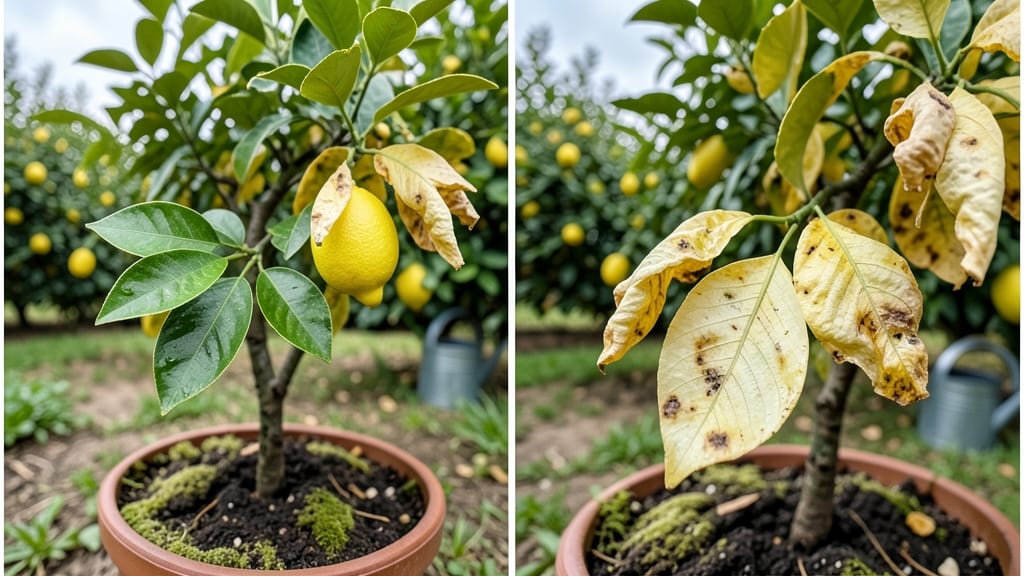
An overwatered citrus tree looks like it's drowning—yellowing leaves, mushy roots, and a sad, wilting shape that makes you wonder what went wrong. 💚 I’ve seen this exact scene play out in my own backyard after a heavy rain, and the telltale signs are impossible to miss once you know what to look for.
The leaves start drooping first, then turn yellow or brown at the edges, while the soil stays soggy and smells funky, like wet socks or mold.
Root rot is the real villain here, caused by too much moisture suffocating the roots. You’ll spot it when you gently dig around the base—roots turn brown or black, feel mushy, and sometimes even ooze a slimy substance.
The tree might also develop a moldy layer on the soil surface, and the bark at the trunk can look discolored or sunken in. Honestly, it’s heartbreaking to see a once-vibrant citrus tree reduced to this state, but the good news? Fixing it is simpler than you’d think.
Start by adjusting your watering routine—citrus trees prefer their soil to dry out slightly between drinks, especially in containers. Improve drainage by adding perlite or sand to the soil mix, and consider repotting if the current container lacks drainage holes.
Prune any severely damaged roots or branches, then let the tree recover in a shadier spot while you monitor its progress. Within a few weeks, you’ll see new green growth pushing through, and that soggy despair will turn into a thriving, productive tree again.
Prevention is all about balance: check soil moisture with your finger before watering, and always ensure excess water has somewhere to go. My garden journal now includes watering schedules tailored to each citrus variety, and I’ve never seen another case of root rot since.
The key is patience—citrus trees are resilient, and with the right care, they’ll bounce back stronger than ever.
Root Causes of Overwatering Citrus Trees
Understanding why your citrus tree is drowning—literally—starts with the soil, watering habits, and environmental factors conspiring against it. Overwatering isn’t just about too much water; it’s about disrupting the delicate balance citrus trees need to thrive. Let’s break down the science behind the soggy soil.
Citrus trees hate sitting in wet feet—literally. If your soil doesn’t drain well, excess water pools around the roots instead of draining away. This creates anaerobic conditions (low oxygen), where roots suffocate and can’t absorb nutrients or water efficiently.
- Clay-heavy or compacted soil acts like a sponge that never releases water.
- Lack of organic matter (like compost or mulch) reduces porosity, trapping moisture.
- Improper planting depth (burying the trunk or grafting point) can block drainage pathways.
💡 Pro Tip: Test your soil’s drainage by digging a 6-inch hole, filling it with water, and timing how long it takes to drain. If it’s slower than 4 hours, amend with perlite, sand, or coconut coir.
Citrus trees need consistent moisture, not constant flooding.
Overwatering often stems from: - Automatic irrigation systems set on timers without soil checks. - Watering by schedule (e.g., every day) instead of by need (check soil moisture first). - Using the wrong watering methods, like overhead sprinklers that waste water and encourage fungal growth.
🌡️ Key Stat: Citrus roots need oxygen—waterlogged soil can drop oxygen levels to <10%, compared to ideal levels of 15-20%.
Even with perfect watering habits, your citrus tree can still drown if the environment works against it:
- High humidity slows evaporation, keeping soil wet longer.
- Shade without airflow (e.g., dense foliage or walls) traps moisture near the roots.
- Heavy rainfall combined with poor drainage turns the root zone into a swamp.
✨ Actionable Fix: If your tree is in a shaded spot, prune nearby plants or move it to a sunnier location with 6+ hours of direct light—citrus trees thrive in dry, well-drained conditions.
Once roots rot or become waterlogged, they struggle to recover.
Common past errors include: - Frequent deep watering without letting the topsoil dry slightly between sessions. - Using saucers or containers without drainage holes (a classic beginner mistake). - Ignoring early signs (like yellowing leaves) and assuming it’s just "citrus stress."
🔥 Warning: Rotten roots release toxic byproducts like ethanol, which can kill the tree if not addressed.
Mulch is a citrus tree’s best friend—when used correctly.
Too much or the wrong type can smother roots and retain moisture like a blanket: - Thick layers (4+ inches) block oxygen and trap heat, accelerating rot. - Organic mulch (like grass clippings) decomposes too quickly, creating a soggy mat. - Placing mulch against the trunk (instead of 2-3 inches away) suffocates the base.
🎯 Best Practice: Use 2-3 inches of inorganic mulch (like gravel or wood chips) and keep it away from the trunk.
Over-fertilizing—especially with high-nitrogen or synthetic fertilizers—can make roots more susceptible to waterlogging. Why?
- Excess salts from fertilizers attract more water, worsening saturation.
- Improper pH (below 6.0) disrupts nutrient uptake, weakening roots’ resilience.
📊 Test Your Soil: A simple pH test kit ($10) can reveal if your soil is too acidic or alkaline—citrus thrives in 6.0-7.0 pH.
Overwatering isn’t just about how much you water—it’s about how the tree’s environment responds. Poor drainage, inconsistent habits, and ignored environmental clues all play a role. The good news?
Most of these issues are preventable with the right adjustments. Next up: how to diagnose if your citrus tree is truly drowning (and what to do about it).
Revive Your Citrus Tree Now
Overwatering can feel like a silent killer for citrus trees—those vibrant leaves turn sad and roots rot before you even notice. But don’t panic! With the right steps, you can nurse your tree back to health and keep it thriving.
Below, we’ll map out cause-specific fixes, so you can act fast and prevent future disasters.
If your citrus tree’s leaves are turning yellow, wilting, or falling off, it’s likely drowning in excess moisture. Here’s how to rescue it:
🔥 Step 1: Stop Watering Immediately
- Cut off all water for at least 3–5 days to let the soil dry out. This is critical—citrus trees hate soggy roots!
- Check the soil: Stick your finger 2–3 inches deep.
If it’s damp, wait longer. If it’s bone-dry, you’ve been underwatering (not overwatering).
🍳 Step 2: Improve Soil Drainage
Overwatering thrives in compacted or clay-heavy soil.
Break the cycle with these tweaks: - Add organic matter: Mix in compost, coconut coir, or perlite to loosen the soil and improve aeration. - Raise the pot (if potted): Place gravel or pot feet under the container to encourage drainage. - Repot if needed: If the roots are circling or the soil is waterlogged, repot into a well-draining mix (like a 50/50 blend of citrus soil and perlite).
👨🍳 Step 3: Prune Damaged Foliage
- Trim yellow or mushy leaves with sterilized pruners to redirect energy to healthy growth.
- Avoid pruning too much—focus on dead or diseased leaves only.
🥘 Step 4: Adjust Your Watering Routine
Once the soil is dry, water deeply but infrequently:
- Water only when the top 2 inches of soil are dry (stick your finger in to test).
- Water at the base, not the leaves, to prevent fungal issues.
- Use the "soak-and-dry" method: Water until it runs out the drainage holes, then wait until the soil is 60% dry before watering again.
If you’ve pulled up the tree and spotted black, mushy roots or a foul smell, root rot is setting in. Act fast!
🔪 Step 1: Prune the Rotten Roots
- Gently remove the tree from the pot or soil.
- Trim away all black, mushy roots with sterilized shears—healthy roots are firm and white.
- Soak the roots in a fungicide solution (like hydrogen peroxide 3% or copper fungicide) for 10–15 minutes to kill pathogens.
⏰ Step 2: Repot in Fresh, Sterile Soil
- Clean the pot with bleach or hot water to kill lingering fungi.
- Use a fast-draining mix: Combine citrus soil, perlite, and sand (or orchid bark for extra aeration).
- Plant the tree at the same depth as before—burying too deep can suffocate the roots.
🌡️ Step 3: Monitor and Adjust Care
- Water lightly for the first week, then return to the soak-and-dry method.
- Avoid fertilizing for 4–6 weeks—stressed roots need time to recover.
- Keep the tree in bright, indirect light (no harsh sun yet) to reduce stress.
Prevention is your best friend! Here’s how to avoid overwatering citrus trees long-term:
✅ 🌡️ Use a moisture meter – No more guessing! These handy tools tell you exactly when to water. ✅ 🎯 Choose the right pot – Terracotta or fabric pots dry out faster than plastic.
If repotting, pick one with drainage holes. ✅ ✨ Mulch correctly – Apply 2–3 inches of mulch (like pine bark) around the base, but keep it 2 inches away from the trunk to prevent rot. ✅ 💪 Water in the morning – This gives leaves time to dry, reducing fungal risks. ✅ 🔥 Avoid saucers under pots – If you must use one, empty it after 30 minutes to prevent waterlogging.
Need a cheat sheet? Here’s what to do based on symptoms:
| Symptom | Cause | Fix It Fast |
|---|---|---|
| Yellow leaves, wilting | Overwatering | Stop watering, improve drainage, prune damaged leaves |
| Black/mushy roots | Root rot | Trim rotten roots, repot in fresh soil, reduce water |
| Leaf drop, stunted growth | Chronic overwatering | Adjust watering schedule, aerate soil, fertilize lightly after recovery |
| Fungal growth on leaves | Excess moisture + poor airflow | Prune affected leaves, use fungicide, improve airflow with pruning |
With these steps, your citrus tree should bounce back in 4–8 weeks—just give it time and patience! 🍊✨ Once it’s recovered, stick to the soak-and-dry method and proper drainage, and you’ll enjoy healthy, fruiting trees for years.
Frequently asked questions
How can I tell if my citrus tree is overwatered vs. underwatered?
Check the soil first—stick your finger 2-3 inches deep. If it's damp, you're likely overwatering. Overwatered trees have yellowing leaves (especially lower ones), wilting despite wet soil, and may develop mold or a foul smell. Underwatered trees have crispy, brown leaf edges and dry soil that pulls away from the pot.
Can I save my citrus tree if the roots are already mushy and black?
Yes, but act fast! Trim all black/mushy roots with sterilized shears, then repot in fresh, fast-draining soil. Soak the roots in 3% hydrogen peroxide for 10 minutes before replanting. Keep the tree in bright, indirect light and water lightly for the first week—no fertilizer yet!
Why does my citrus tree need drainage holes if I water it sparingly?
Even with careful watering, excess moisture builds up in containers without drainage. Without holes, water pools at the bottom, suffocating roots. Citrus trees hate soggy feet! If repotting isn't an option, place your pot on a bed of gravel to create airflow underneath.
How often should I water my citrus tree in summer vs. winter?
Summer: Water when the top 1-2 inches of soil are dry (usually every 5-7 days). Winter: Reduce to every 2-3 weeks—citrus trees need less water in cooler months. Always check soil moisture first!
Will my citrus tree recover if I've been overwatering it for months?
With patience and proper care, yes! Start by stopping all watering for 5 days to dry the soil. Prune yellow leaves and repot if needed. Recovery takes 4-8 weeks, but avoid fertilizing until new growth appears. Most trees bounce back if root rot hasn't spread completely.