
Plants
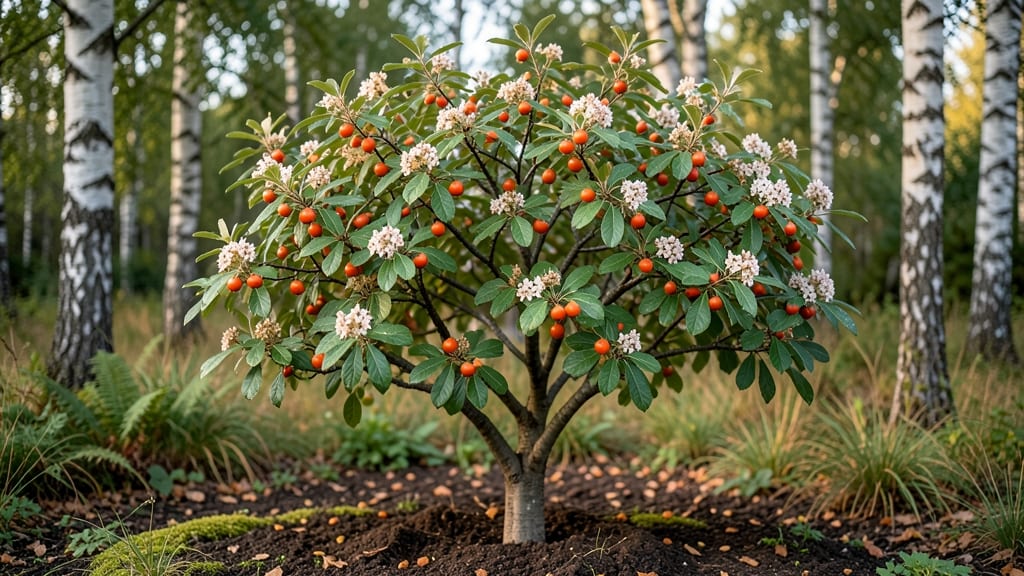
A rowan tree looks like a small to medium-sized deciduous tree with oval, serrated leaves, smooth gray bark that develops shallow grooves, and clusters of bright red berries resembling small apples. Its upright growth habit and white spring flowers make it visually distinct in landscapes.
A rowan tree's most striking features are its lance-shaped leaves that grow in alternating patterns along the branches, often turning vibrant yellow or orange in autumn. 🌿 The bark starts silvery-gray when young but develops distinctive horizontal lenticels as it matures, giving it a textured appearance.
Unlike its close relative the mountain ash, rowan berries stay bright red throughout winter, providing food for birds even in cold months. This tree typically reaches 15-25 feet tall with a rounded crown, making it perfect for small gardens or as a focal point in woodland settings.
What sets rowan trees apart visually is their year-round interest. The white blossoms in spring create a stunning contrast against the emerging foliage, while the persistent berries add winter color when most trees have lost their leaves.
Many people confuse rowan with hawthorn due to similar berry clusters, but rowan's leaves are more elongated and its berries lack the waxy coating found on hawthorn fruits.
💡 In This Article
- Identifying Rowan Tree Leaves, Bark, and Growth Patterns
- Rowan Tree Fruit and Seasonal Visual Characteristics
Identifying rowan tree leaves, bark, and growth patterns
The rowan tree's leaves are its first clue to identification, featuring 5-7 inches long oval shapes with finely serrated edges that resemble a saw blade. These leaves grow alternately along the branches, creating a distinctive pattern when viewed from above.
The upper surface is a rich, deep green with a slightly waxy texture, while the underside appears lighter with visible veins. In autumn, the foliage transforms into brilliant yellow or orange hues, often persisting longer than many other deciduous trees.
Young rowan bark starts smooth and silvery-gray but develops shallow, horizontal grooves and small raised pores called lenticels as the tree matures.
These lenticels allow gas exchange and give the bark a textured appearance that's easily distinguishable from the smoother bark of mountain ash. 🌳 Unlike hawthorn trees, which have more irregular bark patterns, rowan maintains a relatively clean trunk appearance.
The bark's color deepens to a darker gray as the tree ages, creating a beautiful contrast with the vibrant foliage.
Rowan trees exhibit a compact, upright growth habit that typically reaches 15-25 feet tall with a spread of 10-15 feet. This makes them ideal for small gardens or as specimen plants in larger landscapes. The branches grow in a slightly zigzag pattern, creating an interesting architectural form.
In spring, before the leaves emerge, the tree produces white, five-petaled flowers in clusters that create a stunning visual display against the emerging foliage.
One of the most distinctive features is how rowan trees maintain their visual interest throughout all seasons. The white blossoms appear in late spring, followed by the development of berries that persist through winter.
This year-round interest makes rowan trees particularly valuable in landscape design. The tree's growth rate is moderate, typically adding 12-24 inches per year under ideal conditions, which allows for gradual integration into garden designs.
When comparing rowan to similar trees, the key differences lie in the leaf shape and berry characteristics. Mountain ash has more rounded leaves and berries that turn orange-red in autumn, while hawthorn berries are smaller and have a waxy coating.
Rowan's berries remain bright red throughout winter, providing a vital food source for birds during harsh months. This persistent fruit display is one of the tree's most recognizable features.
In terms of seasonal changes, rowan trees exhibit a three-phase visual progression: spring blossoms, summer foliage, and autumn/winter berries. This continuous display of interest makes them particularly appealing for gardeners seeking year-round visual appeal.
The tree's adaptability to various soil types and its resistance to many common pests further enhance its value as a landscape specimen.