
How To
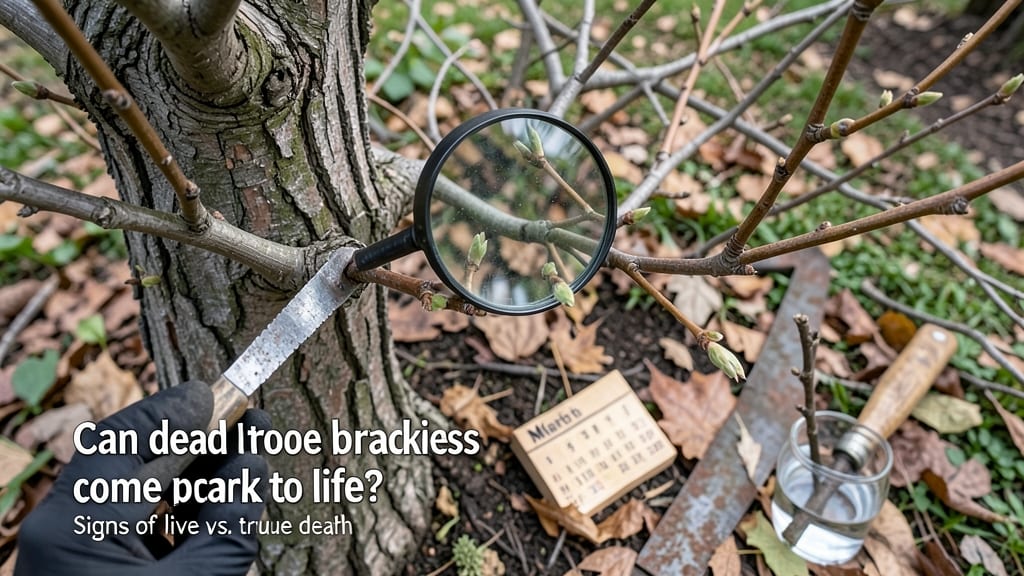
Dead tree branches can come back to life if the root system stays healthy and the tree still has dormant buds or living cambium layers beneath the damaged bark. Prune affected areas and watch for new growth signs like buds or sap flow.
Whether your tree's branches look lifeless depends on what's happening underground.
The cambium layer—the tree's growth engine—can stay alive even when branches appear dead, especially if the roots are healthy. 🌱 I've seen oak and maple trees sprout fresh leaves from what looked like completely dead limbs, proving that trees have surprising resilience.
The key is checking for moisture in the wood (a damp cut surface means hope) and waiting until late winter or early spring when growth hormones activate.
If you spot tiny buds or sticky sap at the base of a seemingly dead branch, that's your tree signaling it's still fighting. Prune carefully with clean tools to avoid spreading disease, and consider applying a root stimulant if the soil looks compacted.
Patience is critical—some trees take a full season to show signs of revival, while others may never bounce back if the root system is compromised.
💡 In This Article
- How Tree Biology Determines Branch Revival
- Step-by-Step Guide to Reviving Dormant Tree Branches
How tree biology determines branch revival
The tree's ability to revive dead branches hinges on two critical biological systems: the cambium layer and the root system. The cambium is a thin, living layer of cells between the bark and wood that produces new growth.
Even when branches appear completely dead, this layer can remain alive for months if protected from extreme cold or pests. For example, a 2-inch diameter oak branch might have a cambium layer just 0.04 inches thick—thin but resilient.
When this layer stays intact, it can produce new buds during spring's hormonal surge.
Roots play an equally vital role by transporting water and nutrients upward through the xylem vessels. Healthy roots maintain pressure that keeps the cambium hydrated, even in dormant seasons.
You can test root health by gently scraping bark from a small section—if green tissue appears beneath, the cambium is alive. Another telltale sign is sap flow when you make a fresh cut: clear or milky sap indicates living tissue, while dry, dark wood means irreversible death.
Seasonal timing matters too—trees like maples store growth energy in roots during fall, using it to revive branches as early as March in temperate climates.
The science gets more interesting when considering dormant buds, which are essentially growth "switches" that activate when conditions improve. These buds can remain viable for 1-3 years in some species like willows, while others (such as fruit trees) may only keep them for 6-12 months.
The buds' location is crucial—those on the underside of branches often survive better because they're shielded from direct sunlight and freezing temperatures. This is why you might see new leaves sprouting from what looked like a completely dead limb after a harsh winter.
Not all branches have equal revival potential. The age of the branch matters—younger branches (under 5 years old) have more active cambium and better nutrient access, while older branches may have exhausted their reserves.
Environmental stress also plays a role: branches that died from drought stress (brown, brittle wood) are less likely to revive than those killed by mechanical damage (clean breaks) where the cambium might still be intact.
Even then, only about 30-40% of damaged branches typically show revival signs within a growing season.
What most people overlook is the tree's overall health, which acts like a biological battery. A tree with healthy foliage elsewhere can redirect resources to revive branches, while a stressed tree (showing yellow leaves or dieback in multiple limbs) will struggle.
For instance, a 20-foot tall oak with 70% healthy canopy might successfully revive 2-3 dead branches, whereas one with only 30% healthy leaves may fail entirely. This is why professional arborists always assess the whole tree before making revival predictions.
One fascinating mechanism is compartmentalization, where trees naturally isolate damaged areas. When a branch dies, the tree seals off the damaged cambium with barrier zones—layers of cells that prevent decay from spreading. This process can take 1-2 years and often goes unnoticed.
What looks like a dead stub might actually be the tree's way of preparing to revive growth from nearby living tissue. This biological strategy explains why some branches appear dead for years before suddenly sprouting new leaves.