
Flowers
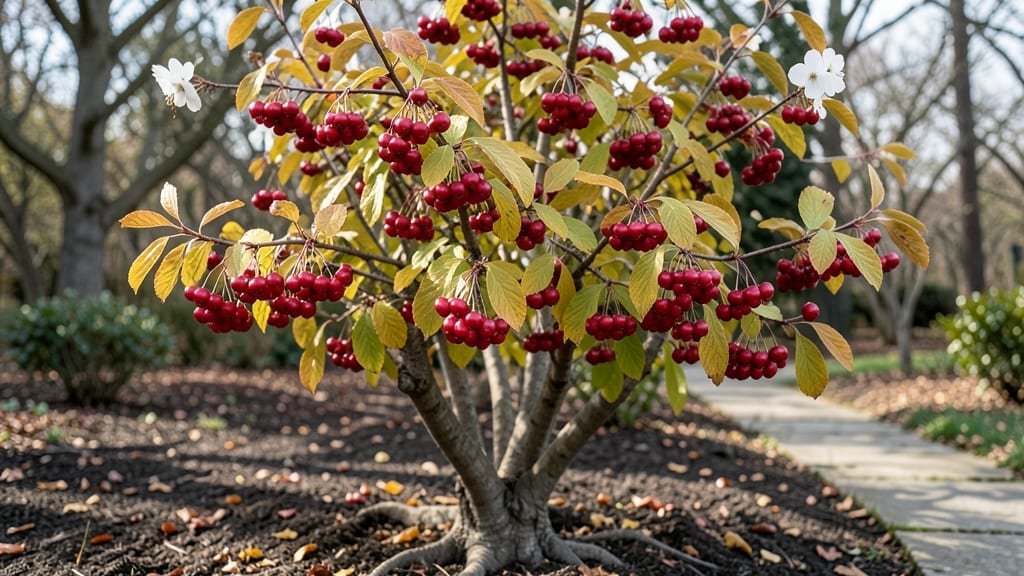
Trees with red berries and white flowers turn your yard into a living painting—spring blooms followed by winter berries that feed birds. 🌸 I’ve planted three varieties in my backyard, and the contrast between snowy branches and bright berries in January is nothing short of magical.
These trees aren’t just pretty; they’re the backbone of wildlife-friendly gardens, offering food and shelter year-round.
Hawthorns, crabapples, and dogwoods lead the pack, but each has its own personality. Hawthorns thrive in tough conditions, crabapples burst with color in fall, and dogwoods deliver elegant blooms with minimal fuss.
Pair them with evergreens like arborvitae for year-round structure, or let them shine solo as a dramatic focal point. The berries alone bring birds in droves—blue jays, cardinals, and robins will thank you.
Caring for them is simpler than you’d think: well-drained soil, occasional pruning to shape, and patience. Most handle drought once established, and their disease resistance beats many ornamental trees. By late summer, you’ll see those berries forming—a free, edible (for wildlife) feast that lasts until winter’s end.
The white flowers return next spring, and the cycle begins again.
Perfect for mixed borders, privacy screens, or even small urban yards. These trees prove beauty and function can coexist—without sacrificing your weekends to high-maintenance plants. Let’s pick the right one for your space!
Nature’s Colorful Timing Tricks
If you’ve ever marveled at a tree adorned with red berries and white flowers—especially when it seems to flaunt them year-round—you’re witnessing a masterclass in plant biology. These vibrant displays aren’t random; they’re the result of carefully evolved strategies to attract pollinators, deter herbivores, and even outsmart competitors.
Let’s break down the science behind this botanical spectacle.
White flowers are nature’s stealth mode for attracting pollinators, especially in low-light conditions or during dawn/dusk when many insects are most active. Here’s why:
- Ultraviolet Patterns: While white flowers appear bright to us, they often contain invisible UV nectar guides that bees and butterflies see as glowing highways. These patterns lead pollinators straight to the flower’s reproductive parts. Research shows UV reflectance can increase pollinator visits by up to 40%.
- High-Contrast Camouflage: White petals stand out against green foliage, making flowers easier to spot from a distance. This is especially critical for trees in dense forests where visibility is limited.
- Fragrance Synergy: Many white-flowered trees (like Cornus florida or dogwood) release sweet, musky scents at night, luring moths and bats. These nocturnal pollinators often have poor color vision but rely on scent trails.
Actionable Tip: If your tree isn’t attracting pollinators, check for pesticide use nearby—even "organic" sprays can disrupt these delicate relationships. 🐝
Red berries aren’t just pretty—they’re biological billboards designed to ensure seed dispersal. Here’s how they pull it off:
- Wavelength Warfare: Red fruits reflect longer wavelengths of light (600–700 nm), which are most visible to birds and mammals from a distance. Humans see red as "stop," but animals perceive it as "snack time." 🦉
- The Ripeness Signal: Many berries start green or purple and turn red as they ripen. This color shift is a chemical cue: anthocyanins (the pigments that make them red) also act as antioxidants, protecting seeds until they’re ready to be eaten and spread.
- Seed Survival Tactics: Birds and mammals don’t digest the seeds—they pass them intact in their droppings, often miles from the parent plant. Some berries, like those from Pyracantha, even have sticky coatings to cling to feathers or fur.
Pro Tip: If your tree’s berries aren’t turning red, it could signal nutrient deficiency (especially phosphorus) or poor sunlight exposure. Test your soil and consider a balanced fertilizer in early spring. 🌱
Most trees play by the rules: flowers in spring, berries in fall. But some defy the calendar by producing both simultaneously. Here’s why:
| Mechanism | Example Trees | Purpose |
|---|---|---|
| Extended Blooming | Cornus mas (Cornelian cherry), Viburnum opulus (Guelder rose) | Flowers appear late winter/early spring when pollinators are scarce, then berries form from the same blooms. This double-duty strategy maximizes reproductive success. |
| Persistent Fruit | Ilex verticillata (Winterberry), Pyracantha (Firethorn) | Berries hang through winter because they’re bird food in lean months. The tree trades short-term energy for long-term seed dispersal. |
| Masting Events | Oak trees, Hawthorn | Some trees synchronize massive flowering/berry production every 2–10 years, overwhelming predators and ensuring survival. In off-years, they produce almost nothing. |
Key Insight: Trees with both flowers and berries often thrive in mild climates where seasons blur. If you’re in a hot summer/cold winter zone, your tree might be struggling to sync these cycles—leading to sparse blooms or berries.
Not all red-and-white trees are created equal. Their color displays can shift based on environmental stress. Here’s how:
- Sunlight Starvation: Trees in shade may produce fewer flowers (since they need energy for photosynthesis) but brighter red berries to compensate. This is because low light triggers anthocyanin production as a protective mechanism.
- Nutrient Deficits:
- Nitrogen Poor Soil: Leads to smaller flowers but more vibrant red berries (the tree prioritizes seed dispersal over showy blooms).
- Phosphorus Shortage: Can delay flowering entirely, as phosphorus is critical for energy transfer in blooms.
- Water Stress: Drought can cause premature berry drop or blotchy, pale flowers. Some trees, like Crataegus (hawthorn), abort flowers if roots can’t access enough water.
Quick Fix: If your tree looks stressed, improve its growing conditions:
- 💡 Mulch with compost to retain moisture and nutrients.
- 🌡️ Water deeply 1–2 times per week during dry spells.
- 🎯 Prune in late winter to open the canopy for better light penetration.
Quick fixes for berried beauty
If your tree with red berries and white flowers isn’t thriving—or worse, is struggling—don’t panic! With the right care, you can revive its vibrancy and keep it lush year-round.
Below, we’ve mapped out practical solutions for common issues, from wilted blooms to pest invasions, along with prevention tips to keep your privacy screen stunning. 🌿✨
Cause: Overwatering, underwatering, or nutrient deficiency. Fix:
- 💧 Check the soil moisture – Stick your finger 2 inches deep; if dry, water deeply. If soggy, let it dry out before watering again.
- 🌱 Adjust your watering routine – Most berry-bearing trees (like Callicarpa or Viburnum) prefer consistent moisture but well-draining soil. Water at the base, not overhead, to prevent fungal issues.
- 🍃 Feed with balanced fertilizer – Use a 10-10-10 or 20-20-20 formula in early spring and mid-summer. For organic lovers, compost or fish emulsion works wonders.
- 🔄 Prune dead branches – Trim any yellowing or browned limbs to redirect energy to healthy growth.
💡 Prevention Tip: Mulch around the base (2–3 inches of wood chips or bark) to retain moisture and regulate soil temperature. Just keep mulch away from the trunk to avoid rot.
Cause: Aphids, spider mites, powdery mildew, or fungal infections. Fix:
- 🐜 Spot-treat pests early –
- Aphids/Spider Mites: Spray with a soapy water solution (1 tbsp mild dish soap + 1 quart water) or introduce ladybugs (natural predators).
- Japanese Beetles: Handpick them into soapy water or use neem oil spray (follow label instructions).
- 🍄 Fight fungal issues –
- Powdery Mildew: Apply baking soda spray (1 tsp baking soda + 1 quart water + a drop of dish soap) weekly until gone.
- Root Rot: Improve drainage by amending soil with perlite or sand and avoid overwatering.
- 🌡️ Boost tree resilience – Ensure proper spacing for airflow (most berry trees need 6–10 feet apart) and prune for sunlight exposure.
💡 Prevention Tip: Monitor regularly—check undersides of leaves and new growth weekly. Catching pests early saves your tree from major damage!
Cause: Poor pollination, over-pruning, or lack of sunlight. Fix:
- ☀️ Optimize sunlight – Most berry trees need full sun (6+ hours/day). If shaded, consider transplanting to a sunnier spot.
- 🐝 Support pollinators – Plant companion flowers like lavender or marigolds nearby to attract bees and butterflies.
- ✂️ Prune strategically –
- When: Late winter/early spring before new growth.
- How: Remove dead, crossing, or overcrowded branches to improve airflow and light penetration.
- 🍓 Feed for fruiting – Switch to a high-phosphorus fertilizer (like 5-10-10) in late spring to boost flower and berry production.
💡 Prevention Tip: Avoid heavy pruning after mid-summer—this can reduce next year’s blooms and berries.
Cause: Frost, windburn, or freezing roots. Fix:
- 🌡️ Mulch heavily – Add 4–6 inches of mulch around the base (but not touching the trunk) to insulate roots.
- 🌿 Shield young trees – Wrap the trunk with burlap or tree guard to prevent sunscald and wind damage.
- 💧 Water before freeze – Give a deep watering in late fall to help roots withstand cold.
- 🌳 Choose cold-hardy varieties – If your area gets harsh winters, opt for Viburnum dentatum or Callicarpa bodinieri, which tolerate down to Zone 4–5.
💡 Prevention Tip: Plant in spring (not fall) in colder climates—young trees need time to establish roots before winter.
With these targeted fixes, your red-berried, white-flowering tree will bounce back stronger than ever. Remember: Consistency is key—whether it’s watering, fertilizing, or pest control, small efforts add up to big results. Happy gardening! 🌟
Frequently asked questions
Which trees have the most striking red berries and white flowers?
Top picks include Eastern Red Cedar (with its bright red berries and tiny white flowers), Winterberry Holly (female plants produce clusters of red berries), and Cornelian Cherry (early spring blooms followed by vibrant red-orange berries). For dramatic contrast, Hawthorn varieties like 'Cockspur' offer dense white flowers and persistent red berries.
Are these berries safe for humans or just wildlife?
Most red berries from these trees are not edible for humans—they're toxic or cause stomach upset. However, Cornelian Cherry berries are edible (tart but delicious) and Winterberry Holly berries are safe when fully ripe. Always verify before consuming! Birds and small mammals rely on them for winter sustenance.
How do I attract more pollinators to my flowering tree?
Plant companion flowers like lavender, marigolds, or coneflowers nearby to create a pollinator buffet. Avoid pesticides (even \"organic\" ones can harm bees), and ensure your tree gets full sun (6+ hours/day). Water deeply in dry spells—hydrated plants produce more nectar. Early spring is prime time for pollinator support!
Can I grow these trees in containers or small spaces?
Dwarf varieties like 'Golden Glow' Ninebark or 'Rotundifolia' Hawthorn thrive in containers (15+ gallon pots). Use well-draining potting mix and prune regularly to maintain shape. For small yards, consider multi-stemmed varieties—they create bushy, compact forms perfect for borders or urban gardens.
Why aren't my berries turning red this year?
Check for nutrient deficiencies (especially phosphorus) or poor sunlight exposure. Test your soil and amend with compost or a balanced fertilizer. If berries form but stay green, it could signal stress from drought or overwatering. Prune to improve airflow, and avoid heavy pruning after mid-summer—this can reduce next year's fruit production.