
Pests and Diseases
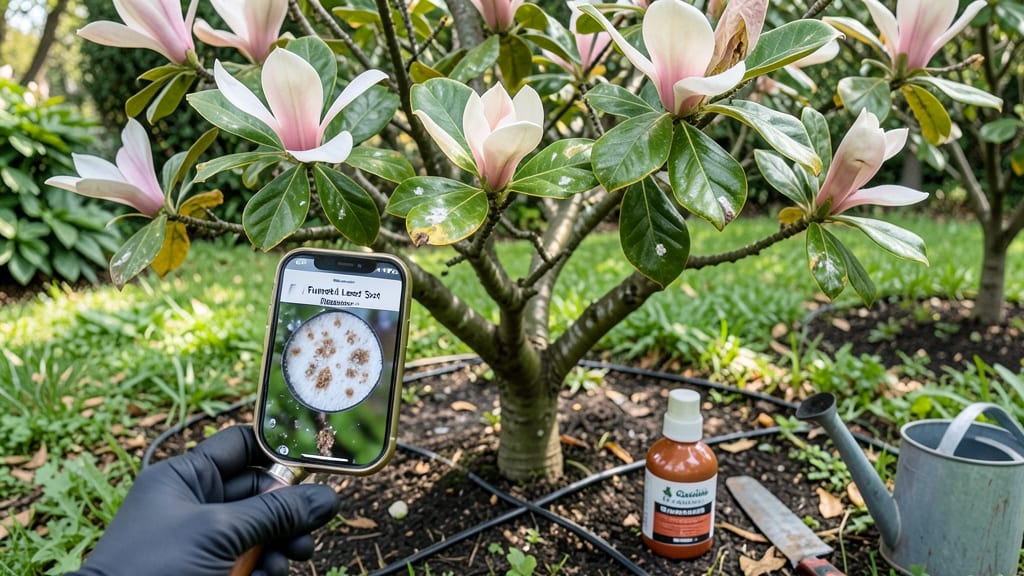
Those white spots on the magnolia tree leaves usually mean powdery mildew—though it could be something else. 🌿 I’ve seen this ruin blooms and yellow leaves faster than you’d think, but there’s a clear way to diagnose and fix it before it spreads.
The key is catching it early when those white, fuzzy patches first appear, usually on the undersides of leaves.
Most cases start with powdery mildew, a fungal infection that thrives in humid, shaded conditions. But stress from overwatering, poor drainage, or pests like spider mites can also trigger white spots.
The good news? Magnolias are tough—they bounce back when you address the root cause, whether it’s improving airflow or adjusting watering habits.
You’ll tackle this in three steps: prune infected leaves, apply a fungicide (neem oil works great), and adjust care to prevent recurrence. Within weeks, you’ll see fresh, spot-free growth—proof the tree’s fighting back. The secret is consistency, not just one treatment.
If the spots keep coming back or the tree looks generally weak, it’s time to call an arborist. Some magnolias carry latent issues that need professional eyes. But in most cases, you’ve got this—your tree’s resilience is stronger than the fungus.
Root Causes of Leaf Discoloration
White spots on magnolia leaves aren’t just an aesthetic issue—they’re often a cry for help from your tree. Understanding the why behind these spots is the first step toward restoring your magnolia’s health. Let’s break down the most common culprits, explained in clear scientific terms with actionable insights.
Fungal diseases are the #1 cause of white spots on magnolia leaves, thriving in warm, humid conditions. Here’s how they strike:
- Powdery Mildew (Erysiphe spp.): The classic white, powdery coating is actually a fungal mycelium spreading across leaf surfaces. It blocks sunlight, stunting photosynthesis and weakening the tree. Magnolias are particularly susceptible because their broad leaves create ideal microclimates for fungal spores to land and germinate.
- Anthracnose (Gloeosporium spp.): While anthracnose often causes dark spots, some strains produce white, fuzzy patches as secondary infections. These spots may appear water-soaked at first, then turn necrotic (dead tissue) with a white fungal mat. Rain splashing spores from infected leaves or debris is the primary transmission method.
- Leaf Spot Fungi (Septoria, Cercospora spp.): These fungi create irregular white or grayish spots with dark borders. Under humid conditions, they produce conidia (spore clusters), which spread via wind or water. Over time, infected leaves yellow and drop prematurely, stressing the tree.
💡 Pro Tip: Fungal spores love wet leaves for 6+ hours. Watering in the early morning (so leaves dry by afternoon) and pruning for airflow can drastically reduce fungal pressure.
Not all white spots are fungal—some are pest-related, leaving behind a trail of damage that mimics disease symptoms.
- Magnolia Scale (Neolecanium cornuparvum): These sap-sucking insects excrete a sticky substance called honeydew, which attracts sooty mold—a black, fuzzy fungus that can look like white spots when mixed with dust or debris. Heavy infestations weaken the tree, making it more vulnerable to secondary infections.
- Spider Mites (Tetranychus spp.): While mites themselves are tiny and red, their webbing and feeding patterns create a stippled, white or yellowish appearance on leaves. Severe infestations cause leaves to curl and drop, mimicking fungal blight.
- Whiteflies (Bemisia spp.): These tiny, winged pests cluster on the undersides of leaves, excreting honeydew that fosters sooty mold. Their presence is often signaled by white, waxy secretions and a sticky residue on leaves.
🔥 Action Step: Inspect the leaf undersides with a magnifying glass. If you see tiny moving dots, webbing, or sticky residue, pests—not fungi—are likely the culprit.
Sometimes, white spots aren’t caused by pathogens or pests but by environmental factors pushing the tree beyond its limits.
- Excessive Moisture or Poor Drainage: Magnolias hate soggy roots. Overwatering or compacted soil leads to root rot, which stresses the tree and makes it susceptible to fungal infections. White spots may appear as a secondary symptom of overall decline.
- Nutrient Deficiencies (Magnesium or Zinc): A magnesium deficiency (often in acidic soils) causes interveinal chlorosis (yellowing between veins), which can look like white spots when severe. Zinc deficiency leads to small, white-tipped leaves and stunted growth.
- Sun Scorch or Heat Stress: In hot, dry climates, magnolia leaves may develop white or bleached patches from oxidative damage. This is common on young, tender leaves exposed to sudden heat waves.
✨ Prevention Tip: Test your soil’s pH (ideal: 5.0–6.5 for magnolias) and drainage. Amend with compost or sulfur if needed, and mulch heavily to retain moisture without waterlogging.
Sometimes, well-intentioned gardening practices cause white spots by disrupting the leaf’s natural defenses.
- Overuse of Fertilizers (Especially Nitrogen): A nitrogen burn causes white or yellowish leaf tips and edges, often accompanied by crispy, dead tissue. Magnolias prefer balanced fertilization (10-10-10 or 12-12-12)—avoid high-nitrogen lawn fertilizers.
- Herbicide or Pesticide Drift: Non-selective herbicides (like glyphosate) or systemic pesticides can cause bleaching or white spots if they contact leaves. Always follow label instructions and avoid spraying when bees or wind are active.
- Hard Water Spray Damage: If you’re using tap water with high calcium/magnesium, the mineral buildup can create white, crusty deposits on leaves, especially in dry climates. Rainwater or filtered water is ideal for sensitive trees.
🎯 Quick Fix: Flush the soil with water to leach excess salts, and wipe leaves gently with a damp cloth if mineral deposits are visible.
Fixing White Spots on Magnolia Leaves
Now that you’ve identified the cause of those pesky white spots on your magnolia tree’s leaves, it’s time to take action! Whether it’s fungal diseases like powdery mildew or anthracnose, or environmental stress, each issue requires a targeted approach.
Below, we’ll break down practical solutions for the most common culprits—plus prevention tips to keep your tree thriving.
Fungal infections like powdery mildew or leaf spot thrive in damp, shaded conditions. Here’s how to tackle them:
🔥 Remove Infected Leaves and Debris
- Prune affected foliage 🍂—Use clean, sharp pruners to cut off leaves with white spots. Dispose of them in the trash (not the compost) to prevent spores from spreading.
- Rake up fallen leaves 🧹—Fungal spores overwinter in leaf litter, so clear them from the base of the tree and surrounding area.
- Thin out dense branches 🌳—Improve airflow by pruning to let sunlight reach the inner canopy.
🍳 Apply Fungicidal Sprays (Organic or Chemical)
- Neem oil spray 🌿 (organic): Mix 1–2 tbsp neem oil with 1 tsp mild soap and 1 quart of water. Spray leaves evenly on both sides, focusing on undersides where spores hide.
Reapply every 7–10 days until new growth appears. - Baking soda solution 🧂 (organic): Combine 1 tbsp baking soda, 1 tsp oil (like vegetable or olive), and 1 gallon of water.
Spray on dry leaves in the early morning to avoid burning. - Copper-based fungicides 🛡️ (chemical): Products like copper hydroxide or chlorothalonil are effective for severe infections. Follow label instructions for safety and reapplication rates.
👨🍳 Adjust Watering Practices
- Water at the base 💦—Avoid overhead irrigation, which splashes spores onto leaves.
- Water early in the day ☀️—This allows foliage to dry quickly, reducing humidity.
- Improve drainage 🌧️—If your magnolia sits in soggy soil, amend with compost or sand to prevent root rot, which weakens the tree’s defenses.
Once your tree recovers, keep these pro tips in mind to avoid future outbreaks:
- 💡 Mulch properly: Apply 2–3 inches of mulch around the base (but not touching the trunk) to regulate soil moisture.
- 🌡️ Monitor humidity: Use a hygrometer to keep humidity below 70%—consider a small fan in shaded areas if needed.
- ✨ Space trees correctly: Plant magnolias 6–10 feet apart to ensure good airflow.
- 🎯 Early intervention: Catch white spots as soon as they appear—fungi spread fast!
If white spots stem from sunburn, nutrient deficiency, or pests, focus on restoring balance:
🌞 Shield from Harsh Sun or Wind
- Gradual acclimation 🌅—If your magnolia is newly planted, acclimate it slowly to full sun over 2–3 weeks.
- Use shade cloth 🏖️—For young trees, provide 30–50% shade during peak afternoon sun.
- Windbreaks 🌬️—Plant fast-growing shrubs (like boxwood or holly) on the windward side to protect delicate leaves.
💪 Fertilize for Resilience
- Test soil first 📊—Use a home soil test kit to check pH (ideal: 5.5–6.5 for magnolias) and nutrient levels.
- Balanced fertilizer 🌱—Apply a slow-release, acidic fertilizer (like 8-3-9 or 10-10-10) in early spring and fall.
- Mulch with compost 🍄—Top-dress with 2–3 inches of compost annually to replenish organic matter.
🐜 Pest Control for Secondary Damage
If pests (like spider mites or scale) are weakening your tree:
- Blast off mites 💦—Spray leaves with a strong stream of water to dislodge spider mites.
- Horticultural oil 🛢️—Apply dormant oil in late winter to smother scale insects and eggs.
- Beneficial insects 🐞—Release ladybugs or lacewings to prey on soft-bodied pests naturally.
| Season | Task | Frequency |
|---|---|---|
| Spring | Prune dead branches, fertilize | Once (early spring) |
| Summer | Monitor for new spots, water deep | Weekly (droughts) |
| Fall | Rake leaves, apply mulch | Once (after leaf drop) |
| Winter | Inspect for pests, prune lightly | As needed |
By combining targeted treatments with preventive care, your magnolia should bounce back with lush, spot-free foliage in no time. 🌿✨ Stay vigilant, and your tree will reward you with stunning blooms year after year!
Frequently asked questions
Are those white spots on my magnolia leaves always powdery mildew?
Not necessarily! While powdery mildew is the most common cause, white spots can also signal anthracnose fungus, pest damage (like spider mites or scale insects), or even nutrient deficiencies. Check the leaf undersides—if you see fuzzy growth, it's likely fungal. If you spot tiny moving dots or webbing, pests are probably the culprit.
How often should I spray neem oil on my magnolia?
Apply neem oil every 7-10 days until the white spots disappear, then switch to a monthly preventive spray during humid seasons. Always mix it with a drop of mild soap to help it stick to leaves. Stop spraying once new growth appears without spots for two weeks.
Will pruning infected leaves help if the problem keeps coming back?
Pruning alone won't solve recurring issues—you must also improve airflow and adjust care habits. Thin dense branches, water at the base (not overhead), and ensure proper drainage. If spots persist after 3-4 weeks of treatment, the problem may be root rot or a hidden pest infestation.
Can I use store-bought fungicide on my magnolia?
Yes, but choose copper-based or chlorothalonil fungicides labeled for ornamental trees. Always follow the label instructions carefully, and wear gloves/mask when applying. For organic options, baking soda spray or potassium bicarbonate products work well too.
How do I know if my magnolia has a nutrient deficiency?
Look for yellowing between leaf veins (magnesium deficiency) or small, white-tipped leaves (zinc deficiency). Test your soil's pH (ideal: 5.5-6.5) and amend with compost or Epsom salt (for magnesium) if needed. A balanced fertilizer (10-10-10) applied in spring helps prevent deficiencies.