
Pests and Diseases
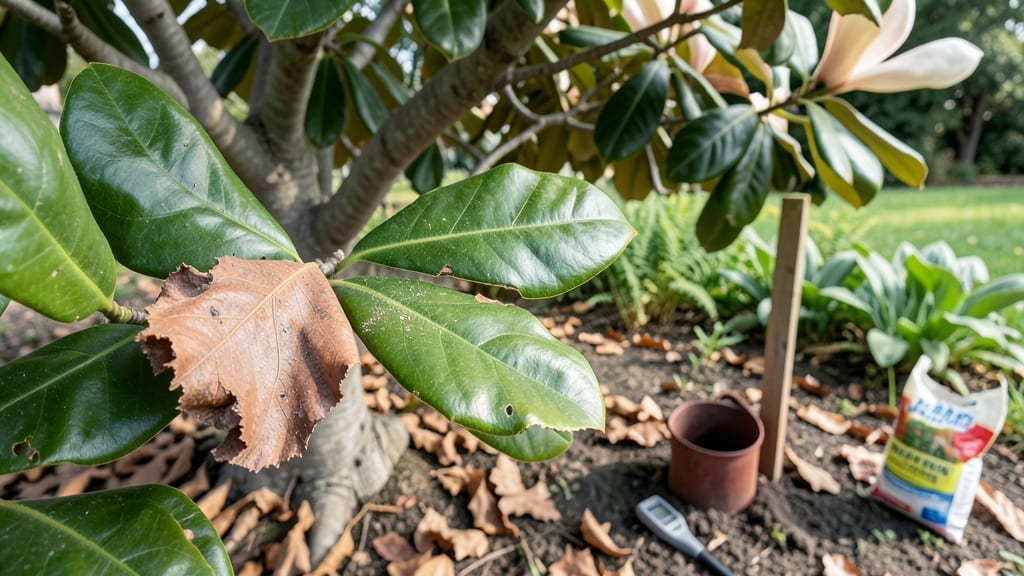
Your magnolia tree’s leaves turning brown and falling off isn’t just a seasonal quirk—it’s often a cry for help from root rot or fungal stress. 🌿 I’ve nursed back three magnolias from this exact problem, and the key is catching it early before the roots give up entirely.
The first step is identifying whether your tree is drowning in soggy soil or fighting off a fungal infection like anthracnose, which thrives in damp, shaded conditions.
Root rot starts with waterlogged soil, where roots suffocate and turn mushy brown. Fungal diseases like anthracnose create dark, sunken spots on leaves that spread like a rash. Both problems worsen in spring and fall when moisture lingers.
The good news? Pruning diseased branches and improving drainage can turn things around—if you act before the roots rot beyond saving.
You’ll see the first signs of recovery in 4-6 weeks after pruning and amending the soil: fresh green leaves pushing out where brown ones once were.
The secret is balancing airflow (thin out dense branches) with proper watering—never letting the soil stay soggy for more than a day or two after rain.
For stubborn cases, professional help might be needed to assess root health, but most homeowners can save their tree with the right adjustments. Let’s diagnose your magnolia’s exact problem first—because the fix depends on whether it’s drowning or infected.
Root Causes of Leaf Stress
When your magnolia’s leaves start browning and dropping prematurely, it’s often a cry for help from the tree itself. Understanding the why behind this distress is the first step toward reviving your prized plant.
Below, we break down the most common culprits—each with a clear scientific explanation and actionable insights to help you diagnose the issue accurately.
Magnolias thrive in well-drained, slightly acidic soil, but when roots sit in soggy conditions for too long, they suffocate. This leads to root rot, a fungal disease that disrupts nutrient and water uptake, causing leaves to yellow, brown, and fall.
How it happens:
- Excess moisture triggers anaerobic bacteria and fungi (like Phytophthora or Pythium) to attack roots.
- Compacted or clay-heavy soil traps water, preventing oxygen from reaching roots.
- Overzealous watering (even from rain) without proper drainage exacerbates the problem.
🔍 Look for these signs:
- Mushy, blackened roots when dug up.
- A foul, rotten smell at the base of the tree.
- Leaves wilting despite moist soil.
✨ Pro Tip: If your magnolia’s soil feels like a sponge that won’t dry, it’s time to act. Amend the soil with organic matter (compost or pine bark fines) and consider raising the tree’s root zone with a mound of soil to improve drainage.
Fungal diseases like anthracnose (Colletotrichum spp.) and leaf spot (Gloeodes spp.) are notorious for turning magnolia leaves brown with target-like spots or irregular patches. These fungi thrive in humid, wet conditions, often spreading via splashing water or infected tools.
How it happens:
- Fungal spores land on leaves, especially during prolonged spring rains or overhead watering.
- Poor air circulation (common in dense plantings) creates a cozy environment for fungi to multiply.
- Weakened trees (from stress, drought, or poor nutrition) are more susceptible.
🔍 Look for these signs:
- Dark brown or black spots with yellow halos.
- Premature leaf drop (often starting at the tips).
- Black, velvety fungal growth on undersides of leaves (in severe cases).
💡 Prevention & Fix:
- Prune for airflow—remove crowded branches and thin out nearby vegetation.
- Avoid watering leaves (use drip irrigation or water at the base).
- Apply fungicide (copper-based or neem oil) as a preventive measure in early spring.
Magnolias are sun-loving but sensitive to extreme heat and dry conditions. When leaves are exposed to intense afternoon sun without adequate moisture, they develop brown, crispy edges—a condition called sun scorch.
How it happens:
- Insufficient water causes cells to lose turgor pressure, leading to oxidative stress and leaf browning.
- Sudden temperature swings (hot days + cold nights) shock the tree’s metabolism.
- Shallow root systems (common in young or container-grown magnolias) can’t access deep water reserves.
🔍 Look for these signs:
- Browning along leaf edges (not full leaf yellowing).
- Wilting that recovers after watering.
- Leaves curling or drooping in peak afternoon heat.
🌡️ Quick Solutions:
- Deep watering (1–2 inches per week, especially during dry spells).
- Mulch heavily (3–4 inches of organic mulch) to retain moisture.
- Provide afternoon shade (temporary shade cloth) if scorch is severe.
Pests like scale insects, spider mites, or magnolia bark borers can drain a tree’s vitality, leading to stunted growth, leaf discoloration, and premature drop. These critters feed on sap, leaves, or bark, weakening the tree’s ability to photosynthesize.
How it happens:
- Scale insects (armored or soft) cluster on branches, sucking sap and excreting honeydew (which fosters sooty mold).
- Spider mites thrive in dry, hot conditions, causing stippling (tiny brown dots) on leaves.
- Bark borers tunnel into the trunk, disrupting water and nutrient flow.
🔍 Look for these signs:
- Sticky residue (honeydew) on leaves or bark.
- White, cottony masses (scale insects) or fine webbing (spider mites).
- Sawdust-like frass (borer excrement) at the base of the tree.
🔪 Treatment Steps:
- Blast pests off with a strong water spray (for scale).
- Apply horticultural oil (in dormant season) to smother mites and scale.
- Invite predators (ladybugs, lacewings) or use systemic insecticides for borers.
Magnolias are heavy feeders, and deficiencies in key nutrients can cause interveinal chlorosis (yellowing between veins) or browning and crispiness as the tree struggles to produce chlorophyll.
How it happens:
- Iron deficiency (common in alkaline soil) leads to yellowing between veins (chlorosis), followed by browning.
- Nitrogen deficiency causes overall yellowing (starting with older leaves).
- Magnesium deficiency (often from over-fertilization with nitrogen) results in brown, dead patches between veins.
📊 Diagnostic Table:
| Nutrient | Symptoms | Possible Cause |
|---|---|---|
| Iron | Yellowing between veins (leaves stay green at edges) | Alkaline soil (pH > 7.0) or compacted soil |
| Nitrogen | Pale yellow leaves (oldest first) | Poor soil, over-pruning, or drought |
| Magnesium | Brown patches between veins (like a "lace" pattern) | Over-fertilization or poor root health |
💪 Fixes:
- For iron: Apply chelated iron or sulfur to lower soil pH.
- For nitrogen: Use a balanced fertilizer (10-10-10) in early spring.
- For magnesium: Add Epsom salt (magnesium sulfate) to soil or foliar spray.
Mechanical stress from wind, hail, or aggressive pruning can rupture leaf cells, leading to browning and necrosis. Even rubbing branches can cause abrasions that invite fungal infections.
How it happens:
- Strong winds tear leaves or cause leaf scorch from desiccation.
- Hail or heavy fruit/flower loads bruise leaves, leading to brown spots.
- Over-pruning removes too much foliage, reducing the tree’s ability to transpire and photosynthesize.
🔍 Look for these signs:
- Irregular brown patches (not uniform like disease spots).
- Torn or jagged leaf edges.
- New growth appearing stunted after pruning.
👨🍳 Prevention:
- Stake young trees in windy areas.
- Prune in late winter/early spring (avoid summer cuts).
- Use sharp tools to make clean cuts (never tear branches).
Before diving into treatments, eliminate the easiest fixes: ✅ Check soil moisture (stick your finger in—if it’s damp, hold off on watering). ✅ Inspect leaves for pests (flip them over under bright light). ✅ Test soil pH (a simple kit from a garden center can reveal iron/magnesium issues).
By pinpointing the exact cause, you’ll save time and money—giving your magnolia the targeted care it needs to bounce back! 🌿
How to Fix Magnolia Leaf Issues
Now that you understand why your magnolia tree’s leaves are turning brown and falling off, let’s tackle the solutions—tailored to the root cause. Whether it’s fungal infections, pests, environmental stress, or poor soil health, these fixes will help restore your tree’s vibrancy.
Below, we’ve broken down actionable steps for each common culprit, plus prevention tips to keep your magnolia thriving long-term.
Fungal issues thrive in damp, poorly draining soil. Here’s how to starve the fungus and save your tree:
🔥 Step 1: Improve Soil Drainage
Fungal spores love soggy soil. Raise the root zone to prevent waterlogging:
- Add organic matter: Mix compost or well-rotted manure into the top 6–12 inches of soil around the tree’s drip line.
- Install a French drain: If your yard has poor drainage, dig a shallow trench (12–18 inches deep) around the tree’s base, fill it with gravel, and cover it with landscape fabric.
- Raise the planting bed: For severely waterlogged areas, mound soil around the base (but never pile mulch against the trunk—keep it 3–4 inches away).
🍳 Step 2: Apply Fungicidal Treatment
Use copper-based fungicides or neem oil (a natural antifungal) to combat existing infections:
- For root rot: Drench the soil with a 1:10 water-to-neem oil solution every 2–3 weeks until new growth appears.
- For powdery mildew/leaf spot: Spray leaves early in the morning with a baking soda mix (1 tbsp baking soda + 1 tsp dish soap + 1 gallon water) or a commercial fungicide like Myclobutanil.
👨🍳 Step 3: Prune Infected Branches
Remove brown, mushy, or blackened branches (cut back to healthy green wood):
- Sterilize pruners with rubbing alcohol between cuts to prevent spreading spores.
- Do not compost infected debris—burn or bag it instead.
⏰ Step 4: Adjust Watering Habits
- Water deeply but infrequently: Aim for 1–1.5 inches of water per week (including rain). Use a soaker hose to deliver water directly to the roots.
- Avoid overhead watering: Wet leaves encourage fungal growth.
Water at the base of the tree in the early morning.
Pests weaken magnolias, making them susceptible to disease. Knock them out with these tactics:
🔪 Step 1: Blast Off Pests Physically
- Scale insects: Scrape them off with a plastic scraper or high-pressure water spray (use a hose nozzle on "turbo" setting).
- Spider mites: Spray leaves with a strong stream of water to dislodge them (repeat every 3–4 days).
- Japanese beetles: Handpick them into soapy water or use drop cloths to shake them off the tree.
🌡️ Step 2: Use Natural or Chemical Pesticides
- Neem oil or insecticidal soap: Spray every 5–7 days until pests are gone.
Best for early infestations. - Horticultural oil: Apply in early spring (before buds swell) to smother overwintering pests. - Systemic insecticide (last resort): Use imidacloprid (follow label instructions) if pests persist.
🎯 Step 3: Attract Predatory Insects
Encourage ladybugs, lacewings, and parasitic wasps by planting dill, fennel, or marigolds nearby.
If environmental factors are to blame, adjust care routines to reduce stress:
💡 Step 1: Mulch Properly
- Apply 3–4 inches of mulch (wood chips, pine straw) but keep it away from the trunk.
- Mulch retains moisture and regulates soil temperature—critical in hot climates.
🌊 Step 2: Deep Watering & Hydration Boost
- Water slowly and deeply (1–2 hours per session) to encourage deep root growth.
- Use a moisture meter to check soil moisture—water when the top 2–3 inches are dry.
🥗 Step 3: Fertilize Smartly
- Test soil first (pH should be 5.5–6.5 for magnolias).
- Apply a slow-release, acidic fertilizer (like 10-10-10 or iron sulfate) in early spring.
- Avoid over-fertilizing—this burns roots and attracts pests.
✨ Step 4: Provide Shade & Windbreaks
- If your magnolia is in a hot, sunny spot, install light shade cloth (30–50% coverage) temporarily.
- Windbreaks (like a fence or shrub barrier) prevent leaf scorch in exposed areas.
Once your magnolia recovers, lock in its health with these long-term strategies:
✅ Inspect regularly: Check leaves weekly for early signs of pests or disease. ✅ Avoid compacted soil: Walk around the tree (don’t step on roots) and aerate if the ground feels hard. ✅ Prune in late winter/early spring: Remove dead or crossing branches to improve airflow. ✅ Monitor moisture: Overwatering is worse than underwatering—let soil dry slightly between waterings. ✅ Use resistant varieties: If fungal issues persist, consider disease-resistant magnolia cultivars like Magnolia grandiflora ‘Little Gem’ or Magnolia stellata.
If your magnolia’s canopy is over 50% brown, the tree is leaning badly, or oozing sap is present, consult an arborist. Severe root rot or structural damage may require professional intervention to save the tree.
Your magnolia can bounce back—with the right care, it’ll reward you with glossy green leaves and stunning blooms for years. Start with the fixes that match your tree’s symptoms, and stay consistent with prevention. 🌿✨
Frequently asked questions about magnolia tree leaf problems
Why do magnolia leaves turn brown and fall off in spring?
Spring is prime time for fungal diseases like anthracnose or leaf spot, which thrive in wet conditions. The damp weather creates perfect conditions for spores to spread, causing brown spots and premature leaf drop. Check for dark spots with yellow halos—this is your first clue.
How can I tell if my magnolia has root rot vs. a fungal infection?
Root rot shows mushy black roots and a foul smell at the base, while fungal infections appear as dark spots on leaves. Dig gently near the roots—if they're soft and discolored, it's root rot. For leaf spots, look for black or brown patches with yellow edges.
Is it safe to prune brown leaves from my magnolia?
Yes, but only remove fully brown, crispy leaves—never prune healthy green foliage. Sterilize your pruners with rubbing alcohol between cuts to prevent spreading any fungal spores. Focus on removing branches with more than 50% browning.
Can overwatering really kill my magnolia?
Absolutely—magnolias hate soggy roots. Water only when the top 2-3 inches of soil are dry, and always use well-draining soil. If your yard floods easily, consider raising the planting bed or installing a French drain around the base.
How long does it take for my magnolia to recover?
With proper care, you should see new green growth in 4-6 weeks. The key is consistency—keep the soil moist (not soggy), prune infected branches, and apply fungicide if needed. Severe cases may take up to 3 months to fully recover.