
Pruning
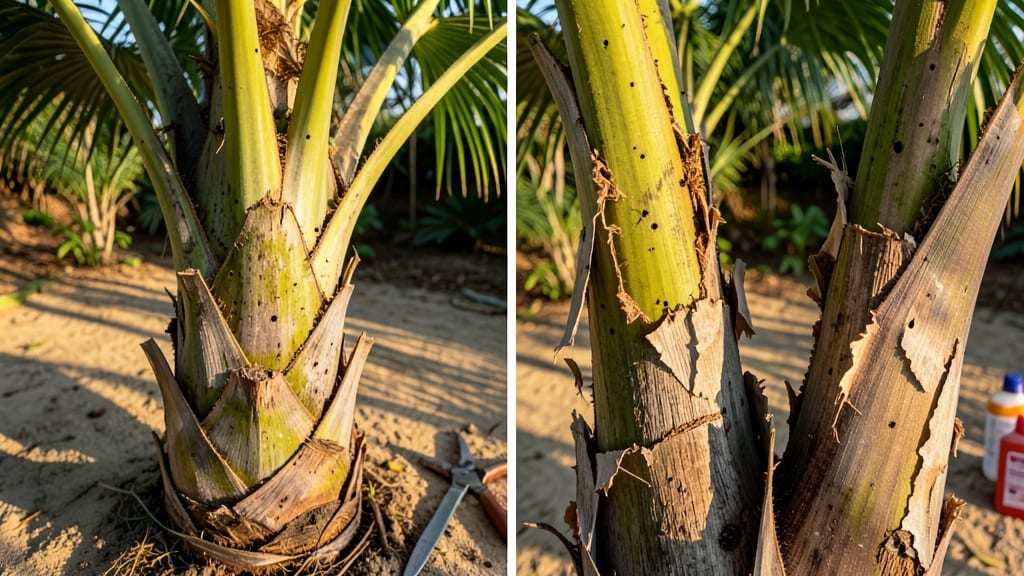
Your palm tree’s bark is falling off like old wallpaper? That’s not just normal shedding—it’s a cry for help. 🌿 While some bark loss happens naturally, excessive flaking during dormant season often signals stress, pests, or disease lurking beneath.
I’ve seen palm trees go from healthy to hopeless in months when ignored, but with the right checks, you can turn this around before it’s too late. First, grab a flashlight and inspect the trunk closely.
Look for hollow spots (a red flag for palm weevils), black stains (fungus or rot), or sawdust-like frass (pest droppings). Healthy bark should be firm and tan—if it’s soft, discolored, or crumbling easily, you’ve got a problem. The good news?
Most issues are fixable with early action, and we’ll walk through exactly how. Start with a deep clean of the trunk using a stiff brush and soapy water to remove debris and pests. For fungal issues, apply a copper-based fungicide—it’s the gold standard for palm diseases.
If weevils are the culprit, neem oil or permethrin spray can buy you time while you call an arborist. The key is acting fast: once the trunk weakens, recovery gets a lot harder (and expensive).
What you’ll end up with is a palm that not only stops losing bark but grows stronger branches over time. Think of it like a spa day for your tree—pruning, treating, and monitoring now means fewer surprises later.
By spring, you’ll notice new fronds emerging with vibrant green color, and that peeling trunk will be a distant memory. Still unsure? When the damage extends more than 12 inches up the trunk or you see oozing sap, it’s time to call a professional.
But for most cases, this 3-step rescue is all you need. Let’s get that palm back to its glory days—before winter turns into a full-blown crisis.
Natural Triggers Behind Bark Loss
If your palm tree’s bark is peeling away like layers of an onion, don’t panic—it’s often a sign of natural processes at work. Understanding the root causes helps you differentiate between normal aging and serious threats.
Below, we break down the science behind why palm tree bark falls off, so you can act with confidence.
Palm trees, like many tropical plants, undergo a dormant or semi-dormant phase during cooler months or dry spells. This isn’t true dormancy like deciduous trees, but a slowdown in growth that triggers bark sloughing as a protective mechanism.
- How it works: As the tree conserves energy, older, outermost bark layers dry out and detach to make way for new growth beneath. Think of it as a natural exfoliation process—healthy for the tree’s long-term vitality.
- What to watch for:
- Bark peeling in large, irregular patches (not uniform strips).
- Exposed areas that are smooth, green, or slightly fibrous underneath.
- No oozing sap, mold, or blackened tissue—signs of stress or disease.
- Actionable tip: 🌡️ Monitor temperature shifts. If bark loss coincides with drops below 50°F (10°C), your palm may be entering a dormant phase. Avoid pruning during this time; wait until new shoots emerge in spring.
Palms are tough, but they’re not immune to environmental shocks. Sudden changes in humidity, wind, or temperature can force bark to peel prematurely as the tree prioritizes survival over aesthetics.
| Trigger | How It Affects Bark | Red Flags |
|---|---|---|
| 💨 High winds | Friction from gusts abrades the bark, causing it to loosen and flake. Common in coastal palms exposed to salt spray. | Bark peeling in windward-facing directions; small tears or frayed edges. |
| ☀️🔥 Intense sun or heatwaves | Overexposure dries out the outer bark layers, making them brittle and prone to cracking. The tree sheds them to prevent sunburn on underlying tissue. | Peeling occurs on southwest-facing sides; exposed areas may look bleached or sunken. |
| 💧 Rapid humidity swings | Bark expands and contracts with moisture changes, leading to stress fractures that cause peeling. Common in indoor palms moved outside or vice versa. | Bark peels in horizontal strips; may feel damp or sticky when touched. |
Pro tip: ✨ If environmental stress is the culprit, protect your palm by:
- Using windbreaks (e.g., lattice screens) for coastal palms.
- Providing afternoon shade during heatwaves with shade cloth (30–50% coverage).
- Avoiding sudden watering changes—keep soil consistently moist but well-draining.
While most bark loss is harmless, persistent peeling with discoloration or oozing could signal an infection. Fungi and bacteria thrive in damaged bark, accelerating decay and weakening the tree’s structure.
- Common culprits:
- Ganoderma butt rot (a fungal infection that causes black, crusty lesions and foul-smelling sap).
- Phytophthora (a water mold that thrives in waterlogged soil, leading to brown, sunken bark).
- Bacterial leaf spot (often spreads to bark, causing water-soaked, yellowing patches).
- How to identify:
- Bark peeling accompanied by mold, rot, or a foul odor.
- Sap that’s thick, dark, or stringy (not the clear, watery sap of healthy palms).
- Wilting fronds or unusual leaf patterns (e.g., yellowing between veins).
- What to do: 🔥 Act fast.
- Prune infected areas with sterilized tools (70% isopropyl alcohol), cutting 6 inches below the visible damage.
- Apply a copper-based fungicide (e.g., Bordeaux mixture) to exposed wounds.
- Improve drainage by amending soil with perlite or sand if waterlogging is suspected.
Note: If you suspect an infection, consult a certified arborist—some diseases (like Ganoderma) can be fatal if untreated.
Revive Your Palm Tree’s Health
If your palm tree’s bark is peeling or falling off, don’t panic—this is often a natural process, but it can also signal underlying stress. The good news? With the right care, you can nurse your tree back to strength and prevent further damage.
Below, we’ve broken down the most common causes of bark loss and actionable solutions to restore your palm’s vitality.
If your palm’s bark is peeling due to poor nutrition, a targeted feeding plan can make a big difference.
🔥 Step 1: Test the Soil
Before adding fertilizers, test your soil’s pH and nutrient levels. Palms thrive in slightly acidic to neutral soil (pH 6.0–7.0). If your soil is depleted, a simple soil test kit (available at garden centers) will reveal deficiencies in nitrogen, potassium, magnesium, or iron.
🍳 Step 2: Apply the Right Fertilizer
Use a balanced palm-specific fertilizer (like 8-2-12 or 6-3-6) with micronutrients. For severe deficiencies:
- Magnesium deficiency (yellowing fronds): Sprinkle Epsom salt (magnesium sulfate) around the base (1 tbsp per gallon of water, applied monthly).
- Iron deficiency (pale new fronds): Use an iron chelate fertilizer or apply iron sulfate granules to the soil.
- Potassium deficiency (weak growth): Opt for a potassium-rich fertilizer like potassium sulfate.
👨🍳 Step 3: Feed at the Right Time
Palms are heavy feeders but need a break in winter. Apply fertilizer every 4–6 weeks during spring and summer, then reduce to once every 2–3 months in fall. Avoid fertilizing in winter or drought conditions—this can burn roots.
💡 Pro Tip:
For organic solutions, try composted manure or banana peels (rich in potassium) buried near the roots. Mulch with wood chips or pine straw to retain moisture and slowly release nutrients.
Extreme heat, cold snaps, or improper watering can cause bark to crack or slough off. Adjusting your care routine can reverse the damage.
❄️ Cold Damage Recovery
If your palm survived a frost but lost bark:
- Prune any blackened or mushy fronds (use sterilized pruners) to prevent rot.
- Apply a thick layer of mulch (3–4 inches) around the base to insulate roots.
- Water deeply but infrequently—palms hate soggy roots but need moisture in dry spells.
🔥 Heat & Drought Solutions
If bark is peeling due to dehydration:
- Water slowly and deeply (1–2 inches per week) rather than shallowly. Use drip irrigation to avoid wetting the fronds (which can cause fungal issues).
- Provide afternoon shade with a lightweight shade cloth (30–50%) if your palm is in a hot, sunny spot.
- Avoid sudden water changes—gradually adjust if your palm was previously overwatered.
🎯 Prevention Tip:
Palms in containers dry out faster. Check soil moisture by sticking your finger 2 inches deep—water when it’s dry. Use a well-draining potting mix with perlite or sand.
Insects like palm weevils or fungal infections can weaken bark integrity. Act fast to stop the spread.
🐜 Palm Weevil Infestation
If you see sawdust-like frass or oozing sap, a weevil may be tunneling inside:
- Inject systemic insecticide (like imidacloprid) into the trunk using a hypodermic syringe.
- Apply borax bait (1 tbsp borax + 1 gallon water) to the base to attract and kill larvae.
- Remove and burn infested fronds immediately to prevent spread.
🍄 Fungal Issues (e.g., Ganoderma Butt Rot)
If bark is dark, spongy, or has white fungal growth at the base:
- Prune all infected areas (use a sterilized chainsaw for large trunks).
- Apply copper fungicide or neem oil to the wound and surrounding soil.
- Improve drainage—raise the soil level or install a French drain if water pools.
✨ Prevention Tip:
Keep the base of the trunk clean—remove dead fronds and debris where pests hide. For preventative care, spray palms with neem oil every 3 months.
Some palms (like Canary Island Date Palms) naturally shed outer bark layers as they grow. If your tree is otherwise healthy, this is normal—but you can still support the process.
🔪 Gently Remove Loose Bark
If large sheets are peeling but not due to disease:
- Use a soft brush or cloth to gently scrape off dead bark (never pull forcefully—this can damage the trunk).
- Avoid peeling healthy green bark—this exposes the tree to rot and pests.
🌿 Promote New Growth
Healthy palms replace old bark naturally. Boost growth with:
- A light layer of compost around the root zone.
- Ensuring the palm gets full sun (6+ hours daily) for photosynthesis.
- Protecting young palms from wind damage with a windbreak if needed.
With these targeted fixes, your palm should bounce back within a few months. Monitor its progress and adjust care as needed—your tree will thank you with lush, vibrant fronds!
Frequently asked questions
Is it normal for palm tree bark to peel during winter?
Yes, but only to a certain extent. Palm trees often shed outer bark layers during cooler months as part of their natural dormant phase. Look for large, irregular patches peeling away—if the exposed area is smooth and green underneath, it’s likely normal. However, if peeling happens year-round or the trunk feels soft, it may signal stress or disease.
How can I tell if my palm tree’s bark loss is from pests vs. environmental stress?
Check for these clues: Pest damage often includes sawdust-like frass (insect droppings), oozing sap, or hollow spots in the trunk. Environmental stress usually shows as uniform peeling on sun-exposed sides or cracked bark from wind. If you see black stains or mold, it’s likely fungal.
Can I prune away peeling bark myself, or should I call a professional?
You can safely remove loose, dead bark with a soft brush or cloth—but never peel healthy green layers. For large trunks or signs of rot (soft spots, foul odors), call an arborist. If the damage extends more than 12 inches up the trunk, professional help is wise to prevent structural issues.
Will fertilizing help if my palm tree’s bark is falling off?
Possibly! Nutrient deficiencies (like magnesium or potassium) can cause bark to weaken. Test your soil first—palms thrive in pH 6.0–7.0 soil. Use a palm-specific fertilizer (8-2-12 ratio) in spring/summer, but avoid over-fertilizing in winter. If bark loss persists, the issue may be deeper (like pests or disease).
How long does it take for a palm tree to recover from bark loss?
With proper care, you’ll see improvement in 3–6 months. Healthy palms regrow bark naturally, but recovery depends on the cause: nutrient fixes show results fastest, while pest/disease treatment may take longer. Monitor for new frond growth—vibrant green leaves mean your palm is healing!