
Pruning
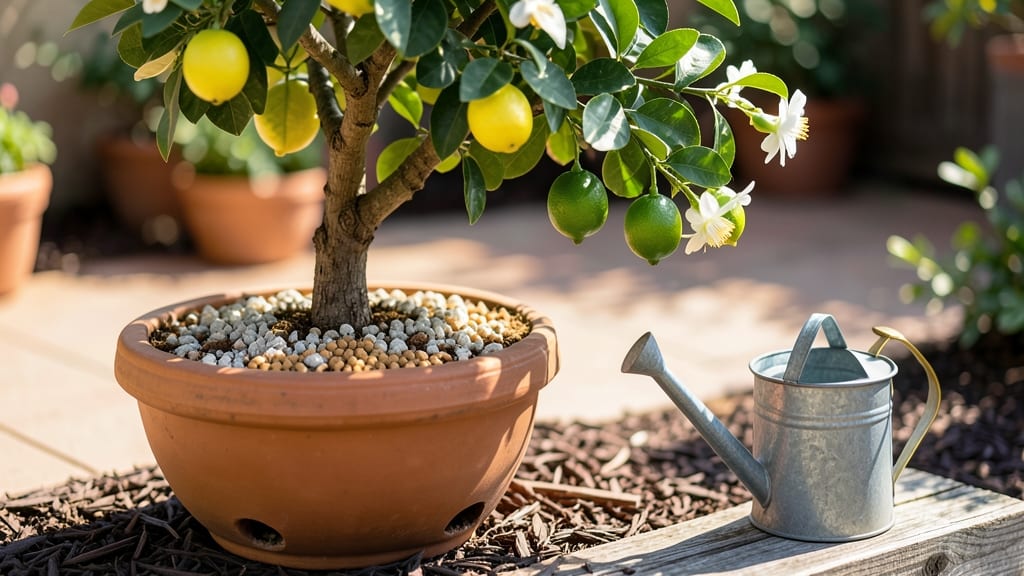
How to take care of a lemon tree in pot means year-round citrus even on a tiny balcony or kitchen windowsill. 🌿 I’ve nursed my own dwarf Meyer lemon tree from a sad, leggy sapling to a fruit-bearing beauty—all using just a 15-gallon container and a sunny corner. The secret? Mimicking its Mediterranean roots with the right light, water, and a little pruning love.
Your potted lemon tree needs 6+ hours of sunlight daily, well-draining soil (think cactus mix + perlite), and water only when the top inch feels dry. Overwatering is the #1 killer—yellow leaves scream "drainage fix!"—while underwatering causes buds to drop.
Feed with citrus fertilizer every 6 weeks in spring/summer, and cut back pruning until late winter when new growth signals it’s safe.
By summer, you’ll see glossy new leaves and maybe even tiny lemons forming. The tree stays compact (under 6 feet tall) with regular pruning, and its fragrant white blossoms attract pollinators even in pots. Winter’s the only tricky season—reduce watering and move it near a south-facing window if indoors.
Root-bound? Repot every 2-3 years in spring, and watch for spider mites (spray with neem oil). My tree now produces dozens of lemons annually, and the neighbors keep asking for cuttings. Here’s how to keep yours thriving without the fuss.
📚 In This Guide
- What you need
- Instructions
- Tips and common mistakes
- Wrapping up and next steps
What you need
- ● Pot: A container at least 12–18 inches in diameter and depth (bigger is better for mature trees). Ensure it has drainage holes—no soggy roots allowed! 🚫💦
- ● Well-draining potting mix: A blend of cactus/succulent mix (60%), perlite or pumice (20%), and compost (20%). Avoid garden soil—it compacts and suffocates roots!
- ● Lemon tree sapling or bare-root plant: Choose a dwarf or Meyer lemon variety (they’re perfect for pots!). Nursery-bought or propagated from cuttings both work!
- ● Fertilizer: A balanced citrus fertilizer (6-6-6 or 10-10-10) or organic options like fish emulsion. Slow-release granules are a game-changer!
- ● Watering can with a narrow spout: For precise, deep watering without drowning the roots.
- ○ Mulch (optional but helpful): A thin layer of orchid bark or straw to retain moisture and regulate soil temp.
- ● Pruning shears: Sharp, sterilized shears for trimming dead or overgrown branches. Bypass pruners are ideal!
- ● Glove: A pair of gardening gloves (lemon trees can have thorns—ouch!).
- ● pH testing kit: To check soil acidity (ideal range: 6.0–7.0). Citrus loves slightly acidic soil!
- ● Support stake or trellis: For young trees to prevent toppling as they grow.
- ● Spray bottle: For misting leaves in dry climates (lemon trees adore humidity!).
- ● A sunny spot: 6–8 hours of direct sunlight daily (south- or west-facing windowsills are perfect!).
- ● Consistent care routine: Lemon trees thrive on predictability—stick to a watering/fertilizing schedule!
- ● Patience: It takes 2–3 years for a potted lemon tree to bear fruit (but the journey is worth it! 🍋).
Step-by-step guide to year-round lemon tree care in pots
Here's the proven system I use to keep my dwarf lemon trees thriving indoors—no green thumb required.
🪴 Step 1: Select the Right Container and Soil Mix
Choose a pot with drainage holes that's 2-3 inches larger in diameter than your tree's root ball. Terra cotta pots work best because they breathe and help regulate moisture. I always use a well-draining mix: combine 60% premium potting soil, 30% perlite, and 10% compost for nutrients without compacting.
This mix prevents root rot while providing the slightly acidic environment lemons love. Tap the pot gently after filling to settle the soil without compacting it. The surface should feel firm but still crumbly when squeezed—like a damp sponge. Place a layer of ½-inch gravel at the bottom to improve drainage further.
☀️ Step 2: Position for Maximum Sunlight Year-Round
Lemon trees need 6-8 hours of direct sunlight daily. A south-facing window is ideal, but if that's not available, supplement with a full-spectrum LED grow light for 12-14 hours daily. I keep mine 12-18 inches from the light source and raise it as the tree grows to maintain that distance.
Watch for these signs: leaves turning yellow? Too much water. Leaves dropping? Needs more light. New growth stretching toward the window? Time to adjust your light position. In winter, when natural light dims, I rotate the pot quarter-turn weekly so the tree grows evenly.
💧 Step 3: Master the Watering Routine
Water when the top 2-3 inches of soil feel dry to the touch. Stick your finger in—if it comes out clean, it's time to water. I use the soak-and-drain method: pour water until it runs freely from the drainage holes, then empty the saucer immediately to prevent root rot. Overwatering is the #1 killer of potted citrus.
In winter, when growth slows, reduce watering to every 10-14 days. You'll know you're doing it right when you see new leaf growth in spring—those are your reward for consistent care. Always use room-temperature water to avoid shocking the roots.
✂️ Step 4: Prune and Fertilize for Healthy Growth
Prune in late winter or early spring to shape the tree and encourage branching. Cut back leggy stems by ⅓ their length just above a leaf node where new growth can emerge. Remove any dead, diseased, or crossing branches first—they sap energy from healthy growth. I sterilize my pruners with rubbing alcohol between cuts to prevent disease spread.
Fertilize monthly from spring through fall with a balanced citrus fertilizer (look for 6-6-6 or 8-3-9 ratio). In winter, cut back to every 6-8 weeks as growth slows. The key is consistency—never skip a feeding once you start, or you'll see yellow leaves and poor flowering. Flush the soil with water monthly to prevent salt buildup.
🌿 Step 5: Handle Seasonal Care Transitions
In spring, when temperatures rise above 50°F, move your lemon tree outdoors to a shaded spot for 2-3 hours daily to acclimate. Gradually increase exposure over 2 weeks to full sun. This hardening-off process prevents leaf scorch from sudden sun exposure. Watch for new growth—this is your signal the transition is working.
In fall, before temperatures drop below 50°F, bring the tree back indoors. Check for pests like spider mites or aphids during this transition—these hitchhikers love citrus. Wipe leaves with a damp cloth and treat with neem oil if you spot any. Keep the tree away from drafts and heat vents, which cause stress and leaf drop.
Tips & tricks for perfect lemon tree care in pots
Here's what nobody tells you about keeping your citrus thriving in small spaces—these are the secrets that'll make all the difference.
Soil Mix Precision: When combining your 60% premium potting soil, 30% perlite, and 10% compost, sift the perlite first to remove any fine particles that could compact. I learned this the hard way after noticing poor drainage in my first batch—lemon trees hate soggy roots. The ½-inch gravel layer at the bottom isn't just decoration; it creates an air pocket that prevents waterlogging, especially in terra cotta pots which dry out faster.
Light Positioning Hack: That 12-18 inch distance from your grow light isn't arbitrary—it's the sweet spot where your tree gets enough intensity without burning. I use a simple trick: hold a piece of white paper near the light and adjust until you see a slight shadow. This ensures even coverage across all leaves. In winter, when natural light dims, I move the pot to the brightest window and add a small LED bulb for that extra 2-3 hours of light.
Watering Tell-Tale Signs: The finger test in Step 3 is foolproof, but here's the pro move: press your finger to the 2-3 inch depth and hold for 5 seconds. If the soil feels cool and dry, it's time to water. Warm soil means you're just a day or two away from watering. I also check the pot's weight—when it feels noticeably lighter, that's your second confirmation. Overwatering is silent killer, so empty that saucer immediately after watering to prevent root rot.
Seasonal Transition Timing: Those 2 weeks of gradual outdoor acclimation in spring are non-negotiable. I start with just 2-3 hours in partial shade, then increase by 30 minutes daily. Watch for tiny new leaves forming—this is your tree's way of saying "I'm adapting!" In fall, bring it inside before temperatures drop below 50°F, but keep it in the same room for 3-4 days to avoid temperature shock. Drafts from windows or vents will cause leaf drop faster than you can say "citrus stress."
Pro Tips for Take Care Of Lemon Tree In Pot
- Here's what nobody tells you about keeping your citrus thriving in small spaces—these are the secrets that'll make all the difference.
- Soil Mix Precision: When combining your 60% premium potting soil, 30% perlite, and 10% compost, sift the perlite first to remove any fine particles that could compact.
- Light Positioning Hack: That 12-18 inch distance from your grow light isn't arbitrary—it's the sweet spot where your tree gets enough intensity without burning.
Frequently asked questions
Got questions about keeping your potted lemon tree happy? Here are some of the most common concerns—plus quick fixes to keep your citrus thriving!
What’s the best temperature range for a potted lemon tree?
A potted lemon tree loves warmth but hates extremes. Keep it in 60–85°F (15–29°C) during the day, with cooler 50–60°F (10–15°C) at night. Avoid drafts, AC vents, or freezing temps—they’re toxic to your tree! If temps drop below 40°F (4°C), move it indoors or wrap the pot in bubble wrap.
How often should I water my lemon tree in a pot?
Water when the top 1–2 inches of soil feel dry (stick your finger in to test!). In summer, this might be every 2–3 days; in winter, once a week or less. Overwatering is the #1 killer—yellow leaves or soggy soil? Cut back! Use well-draining soil and a pot with drainage holes to prevent root rot.
Why are my lemon tree leaves turning yellow?
Yellow leaves usually mean overwatering, nutrient deficiency, or pests. Check the roots—if they’re mushy or smelly, repot in fresh soil. Lack of nitrogen? Feed with a citrus fertilizer every 2–3 months. Bugs like spider mites? Wipe leaves with neem oil or insecticidal soap. Old leaves? That’s normal—focus on new growth!
Can I grow a lemon tree indoors all year, or does it need outdoor time?
Lemon trees thrive indoors year-round but benefit from 4–6 hours of sunlight daily (south or west-facing windows are ideal). If natural light is weak, supplement with a grow light (12–14 hours/day). For extra vigor, move it outside in spring/summer (acclimate slowly to avoid sunburn!).
How do I encourage my lemon tree to bear fruit?
Fruit production needs patience, sunlight, and the right care:
- Age: Trees need 3–5 years to mature.
- Light: 6+ hours of direct sun (indoors or out).
- Pollination: Hand-pollinate with a small brush if indoors (no bees!).
- Fertilizer: Use a citrus-specific fertilizer high in nitrogen (spring) and phosphorus (fall).
- Pruning: Trim dead branches but avoid over-pruning—you need leaves for energy!
Bonus: Stress = fewer lemons. Keep conditions stable (no sudden temp/light changes).
How big should the pot be for a lemon tree?
Start with a 5–7 gallon pot for young trees, then upgrade to 10–15 gallons as it grows. Lemon trees have deep roots, so prioritize depth over width. If roots circle the pot, repot every 2–3 years in spring. Pro tip: Use a pot 2–3 inches wider than the root ball to avoid transplant shock.
Wrapping up and next steps
Caring for a lemon tree in a pot is totally doable—even for beginners! 🌱 With the right balance of sunlight, water, and pruning, your citrus friend will thrive year-round. Remember, patience and consistency are key, so don’t stress if it takes time to see those juicy lemons.
Now that you’re armed with expert tips, why not take the next step? Try propagating a cutting or experimenting with fertilizers to boost growth. Happy gardening—your future lemons are waiting! 🍋✨