
Propagation
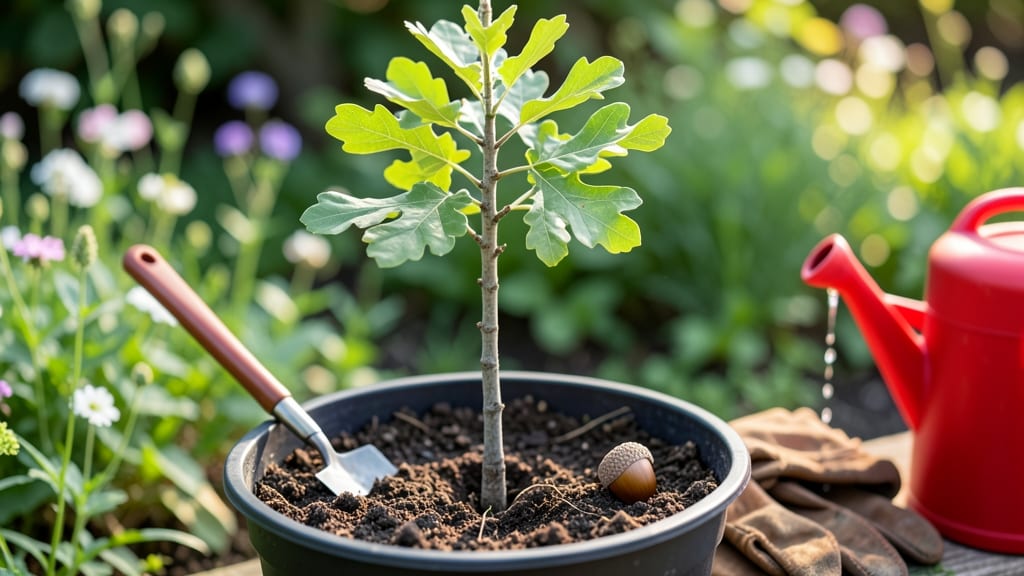
To grow a white oak tree from acorn, start with cold stratification for 60-90 days using moist sand or peat moss at 35-40°F, then plant in well-draining soil with consistent moisture. Germination typically takes 1-3 months, and saplings require 3-5 years of careful nurturing before they're ready for outdoor transplanting.
White oak acorns need this cold treatment to break their natural dormancy, mimicking winter conditions that trigger germination in nature. 🌱 The key is maintaining consistent moisture and temperature during stratification—too dry or warm, and the acorns won't sprout.
Once germinated, seedlings thrive in partial shade with regular watering, developing strong root systems that prepare them for eventual outdoor planting in zones 3-9. Patience is crucial, as white oaks grow slowly but reward you with majestic, long-lived trees.
For best results, collect acorns from mature trees in fall and remove any that show signs of pest damage before stratification. The stratification period is your best chance to maximize germination rates, so don't skip this step even if you're eager to see growth.
Once sprouted, keep seedlings in containers for their first few years, gradually acclimating them to outdoor conditions before permanent transplanting.
💡 In This Article
- Cold Stratification Process for White Oak Acorns
- White Oak Seedling Care Timeline and Transplanting Tips
Cold stratification process for white oak acorns
The cold stratification process mimics the natural winter conditions that white oak acorns experience in the wild. When acorns fall from mature trees in autumn, they enter a dormant state triggered by chemical changes within the seed. This dormancy prevents premature germination during unfavorable conditions.
The key compound here is abscisic acid, which inhibits growth until cold temperatures break it down. At 35-40°F with consistent moisture, this hormone degrades while another growth-promoting hormone, gibberellin, gradually accumulates—this hormonal shift is what kickstarts the germination process.
To replicate these conditions at home, you'll need a moist but not soggy medium like a mix of sand and peat moss (or even damp paper towels). The moisture level should feel like a wrung-out sponge—too dry, and the acorns won't break dormancy; too wet, and they'll rot.
Place the acorns in a sealed container with small ventilation holes, then refrigerate for 60-90 days. This period allows the internal seed structures to soften and prepare for root emergence. Pro tip: Check acorns weekly for mold—if you see fuzzy growth, increase airflow or reduce moisture immediately.
What most people don't realize is that temperature consistency matters more than the exact duration. While 60-90 days is ideal, some acorns may need up to 120 days if they're particularly dormant. The critical factor is maintaining that 35-40°F range—any warmer, and the stratification fails.
Think of it like training for a marathon: the gradual, controlled stress of cold temperatures prepares the acorn for the "race" of germination, just as it would in nature's timing. 🌱
Here's how to monitor progress: After 4-6 weeks, gently press on the acorn—if it feels slightly softer and you see a tiny white root emerging, stratification is working. If nothing happens after 90 days, the acorn may be non-viable.
Remember, white oaks are slow growers, and their seeds have evolved to wait for the perfect moment to sprout. This patience pays off with trees that can live for centuries and reach heights of 60-80 feet.
For visual learners, imagine the acorn's internal structure: the hard shell protects the embryo, which contains a tiny root (radicle) and shoot (plumule). During stratification, the radicle grows just enough to break through the shell, signaling that the seed is ready for planting.
This pre-germination growth is why stratification is non-negotiable—it's the difference between a seed that might sprout and one that will reliably grow into a strong sapling.
One common mistake is using tap water for stratification—its chlorine content can inhibit germination. Instead, use filtered or rainwater. Also, avoid plastic bags entirely; they trap too much moisture and heat.
A simple container with a loose lid or breathable fabric cover works best. The goal is to replicate the forest floor's microclimate where acorns naturally germinate after winter's chill.