
Propagation
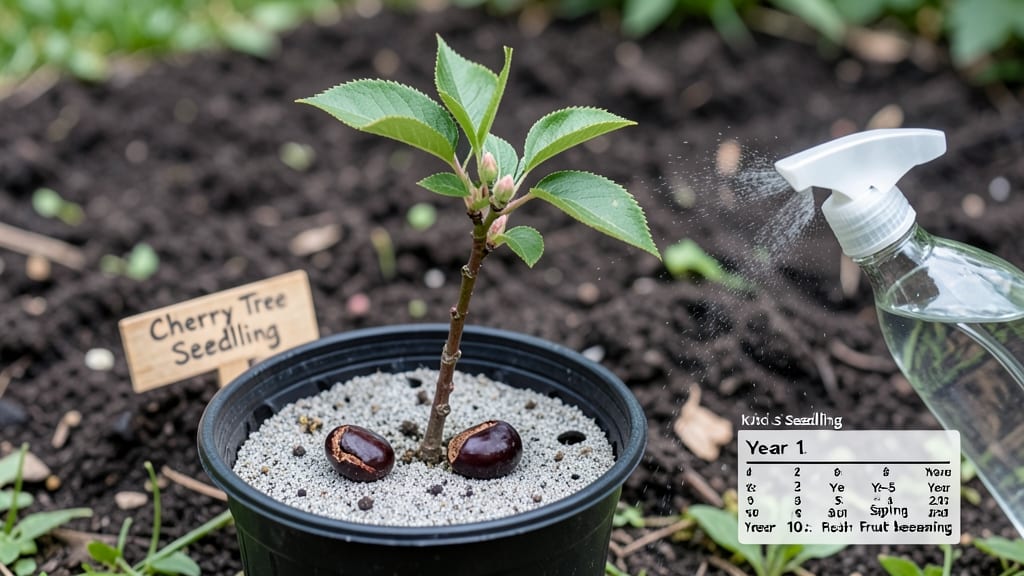
Growing a cherry tree 🍒 from seed takes patience—expect 5 to 15 years before your tree bears fruit, depending on the variety and growing conditions.
If you’ve ever dreamed of a backyard full of sweet Bing cherries or tart Montmorency snacks, you’ll want to know how to speed up the process. Unlike nursery-bought saplings, seeds require careful stratification and years of nurturing before they mature.
Sweet cherries like Bing or Rainier can take up to 10 years to fruit, while sour varieties like Montmorency may fruit sooner—sometimes as early as 5 years. The key lies in proper soil, sunlight, and a little extra care during the early stages.
In this guide, I’ll break down the full timeline—from seed germination to fruit-bearing—so you can set realistic expectations and maximize your chances of success.

Cherry tree germination timeline by variety: fastest vs slowest species
When growing a cherry tree from seed, germination times vary dramatically by variety—some sprout in 4 weeks, while others take up to 6 months.
Understanding these differences helps set realistic expectations and optimize your care routine. Sweet cherries like Bing often germinate faster than sour cherries like Montmorency, but ornamental varieties can surprise you with unexpected speed. Let’s break down the timelines and essential steps to encourage faster sprouting.
The key to faster germination lies in cold stratification, a process mimicking winter conditions. Most cherry seeds require 60–90 days in a cold, moist environment before planting. Skipping this step can delay germination by 2–4 months or even result in no sprouts at all.
For example, Rainier cherry seeds often respond well to 8 weeks of stratification, while Black Tartarian seeds may need up to 12 weeks for optimal results.
Soil temperature also plays a critical role. Ideal germination occurs when soil reaches 60–70°F—too cold, and seeds remain dormant; too hot, and they may rot. In cooler climates (USDA Zones 3–5), plant stratified seeds outdoors in early spring for the best success. Warmer zones (6–9) can start seeds indoors 8–10 weeks before last frost to align with ideal soil temperatures.
| Variety | Germination Time | Cold Stratification Needed | Speed Hack |
|---|---|---|---|
| Bing (Sweet Cherry) | 4–8 weeks | 60–90 days | Soak seeds in warm water for 24 hours before stratification |
| Rainier (Sweet Cherry) | 5–10 weeks | 70–90 days | Use a seedling heat mat to maintain 65–70°F |
| Montmorency (Sour Cherry) | 8–12 weeks | 90–120 days | Plant seeds in a mix of 50% sand for faster drainage |
| Black Tartarian (Ornamental) | 6–10 weeks | 80–100 days | Scarify seeds with sandpaper to break dormancy |
| Stella (Dwarf Sweet Cherry) | 3–6 weeks | 45–60 days | Plant in a greenhouse for controlled humidity |
Ornamental cherry varieties like Black Tartarian often germinate faster than their fruit-bearing counterparts, making them a great choice if you’re impatient for results. However, their fruit may not be edible, so choose based on your goals.
For edible cherries, Bing and Stella varieties offer the fastest germination windows, with some sprouts appearing in as little as 3–4 weeks under ideal conditions.
Light exposure after germination is equally critical. Once sprouts emerge, move them to a bright, indirect light source for 12–14 hours daily. Direct sunlight can scorch tender seedlings, so use a sheer curtain to diffuse light until they’re 2–3 inches tall.
At this stage, you’ll notice first true leaves forming—these are a sign your seedlings are ready for gradual hardening off if you’ve started them indoors.
Patience is key when growing cherry trees from seed, but proper stratification and soil conditions can cut germination time by up to 50%. For example, soaking seeds overnight before stratification can reduce the process from 12 weeks to 8 weeks for some varieties.
Additionally, maintaining consistent moisture (not soggy) during stratification prevents mold and ensures stronger root development once planted.
If you’re growing multiple varieties, label your seedlings immediately to avoid confusion as they mature. Bing and Rainier cherries may produce fruit in 5–7 years, while Montmorency can take 7–10 years due to slower early growth.
Ornamental varieties like Black Tartarian may flower earlier but won’t bear edible fruit. Plan accordingly by selecting seeds based on your long-term gardening goals.
For faster results, consider grafting your homegrown seedlings onto established rootstock. This technique can reduce the time to fruiting by 2–3 years, though it requires more advanced horticultural skills. Alternatively, purchase certified organic saplings and transplant them into your garden—this guarantees fruiting in 3–5 years without the germination wait.
Remember, every cherry seed is unique, and germination times can vary even within the same variety. Track your seedlings’ progress in a gardening journal to refine your methods for future plantings.
With the right variety and care, you’ll be enjoying homegrown cherries in no time—just be prepared for the journey! 🌱🍒
Critical growth stages: from seed to fruit-bearing tree (year-by-year)
Watching a cherry tree grow from a tiny seed to a fruit-bearing giant is one of the most rewarding long-term gardening projects. Unlike nursery-bought trees, your seed-grown cherry will develop at its own pace, with each year bringing transformative milestones.
Understanding these stages helps you provide the right care at the right time—whether it’s protecting young roots in Year 1 or encouraging flowering in Year 10+.
The journey from seed to fruiting cherry tree typically spans 10 to 15 years, but factors like soil quality, climate, and pruning practices can accelerate or delay progress.
For example, trees in USDA Zone 7+ with well-draining soil may reach fruiting 2-3 years sooner than those in cooler regions. Let’s break down what to expect each year and how to optimize growth.
- 🌱 Year 1: Seed germination and root establishment (1–2 ft tall). Focus on consistent moisture and protection from pests.
- 🌿 Years 2–3: Trunk thickening (3–10 ft tall). Prune to remove competing branches and improve air circulation.
- 🍃 Years 4–5: First leaves mature (6–15 ft tall). Monitor for nutrient deficiencies and adjust fertilization.
- 🌸 Years 6–9: Flower buds form (10–20 ft tall). Thin branches to promote sunlight penetration for fruit development.
- 🍒 Years 10+: Fruiting potential (20–40 ft tall). Protect blossoms from late frosts and pests like cherry fruit flies.
In Year 1, your cherry seedling’s primary goal is to establish a strong root system. The first 12 months are critical—seedlings planted in well-aerated, slightly acidic soil (pH 6.0–6.5) grow 1–2 feet tall if given 6+ hours of sunlight daily.
Mulch around the base to retain moisture and suppress weeds, but avoid piling mulch against the trunk to prevent rot. Young roots are shallow, so water deeply once a week during dry spells.
By Years 2–3, your tree enters its trunk-thickening phase, where it develops structural strength to support future branches and fruit. This is when pruning becomes essential: Remove any crossing or diseased branches to prevent future issues.
In cooler climates, young trees may grow more slowly—expect 3–5 feet of height gain per year. Apply a balanced fertilizer (10-10-10) in early spring to support this rapid above-ground growth.
Between Years 4–5, your cherry tree will finally develop its characteristic foliage, with leaves reaching their full size. Height jumps to 6–15 feet, but growth slows as the tree allocates energy to leaf production and branch development.
This is also when you’ll notice the tree’s natural shape—some varieties like Black Tartarian grow upright, while others like Montmorency develop a more rounded canopy. Test soil for nutrient levels and amend with compost if needed.
Once your tree reaches Years 6–9, it enters a pre-fruiting phase, where flower buds begin forming along the branches. You might spot pink or white blossoms in spring, but these often fall off without producing fruit—a natural process as the tree matures its reproductive systems.
Prune to open the canopy, ensuring sunlight reaches the inner branches where future fruit will develop. In drought-prone areas, deep watering every 10–14 days prevents stress-induced bud drop.
The 10-year mark is when most seed-grown cherry trees finally reach fruiting maturity, though some varieties like sweet cherries (Bing, Rainier) may take 12–15 years.
At this stage, your tree will tower 20–40 feet tall, and its first harvestable cherries will appear in late spring or early summer.
Protect blossoms from late frosts (below 28°F) with frost cloth or a heat lamp, and monitor for pests like aphids or cherry leaf spot. With proper care, your tree could produce fruit for 50+ years.