
Planting
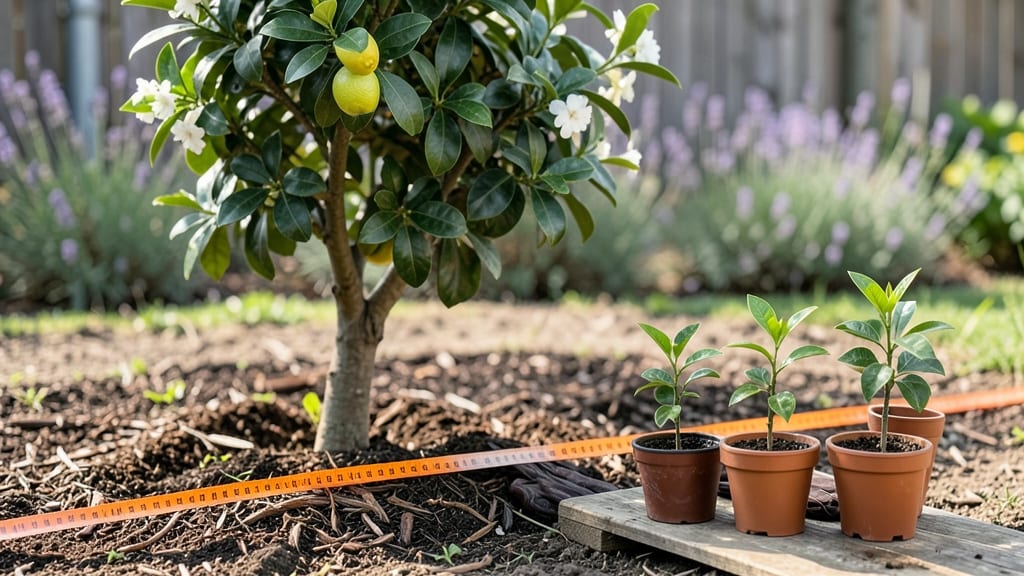
Proper citrus tree spacing is the foundation of a thriving orchard 🍊—whether you’re growing dwarf Meyer lemons or towering Valencia oranges.
Struggling to maximize your citrus orchard’s fruit production? The right spacing between trees isn’t just about aesthetics—it directly impacts sunlight exposure, airflow, and long-term yield. Get the science-backed distances that ensure healthy growth and bountiful harvests.
In USDA Zones 9-11, where citrus thrives year-round, standard trees need 15-25 feet between trunks to avoid root competition. Dwarf varieties can squeeze into smaller spaces, but even they benefit from 6-10 feet of room to stretch their branches.
Below, I break down the exact spacing rules for your variety, plus how to adjust for containers, companion plants, and long-term harvest efficiency—so you never waste space (or fruit).
Optimal citrus tree spacing by variety and growth habits
Choosing the right citrus tree spacing is one of the most critical decisions for a thriving orchard. Whether you're planting dwarf Meyer lemons in containers or standard Valencia oranges in your backyard, spacing directly impacts fruit production, airflow, and root competition.
Standard trees need room to spread their canopy width, while dwarf varieties can thrive in tighter spaces—but even they need proper airflow to prevent disease. Let’s break down the science-backed distances for each variety and how to apply them in both home gardens and commercial orchards.
For home gardeners, spacing citrus trees too closely leads to overcrowding, which stunts growth and invites pests like aphids and fungal infections. Meanwhile, commercial growers balance spacing with row orientation to maximize yield per acre. The key is understanding how mature tree size and root spread dictate distances.
For example, a standard grapefruit tree can reach 20 feet tall with a 15-foot canopy, while a dwarf calamondin stays under 6 feet but still needs 3-4 feet of space for airflow. Let’s explore the exact measurements you need.
| Citrus Variety | Tree Type | Mature Height | Canopy Width | Home Garden Spacing | Commercial Spacing | Row Spacing |
|---|---|---|---|---|---|---|
| Dwarf Meyer Lemon | Dwarf | 6-10 ft | 6-8 ft | 6-8 ft apart | 8-10 ft apart | 10-12 ft |
| Semi-Dwarf Eureka Lemon | Semi-Dwarf | 12-15 ft | 10-12 ft | 10-12 ft apart | 12-15 ft apart | 15-18 ft |
| Standard Valencia Orange | Standard | 20-25 ft | 15-20 ft | 20-25 ft apart | 25-30 ft apart | 30-35 ft |
| Dwarf Calamondin | Dwarf | 4-6 ft | 3-5 ft | 3-4 ft apart | 5-6 ft apart | 6-8 ft |
| Standard Grapefruit | Standard | 20-30 ft | 15-20 ft | 20-25 ft apart | 25-30 ft apart | 30-35 ft |
| Semi-Dwarf Lime (Bearss) | Semi-Dwarf | 12-16 ft | 10-12 ft | 10-12 ft apart | 12-15 ft apart | 15-18 ft |
When planning your citrus orchard layout, start by mapping out the mature size of each variety. For instance, dwarf citrus trees like Meyer lemons or calamondins are perfect for small gardens or container growing, but even they need 6 feet of space to prevent root competition.
If you’re planting multiple rows, leave 10-12 feet between rows to allow for mowers or tractors and ensure sunlight penetration to the center of the orchard. In commercial settings, wider spacing (up to 35 feet between rows) is standard to accommodate harvest equipment and reduce disease spread.
Another critical factor is wind exposure. Citrus trees in exposed areas need slightly wider spacing (up to 20% more) to prevent wind damage to branches and fruit.
For example, a standard lime tree in a windy coastal area might need 25 feet of spacing instead of the standard
How tree spacing affects citrus growth and disease prevention
Proper citrus tree spacing isn’t just about fitting more trees in your yard—it’s about creating an environment where your trees thrive. When trees are too close, they compete for sunlight, nutrients, and water, leading to stunted growth and poor fruit quality.
Even worse, crowded trees trap moisture, creating the perfect conditions for fungal diseases like citrus canker, which can devastate your orchard if left unchecked.
On the flip side, giving your citrus trees enough space improves air circulation, reduces humidity around the foliage, and allows sunlight to reach all parts of the canopy. This simple adjustment can mean the difference between a few scattered fruits and a bountiful harvest every season.
Let’s dive into how spacing directly impacts your trees’ health and productivity.
Trees spaced less than 10 feet apart suffer from poor airflow, trapping moisture and spores. This creates ideal conditions for citrus canker and root rot, two common diseases that can kill your trees if untreated. Even standard citrus varieties need at least 15-25 feet between trees to prevent these risks.
One of the biggest consequences of poor spacing is reduced sunlight penetration. Citrus trees need 6+ hours of direct sunlight daily to produce fruit. When trees are crowded, the inner branches become shaded, leading to smaller leaves, fewer flowers, and ultimately lower yields.
Even if your trees survive, the fruit quality suffers—citrus grown in shade tends to be less sweet and more acidic.
Proper spacing also enhances pollination, which is crucial for fruit set. Bees and other pollinators struggle to navigate crowded canopies, reducing the chances of successful fertilization.
By spacing your trees correctly, you create an open environment that encourages pollinators to visit, leading to more blossoms and heavier fruit loads. This is especially important for varieties like oranges and lemons, which rely on cross-pollination for optimal fruit development.
Don’t overlook the long-term benefits of proper spacing. Trees with enough room develop stronger root systems and denser canopies, making them more resilient to pests and environmental stress. Overcrowded trees, however, become weak and prone to pest infestations like aphids and scale insects, which thrive in dense, shaded conditions.
By planning your orchard layout with spacing in mind, you’re investing in the health and longevity of your citrus trees.
If you’re already dealing with overcrowded citrus trees, don’t panic. You can still improve airflow by pruning the inner branches to open up the canopy or even removing one or two trees to give the remaining ones more space.
Start with the smallest or weakest trees to minimize stress on your orchard. With the right adjustments, you’ll see a noticeable improvement in growth and fruit quality within a season.