
Pruning
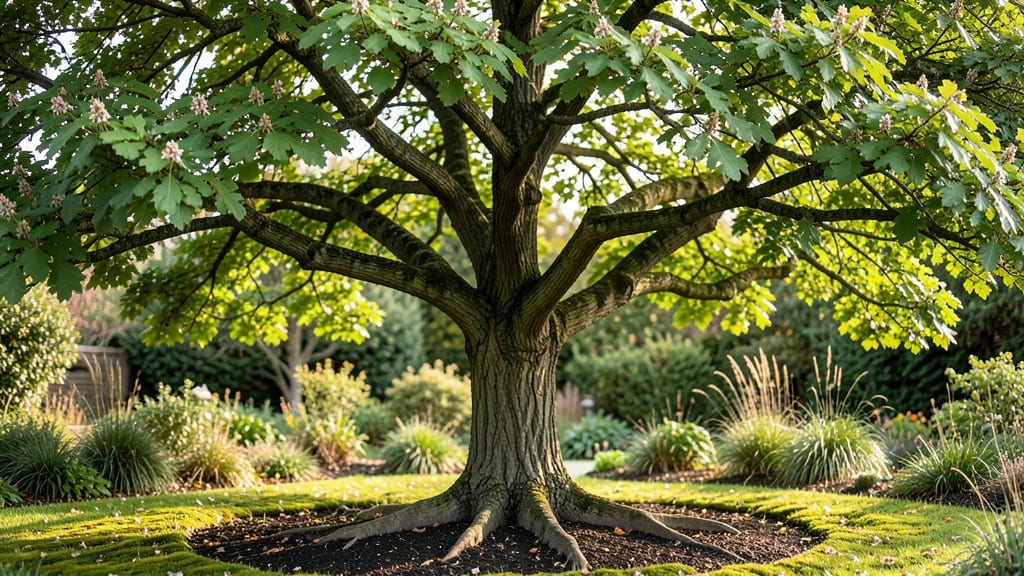
Identifying the tree in your yard starts with just five clear photos of its leaves. 🌿 I’ve spent years helping neighbors puzzle over mysterious trees—whether it’s a towering oak or a scraggly pine—and the secret is always in the details: leaf shape, edge texture, and even how they attach to the branch.
Most common yard trees—like maples, birches, or elms—have distinct leaf patterns. A simple leaf key (shape, lobes, veins) narrows it down fast. For example, oak leaves have pointed lobes, while maple leaves split into finger-like points.
Snap photos from different angles, and you’ll have enough clues to match it to a database in minutes.
Once you know the species, you’ll unlock care tips tailored to its needs—whether it’s watering young pines differently from shade-loving maples. You might also spot early signs of pests or diseases specific to that tree, saving you from costly surprises later.
This method works for any yard, from suburban backyards to urban sidewalks. No fancy tools needed—just your phone and a little curiosity. Ready to put a name to that mystery canopy?
Identifying Trees Through Leaf Traits
If you’re staring at your yard wondering, “What tree is in my yard?”, the answer often lies in the leaves—specifically, their shape, edges, veins, and arrangement. But why do these traits matter so much?
The way a tree’s leaves grow, their structure, and even their seasonal changes are all tied to the species’ evolutionary adaptations, climate preferences, and survival strategies. Here’s why these features are your best clues—and how to spot them like a pro.
Every tree species has a unique leaf shape, almost like a biological signature. These variations aren’t random—they’re the result of millions of years of evolution to optimize sunlight capture, water retention, and defense against pests. For example:
- Broad, flat leaves (like those of maples or oaks) maximize surface area for photosynthesis, ideal for trees in warm, moist climates where water isn’t scarce.
- Needle-like leaves (found in pines or spruces) reduce water loss and protect against harsh winds, perfect for cold, dry, or high-altitude environments.
- Palmate or pinnate veins (like fingers spreading from a central point or a feather-like pattern) dictate how efficiently the tree transports water and nutrients.
Actionable tip: Snap a photo of a single leaf from different angles—top, bottom, and side. The underside often reveals hidden details like hairy textures (common in elms) or prominent veins (a dead giveaway for walnuts).
The serrated, lobed, or smooth edges of a leaf aren’t just for aesthetics—they’re defense mechanisms. Sharp teeth (like on hickory or oak leaves) deter herbivores, while smooth edges (common in willows) might indicate a tree adapted to fast-growing, short-lived leaves.
Even the way edges curl or wilt can hint at the species’ stress tolerance:
- Deeply lobed leaves (e.g., white oak) suggest a tree that thrives in well-drained soil and can handle drought.
- Serrated edges (e.g., birch or ash) often belong to trees that grow in temperate forests with moderate rainfall.
- Entire (smooth) edges (e.g., magnolia) typically belong to trees that prioritize water retention in humid climates.
Pro tip: Look for consistency—if most leaves on a branch have jagged edges but one or two don’t, it might be a hybrid or a young sapling still developing. 🔍
A leaf’s vein pattern isn’t just decorative—it’s a highway for nutrients and water, and it reveals how a tree balances growth and survival. The two main types, pinnate (feather-like) and palmate (hand-like), serve different purposes:
| Venation Type | Common Trees | Why It Matters |
|---|---|---|
| Pinnate | Oak, walnut, ash, hickory | Efficient for tall trees—veins run parallel, reducing water loss in broad canopies. |
| Palmate | Maple, horse chestnut, sweetgum | Ideal for trees in dense forests where sunlight is limited—maximizes light absorption. |
| Reticulate (net-like) | Citrus, fig, some oaks | Common in tropical/subtropical trees where rapid growth is prioritized. |
Key observation: Hold the leaf up to light—you’ll see how veins branch. A single central vein (midrib) with smaller veins fanning out? That’s pinnate. Multiple main veins radiating from one point? Palmate. 🌞
How leaves attach to the stem and their phyllotaxy (arrangement pattern) can narrow down your tree’s identity faster than you’d think. These patterns are hardwired into the species’ DNA and affect everything from airflow to sunlight exposure:
- Alternate arrangement (leaves staggered up the stem, e.g., oak, maple): Common in trees that need to maximize canopy space.
- Opposite arrangement (pairs at each node, e.g., dogwood, ash): Often found in trees that grow in shaded understories.
- Whorled arrangement (3+ leaves per node, e.g., buckeye): Rare but a dead giveaway for specific species.
Actionable tip: Look at a branch’s entire structure. If leaves spiral upward (like a screw), it’s alternate. If they form perfect pairs or clusters, it’s opposite or whorled. 🌀
Leaves don’t just fall—they transform in predictable ways based on the tree’s life cycle. Evergreens keep their needles year-round because they’re adapted to cold, dry conditions, while deciduous trees shed leaves to conserve water and energy during winter. Even the color changes before fall can hint at the species:
- Bright red/orange (maple, sumac): High levels of anthocyanins (antioxidants) that protect leaves from frost.
- Yellow (birch, aspen): Chlorophyll breaks down, revealing hidden pigments.
- Brown (oak, beech): Tannins dominate, a sign of drought resistance.
Pro tip: If your tree holds onto dead leaves (like ginkgo or sweetgum), it’s a marcescence trait—common in trees that evolved in areas with late frosts. 🍁
Identify And Care For Tree
Now that you know why your yard might be home to an unidentified tree, it’s time to take action! Whether you’re dealing with an invasive species, a beloved shade provider, or a mystery plant that’s just there, the right steps will help you manage it effectively.
Below, we’ve mapped out practical solutions based on common scenarios—plus prevention tips to keep future surprises at bay.
Before you prune, plant, or panic, double-check your findings with these easy methods:
- 📸 Leaf Photo Comparison Use apps like PictureThis, PlantNet, or Google Lens to upload close-ups of leaves, bark, and flowers. Snap shots from multiple angles (top, bottom, side) for accuracy.
- 🌿 Local Arboretum or Extension Office Many regions offer free tree ID services. Email or visit with your photos—experts can confirm species and even share local growth habits.
- 📚 Field Guide or Online Database Books like The Tree Book by Allen Coombes or websites like USDA Plants Database let you filter by region for faster matches.
✨ Pro Tip: If your tree is young, dig 1–2 inches deep near the base to check for root structure (taproots vs. fibrous roots), which can hint at species like oaks or maples.
Once you’ve ID’d your tree, customize your approach based on its needs:
🌳 If It’s a Native Tree (e.g., Oak, Maple, Dogwood)
- 🌿 Mulch Properly – Spread 2–4 inches of mulch (wood chips, bark) in a 3-foot ring around the trunk (but keep it 6 inches away from the bark to avoid rot). - 💧 Water Deeply – 1–2 inches per week (more in drought).
Use a soaker hose to encourage deep root growth. - 🌱 Prune Smartly – Remove dead, crossing, or diseased branches in late winter/early spring (when the tree is dormant). Use sterilized tools to prevent spreading disease.
Don’t:
- ❌ Over-fertilize – Most native trees thrive in moderate soil and may suffer from too many nutrients.
- ❌ Wrap the Trunk – Avoid plastic or thick mulch against the bark, which can trap moisture and cause bark rot.
🚨 If It’s an
Invasive Species (e.g., Bradford Pear, Tree of Heaven, Japanese Knotweed)
- 🗑️ Remove It Completely – Invasive trees spread aggressively. Cut stumps and apply horticultural vinegar or copper sulfate to kill roots. - 🌱 Replace with Natives – Swap invasives for local alternatives (e.g., replace Bradford Pear with Serviceberry or Eastern Redbud). - 🔍 Monitor Nearby Areas – Invasives often resprout from roots or seeds.
Check your yard seasonally for regrowth.
Don’t:
- ❌ Let It Seed – Many invasives (like Bradford Pear) produce thousands of seeds—remove fruit clusters before they drop.
- ❌ Assume “Small” Means Safe – Some invasives (e.g., Autumn Olive) start small but choke out natives quickly.
🌿 If It’s a Fruit/Nut-Producing Tree (e.g., Apple, Walnut, Hickory)
- 🍎 Harvest Responsibly – Pick fruits before they fall to avoid pests/animals spreading them.
Wear gloves—some (like Poison Ivy lookalikes) can irritate skin. - 🌱 Thin Young Trees – If overcrowded, remove smaller trees to give your target tree 6–10 feet of space. - 🐛 Pest-Proof It – Watch for borers, aphids, or squirrels.
Use neem oil or beneficial insects (like ladybugs) for organic control.
Don’t:
- ❌ Ignore Allergies – Trees like Walnut release juglone, a toxin harmful to some plants (e.g., tomatoes, azaleas). Keep them 20+ feet away from sensitive crops.
- ❌ Over-Prune – Heavy fruit production can stress the tree—prune only to improve airflow (not for aesthetics).
Even after ID’ing your tree, new surprises can pop up. Stay ahead with these low-effort habits:
| Problem | Prevention Tip | When to Do It |
|---|---|---|
| Seedlings from unknown trees | Pull weeds + seeds monthly in spring/fall. Use a soil solarizer in hot months. | Spring & Fall |
| Invasive spread | Mulch with cardboard under trees to block light (suffocates weeds/seeds). | Year-round (especially spring) |
| Pests/diseases | Inspect leaves weekly for holes, spots, or sap. Spray neem oil preventatively. | Early spring & late summer |
| Overcrowding | Plant new trees 15+ feet apart. Prune young trees to encourage strong structure. | When planting new trees |
| Soil erosion | Add compost annually to improve drainage and root health. | Early spring or fall |
Got a specific problem with your tree? Here’s a rapid-response guide:
| Issue | Quick Fix |
|---|---|
| Yellowing leaves | Check for overwatering (fix by letting soil dry) or nutrient deficiency (add iron sulfate or compost). |
| Cracked bark | Seal with tree wound pruning sealant (only for small wounds—large ones should be pruned). |
| Fungal growth (mushrooms) | Remove mushrooms + surrounding soil (they feed on decaying wood). Improve drainage. |
| Animal damage (chewed bark) | Wrap trunk with tree guard (metal or plastic) to deter rabbits/squirrels. |
| Leaf curl | Likely pest-related (e.g., mites). Spray with soapy water or horticultural oil. |
🌟 Final Reminder: Even the most stubborn tree mysteries have solutions—just observe, research, and act. And if all else fails? Call a local arborist for a pro opinion. Your yard (and future homebuyers) will thank you!
Frequently asked questions
What’s the best time of year to identify my yard tree?
Late spring through early summer is ideal! That’s when most trees have full foliage, making leaf shape, size, and vein patterns easiest to spot. Evergreens like pines or spruces can be identified year-round, but deciduous trees (like oaks or maples) are trickiest in winter when they’re bare.
Can I identify a tree just from bark or fruit?
Bark and fruit can help, but they’re not enough alone! Bark patterns (like smooth birch or furrowed oak) give clues, and fruit/nuts (like acorns or apples) narrow it down further. However, leaf shape is the most reliable identifier—always photograph leaves from multiple angles for accurate results.
What if my tree doesn’t match any online databases?
Start by checking regional databases (like your state’s USDA Plants Database)—some trees are rare or localized. If still unsure, consult a local arboretum or extension office with your photos. They can compare against specimens in their collections or suggest a professional arborist.
How do I tell the difference between a young tree and a mature one?
Young trees often have softer leaves and thinner bark, while mature trees develop thicker bark patterns and larger, more complex leaves. Look for seedlings or saplings nearby—these are clear signs of a young tree. Mature trees also tend to have broader canopies and more pronounced branch structures.
Are there any toxic trees I should avoid?
Yes! Some common yard trees have toxic parts—like poison ivy (leaves of three, let it be), black walnut (juglone toxin harms other plants), or yew trees (all parts are poisonous). If you suspect toxicity, wear gloves when handling leaves or sap, and avoid planting near edible crops or children’s play areas.