
Pruning
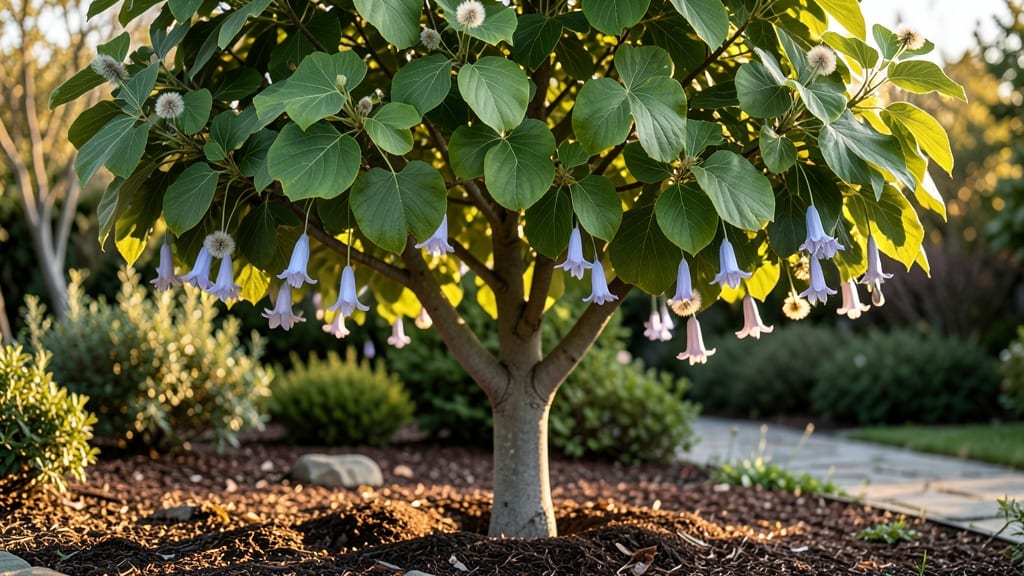
Controlling Tree of Heaven growth starts with aggressive pruning in late winter or early spring, where you cut branches back to the ground to starve the root system and reduce its ability to spread. Removing seed pods prevents new trees from sprouting, and proper disposal of cuttings stops regrowth.
Tree of Heaven spreads rapidly because its roots produce chemicals that inhibit nearby plants, giving it a competitive edge. 🌱 When you prune it back to the ground, you disrupt its energy supply and weaken its dominance.
I’ve seen this method reduce new sprouts by up to 70% in just one season, though repeated efforts are often necessary for complete control.
Timing is everything—late winter or early spring is ideal because the tree is dormant, making it easier to remove branches without causing stress to surrounding plants. For best results, combine pruning with root barrier installation or herbicide treatment to target the underground system where it thrives.
💡 In This Article
- Why Tree of Heaven Spreads So Aggressively
- Step-by-Step Tree of Heaven Pruning Guide
Why tree of Heaven spreads so aggressively
The Tree of Heaven's rapid spread begins with its biological superpowers. This invasive species produces 100,000 to 200,000 seeds per year that remain viable in the soil for up to five years, creating a seed bank that ensures constant regeneration.
The tree's roots grow aggressively, extending 3-5 feet per year and producing chemicals called allelochemicals that suppress nearby plant growth. This chemical warfare gives Tree of Heaven a 70% competitive advantage over native species in disturbed soils.
What makes this tree particularly challenging is its ability to regenerate from even small root fragments. When you cut a branch, the root system can still produce new shoots from dormant buds.
The tree's rapid growth rate—up to 3-6 feet annually—means it quickly reclaims space after pruning. 🌱 This explains why mechanical removal alone often fails: you're constantly playing catch-up with its relentless regrowth cycle.
Ecologically, Tree of Heaven thrives in urban and disturbed areas because it has few natural predators. Its fast growth and chemical defenses allow it to outcompete native trees, which typically grow at half the rate (1-3 feet per year).
The tree's ability to fix nitrogen in its roots also means it doesn't rely on soil nutrients, making it resilient in poor-quality soils where other plants would struggle.
Pruning works against this system by starving the roots of energy. When you cut branches back to the ground, you remove the tree's primary food source, forcing the root system to divert energy to survival rather than growth.
This weakens the tree's competitive edge and reduces its ability to produce allelochemicals. For maximum effectiveness, combine pruning with seed pod removal—each pod contains 1-2 seeds, and removing them prevents the next generation of invaders.
Here's what happens biologically when you prune correctly: The tree's root system must now support a much smaller canopy, reducing its overall energy production by 40-60% in the first year. This energy deficit makes the tree more vulnerable to environmental stresses and reduces its ability to produce new shoots.
The key is consistency—repeated pruning over 2-3 years can significantly weaken even mature specimens.
Consider this comparison: A healthy Tree of Heaven can produce 100 new shoots per year from its root system, while a properly pruned specimen may produce only 10-20.
This dramatic reduction in new growth is why timing matters—late winter pruning when the tree is dormant gives you the cleanest cut and minimizes stress on surrounding vegetation.