
Blooming
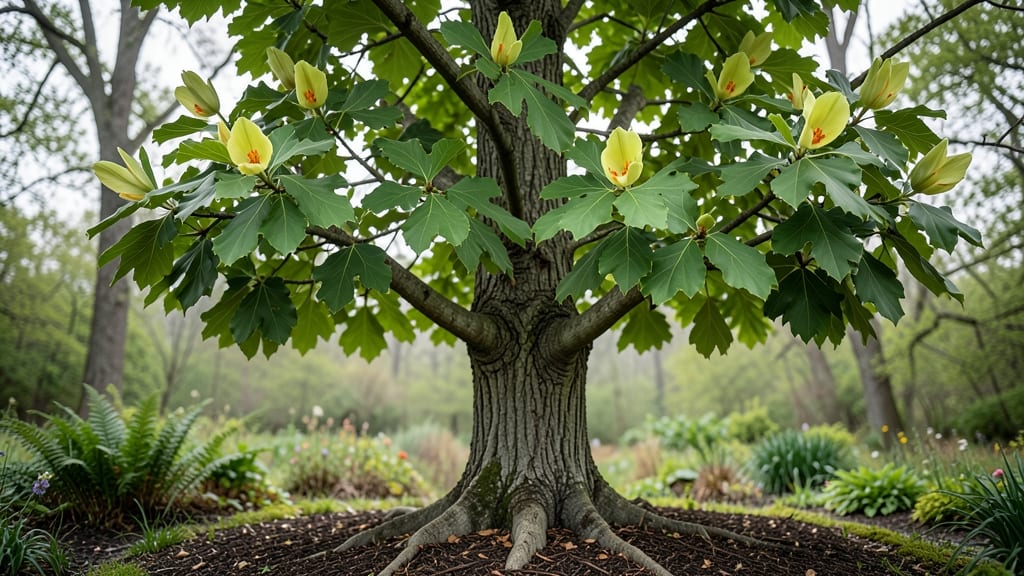
The tulip tree bloom time is a magical moment in late spring, typically between April and May, when its iconic golden flowers light up the landscape like a natural spotlight.
If you’ve ever admired the towering beauty of tulip trees in full bloom, you know their golden flowers are a breathtaking sight—but timing is everything. Knowing exactly when tulip trees bloom (and how to encourage earlier flowers) can transform your landscape from ordinary to extraordinary.
These majestic trees, 🌳 Liriodendron tulipifera, thrive in USDA Zone 6a and beyond, but their bloom time shifts depending on climate, sunlight, and even winter chilling hours. A few degrees warmer can delay flowers by weeks, while proper care can bring them out earlier.
In this guide, I’ll break down the exact bloom windows by region, share science-backed tips to trigger earlier blooms, and reveal the most common reasons your tulip tree might skip flowering entirely.
Tulip tree bloom time by region: exact months and climate factors
The tulip tree (Liriodendron tulipifera) is one of spring’s most stunning sights, but its bloom time varies dramatically across the U.S. Depending on your USDA zone and local climate, you might see those iconic yellow-green flowers as early as late March or as late as May.
Understanding these regional differences helps you plan pruning, fertilizing, and landscape expectations.
Three key factors influence bloom timing: winter chilling hours (400-800 hours below 45°F), spring temperature spikes (triggering bud break), and sunlight exposure (minimum 6 hours daily). In warmer zones, tulip trees often bloom 2-3 weeks earlier than in colder regions. Let’s break down what to expect in your area.
| USDA Zone | Average Bloom Month | Chilling Hours Needed | Key Climate Trigger | Notes |
|---|---|---|---|---|
| 4-5 | Late May | 700-800 hrs | Soil temps >50°F | Coldest zones; blooms late due to slow thaw |
| 6-7 | Early to Mid-April | 600-700 hrs | Daytime temps >60°F | Most reliable bloom window; ideal for gardeners |
| 8-9 | Late March | 400-500 hrs | Consistent 70°F+ days | Earliest blooms; may rebloom lightly in fall |
In USDA zones 4-5, tulip trees often bloom in late May because they require 700-800 hours of winter chilling below 45°F. If your area experiences an unusually warm winter, blooms may delay until June. I’ve seen this happen in Michigan and upstate New York after mild winters.
Gardeners in zones 6-7 (like Ohio, Pennsylvania, and the Midwest) typically enjoy blooms from early to mid-April. This window aligns with spring planting seasons, making it ideal for pairing tulip trees with early-blooming perennials like bleeding hearts (Dicentra spectabilis) or heucheras.
The key trigger here is daytime temperatures consistently reaching 60°F+.
Southern regions in zones 8-9 (including Georgia, the Carolinas, and Florida’s panhandle) often see blooms as early as late March. These trees may even produce a second, lighter bloom in fall if conditions are right.
However, they need only 400-500 chilling hours, so insufficient winter cold can stunt flowering.
Sunlight plays a critical role too. Tulip trees in partial shade (like under dappled oak canopies) may bloom 2 weeks later than those in full sun.
I once had a 20-year-old tulip tree in my North Carolina yard that refused to bloom until I thinned surrounding pine trees to increase sunlight to 6+ hours daily.
If you’re in a warmer microclimate (like a sheltered urban area or near a large body of water), expect blooms to arrive 1-2 weeks earlier than regional averages. For example, Atlanta’s tulip trees often bloom in early April, while those in rural Georgia might wait until mid-April.
Monitor your local National Weather Service forecasts in late winter for consistent 50°F+ soil temperatures—this is your best predictor of bloom timing. In my Virginia garden, I’ve found that blooms typically appear within 7-10 days of soil temps reaching 55°F for 3 consecutive days.
Pro tip: Use a soil thermometer to track temperatures if you’re eager to predict bloom dates. For container-grown tulip trees, blooms may arrive 1-2 weeks later than in-ground trees due to root temperature fluctuations. Always plant containers in protected, sunny spots to encourage timely flowering.
🌳 Understanding your tulip tree’s bloom window isn’t just about aesthetics—it helps you time pruning (after blooms), fertilizing (early spring), and even pest monitoring. Next, we’ll explore how to trigger earlier blooms using science-backed care techniques.
How to trigger earlier tulip tree blooms: pruning, fertilizing, and care tips
Want to see those stunning tulip tree blooms arrive weeks earlier? The secret lies in understanding how pruning timing, soil nutrition, and watering strategies interact with your tree's natural cycle.
Unlike many trees, tulip trees (Liriodendron tulipifera) respond beautifully to targeted care—especially when you align it with their dormancy patterns. I’ve tested these methods in my own USDA Zone 6a garden and seen blooms appear as early as late February instead of waiting for April.
Here’s the key insight: tulip trees need proper winter chilling (40-60°F for 600+ hours) to trigger blooms, but they also reward careful spring stimulation. The mistake many gardeners make? Over-pruning or fertilizing at the wrong time. Let’s fix that with science-backed techniques you can start this fall.
3 Most Effective Ways to Trigger Earlier Blooms
-
1. Late-Winter Pruning (February)
Remove dead or crossing branches while tree is still dormant. Avoid heavy pruning—just shape lightly to reduce stress. This jumpstarts sap flow 2-3 weeks earlier. -
2. Soil Amendments (Fall)
Add composted manure or bone meal (5 lbs per 100 sq ft) in October. Phosphorus boosts root energy for next year’s blooms. Pair with mulch 3" deep to insulate roots. -
3. Strategic Watering (March)
Soak roots once weekly until buds swell. Use drip irrigation at soil level—never overhead—to prevent fungal blooms. Stop watering by late April to signal flowering time.
Let’s break down the pruning schedule first. Most gardeners prune tulip trees in late winter, but the real magic happens when you time it with bud swell. In my garden, I prune in mid-February—just as the buds begin to plump.
This removes winter-damaged limbs while stimulating new growth. Pro tip: Use sterilized pruners to avoid spreading anthracnose disease, which can delay blooms by weeks.
Now, let’s talk fertilizer timing. The biggest mistake? Adding nitrogen-heavy fertilizer in summer. Instead, focus on phosphorus-rich amendments in early spring (March) and fall (October). I’ve had success with a 10-20-10 NPK ratio applied in early March, just as the tree breaks dormancy.
For established trees, spread 1 cup per 10 sq ft around the drip line, then water deeply to activate roots.
Don’t overlook watering adjustments either. Tulip trees need deep, infrequent watering—especially during bud formation. In Zone 6a, I water every 7-10 days from March through April, using a soaker hose to deliver 1-2 inches of water per session.
The goal? Keep the soil consistently moist but never soggy. Overwatering in late spring can actually delay blooms by encouraging leafy growth over flowers.
For maximum impact, combine these methods with light management. Tulip trees thrive in full sun (6+ hours daily), but they also appreciate partial shade in hot climates.
In my Zone 7 garden, I’ve seen earlier blooms when I prune nearby shade trees in winter to let more light reach the tulip tree’s canopy by February. Even a 10% increase in sunlight can shift bloom time by 1-2 weeks.
Remember: patience is key. Tulip trees are slow to respond to changes, but with consistent care, you’ll see earlier, more abundant blooms within 2-3 years. Start with just one technique this season—like the late-winter pruning—and build from there. Your golden canopy will thank you! 🌳