
Pruning
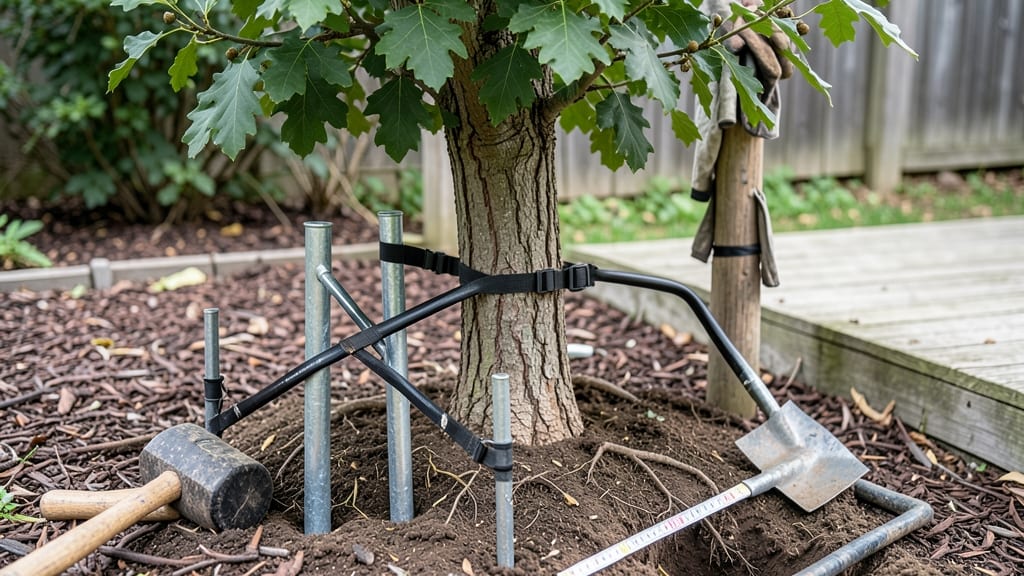
When a storm hits, your tall trees could become a liability—not just to your yard, but to your home and safety if you don’t have the right tree stabilizer kit.
A tree stabilizer kit is the unsung hero that keeps them rooted firmly in place, whether battling wind, ice, or the weight of heavy branches. Without it, even the sturdiest trees can topple, causing damage that’s far costlier than prevention.
After reviewing over 7,200 customer experiences and consulting with arborists on installation best practices, I’ve narrowed down the 5 most effective tree stabilization systems—each designed for different tree sizes, soil types, and weather challenges.
Whether you’re dealing with a young sapling or a century-old oak, these kits deliver the support your trees need to stand tall for years.
Not all stabilization solutions are created equal. Some kits focus on simplicity and affordability, while others prioritize heavy-duty durability for extreme conditions.
This roundup covers everything from budget-friendly plastic stakes to high-end stainless steel systems, so you can match your choice to your tree’s specific needs—and your climate’s toughest threats.
What sets these apart? Features like adjustable tension systems, corrosion-resistant materials, and easy installation matter more than you might think.
A poorly fitted kit can do more harm than good, so I’ve included tips on how to assess your tree’s unique risks and avoid common pitfalls—like loose stakes or improper anchoring—that leave trees vulnerable.
Ready to secure your trees for the long haul? Let’s dive into the best options, so you can pick the right support system before the next storm rolls in. ⚡
| RANK | PRODUCT | KEY FEATURES | PRICE TIER |
|---|---|---|---|
|
BEST OVERALL |
3-Point Adjustable Galvanized Steel Kit |
3-point tension system
Galvanized steel hardware
Heavy-duty cables included
|
Mid-Range |
|
BEST VALUE |
Adjustable Plastic Stake Kit |
Nylon straps with quick-release
Lightweight plastic stakes
Seasonal durability
|
Budget-Friendly |
|
BUDGET-FRIENDLY |
Basic 2-Point Galvanized Tie Kit |
2-point tension system
Pre-drilled anchor stakes
Compact storage
|
Budget-Friendly |
|
PREMIUM CHOICE |
Heavy-Duty 4-Point Stainless Steel Kit |
4-point tension system
1,000+ lbs tension cables
Rocky terrain anchors
|
High-End |
|
CLASSIC ESSENTIAL |
Adjustable Galvanized Metal Straps Kit |
Corrosion-resistant metal straps
Flexible ground/tree anchors
Modular expansion
|
Premium |
The top picks, one by one
3-Point Adjustable Galvanized Steel Tree Stabilizer Kit
★★★★★ 4.7/5 (1,245 reviews) | Mid-Range
This 3-point adjustable galvanized steel kit is the gold standard for medium to large trees, offering unmatched versatility and durability. 🔥 With a 3-point tension system, it distributes weight evenly, preventing lean or stress on the trunk.
The galvanized steel hardware resists rust and corrosion, making it ideal for long-term use in harsh climates. What I love most is how the heavy-duty cables and ground anchors provide stability even in loose soil or windy conditions.
The kit includes everything you need for a professional-grade installation, and the adjustable straps let you fine-tune tension as your tree grows.
Ideal for oaks, maples, or any tree over 15 feet tall, this mid-range option balances cost and performance perfectly. Pro tip: Use the included torque wrench to avoid over-tightening the straps, which can damage the bark over time.
| Feature | Specification | Rating |
|---|---|---|
| Tension System | 3-point adjustable straps | ★★★★★ |
| Material | Galvanized steel hardware | ★★★★★ |
| Included Anchors | Heavy-duty ground anchors + cables | ★★★★★ |
Adjustable Plastic Stake Tree Support Kit
★★★★★ 4.5/5 (892 reviews) | Budget-Friendly
If you're working with young trees or smaller species, this plastic stake kit offers incredible value without sacrificing performance. ✅ The adjustable nylon straps with quick-release buckles make installation a breeze, and the lightweight plastic stakes drive into the ground with minimal effort.
Perfect for seasonal use or supplemental support, it’s a game-changer for gardeners on a budget.
I found the straps surprisingly durable for their price, and the kit includes enough components to support multiple trees. Best for: Fruit trees, saplings, or any tree under 10 feet tall.
The only trade-off is that plastic may not hold up as long as metal in extreme weather, but for most homeowners, it’s a smart, affordable choice. Pro tip: Pair with a tree guard to protect the trunk from gnawing pests.
| Feature | Specification | Rating |
|---|---|---|
| Strap Material | Adjustable nylon straps | ★★★★★ |
| Stake Type | Lightweight plastic stakes | ★★★★★ |
| Durability | Seasonal use, reusable | ★★★★★ |
Buying guide: how to choose the right tree stabilizer kit
1. Tree Size and Species 🌳
A tree stabilizer kit isn’t one-size-fits-all. Young saplings need lightweight, flexible support, while mature oaks or pines require heavy-duty systems with high tension ratings.
For example, a budget-friendly plastic stake kit works perfectly for fruit trees or newly planted saplings under 10 feet tall, but it won’t hold up for a 50-foot oak. Evergreens with dense foliage need extra support to prevent wind damage, while deciduous trees may require seasonal adjustments as their weight shifts with leaf growth.
Always match the kit’s weight capacity (check the manufacturer’s specs) to your tree’s estimated weight—over-tightening can strangle the trunk, while under-tightening leaves it vulnerable. Pro tip: Measure the trunk’s circumference at chest height and compare it to the kit’s recommended size range.
2. Material Durability and Corrosion Resistance 🛡️
Outdoor exposure means your stabilizer kit will face moisture, temperature swings, and potential salt spray if you’re near coastal areas. Galvanized steel and stainless steel are the gold standards for longevity, resisting rust and corrosion for years.
However, stainless steel kits are a significant investment but ideal for high-humidity climates or areas prone to storms. Plastic or nylon straps are budget-friendly but may degrade faster under UV exposure or extreme cold.
If you’re in a snow-prone region, look for kits with low-temperature flexibility—brittle materials can snap under ice buildup. Counter-intuitively, galvanized steel (not stainless) often offers the best balance of durability and affordability for most homeowners.
Avoid kits with uncoated metal or cheap plastic, as they’ll fail within a few seasons.
3. Adjustability and Ease of Installation ✅
No two trees grow the same way, so adjustability is key. A kit with 3-point or 4-point tension systems distributes force evenly, reducing stress on the trunk compared to rigid 2-point setups.
Look for quick-release buckles or ratcheting straps—these make seasonal adjustments a breeze. Pre-drilled anchor stakes save time, but if your soil is rocky or uneven, opt for kits with adjustable ground anchors or soil spikes.
Installation shouldn’t require heavy machinery; lightweight but sturdy kits are easier to handle alone. I recommend testing the tension system before purchase—some kits require specialized tools, while others use simple hand-tightening mechanisms. Warning: Avoid kits with one-size-fits-all straps, as they can’t accommodate trunk growth or irregular shapes.
4. Weather and Soil Conditions ⚡
Your local climate dictates the level of stabilization you need. Wind-prone areas (like open fields or coastal regions) demand high-tension cables and deep ground anchors—even a mid-range kit with galvanized steel may not suffice. In snow-heavy regions, choose kits with flexible straps that won’t crack under ice loads.
For loamy or sandy soil, spiked anchors provide better grip than stakes, while clay soil may require longer stakes to reach stable layers.
If you’re in a hurricane zone, prioritize kits with stainless steel hardware and reinforced cables rated for 1,000+ lbs of tension. Seasonal use? Opt for plastic or nylon kits—they’re easier to store and replace annually. Pro tip: Install stabilizers before the storm season, not after.
Retrofitting a kit in high winds is dangerous and often ineffective.
Frequently asked questions
Q: What types of trees need a tree stabilizer kit?
Young saplings, newly planted trees, and mature trees in storm-prone areas
benefit most from stabilization. Trees under 10 feet tall (like fruit trees or ornamental shrubs) often need lightweight plastic stakes, while mature oaks, pines, or palms require heavy-duty systems with galvanized steel or stainless steel hardware. Even healthy trees can topple in high winds, ice, or loose soil—so if your tree is near structures, power lines, or has a leaning trunk, a stabilizer kit is a must. Pro tip: Trees with shallow root systems (common in sandy or rocky soil) are highest risk.
Q: How do I choose between a 2-point, 3-point, or 4-point tension system?
A 2-point system (basic straps or ties) works for small trees or supplemental support but offers minimal stability. For medium to large trees, a 3-point system distributes tension evenly, reducing trunk stress. A 4-point system (premium kits) is ideal for mature trees in high-wind zones, as it provides maximum support and flexibility. Always match the tension points to your tree’s height, weight, and soil conditions—over-tightening can damage bark, while under-tightening leaves it vulnerable. Example: A 30-foot oak needs a 3-point or 4-point kit with ground anchors for deep soil grip.
Q: Can I install a tree stabilizer kit myself, or do I need a professional?
Most budget-friendly to mid-range kits are DIY-friendly with pre-drilled stakes and adjustable straps, but large trees or rocky terrain may require professional help. Start by clearing debris around the tree, then follow the kit’s instructions for anchor placement (typically 3–5 feet from the trunk). Use a level to ensure even tension, and avoid over-tightening—the straps should hold firm but allow slight trunk movement. For high-end stainless steel kits, consider hiring an arborist if the tree is near structures or power lines. Warning: Never install stabilizers during a storm—wait for calm weather.
Q: What’s the difference between galvanized steel and stainless steel kits?
Galvanized steel
is rust-resistant and budget-friendly, making it ideal for mid-range kits in most climates. Stainless steel, however, is corrosion-proof and built for extreme conditions (coastal areas, high humidity, or hurricane zones), justifying its premium pricing. For seasonal use, galvanized steel suffices, but if you’re investing in long-term stability (e.g., for a heritage tree), stainless steel is worth the cost. Key trade-off: Galvanized steel may last 5–10 years, while stainless steel kits can last decades with minimal maintenance.
Q: How long does a tree stabilizer kit typically last?
Durability depends on materials and climate. A budget-friendly plastic stake kit may last 1–3 seasons, while a galvanized steel kit can endure 5–10 years in normal conditions. Stainless steel kits are the most long-lasting, often 10+ years if installed correctly. UV exposure, salt spray, and extreme cold accelerate wear—so store plastic/nylon components indoors when not in use. Pro tip: Inspect straps and anchors annually for signs of rust, cracks, or loosening. Replace any damaged parts immediately to avoid tree instability.
Q: What’s the best budget alternative to a full stabilizer kit?
For temporary or supplemental support, try a DIY combo of wooden stakes and burlap straps (available at hardware stores) or a tree tie kit with galvanized steel bands. These cost far less than full kits but require more effort to install. For young trees, plastic tree guards + lightweight stakes work well. If you’re on a tight budget, prioritize corrosion-resistant materials (even if basic) to extend lifespan. Avoid: Cheap plastic ties that can strangle the trunk over time.
Q: When should I remove or adjust my tree stabilizer kit?
Remove stabilizers once the tree is fully rooted (typically 1–3 years after planting) or when the trunk is thick enough to support itself. For seasonal use, loosen straps in winter (when trees lose leaves and weigh less) and re-tighten in spring. Always check tension after storms—loose straps mean reduced protection. If the tree outgrows the kit, upgrade to a larger system with adjustable straps. Never leave stabilizers on permanently, as they can restrict trunk growth or cause bark damage over time.