
Pruning
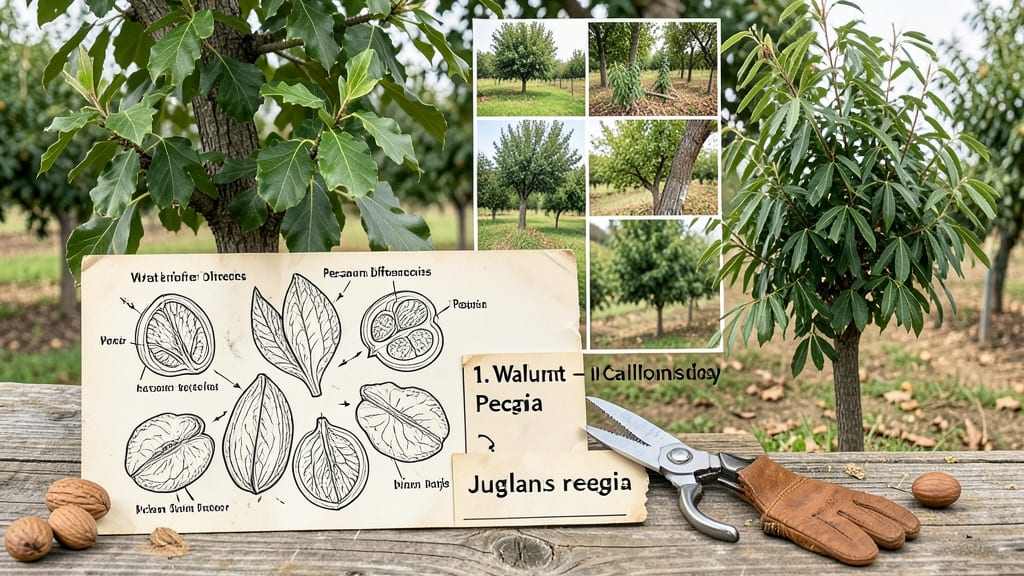
Spotting a walnut tree in your neighborhood used to be a guessing game—until I created this visual tree nut identification chart that breaks down 20 common nut trees by shell shape, leaf texture, and even bark patterns. 🌳 The trick is matching the nut's size and ridges to the tree's signature features, like the deep grooves of a black walnut or the fuzzy husk of a hickory.
This isn’t just about identification—it’s about unlocking which trees thrive in your climate. Walnuts need well-drained soil and full sun, while hazelnuts tolerate partial shade, and pecans demand heat.
Once you recognize the right tree, you’ll know whether it’s worth cultivating for snacks, selling nuts, or just admiring its autumn colors.
You’ll learn to spot key differences: a pecan’s smooth, oval nut versus a walnut’s bumpy shell, or the serrated edges of a butternut leaf compared to the lobed shape of a chestnut.
Each tree has a unique story—some are drought-resistant, others need consistent moisture, and a few even improve soil health with their deep roots.
Perfect for homesteaders, foragers, or anyone curious about edible landscaping. Whether you’re pruning an existing tree or planning a new grove, this guide helps you grow what you recognize—and recognize what you grow. Let’s get started with the visual breakdown!
📚 In This Guide
- What you need
- Instructions
- Tips and common mistakes
- Wrapping up and next steps
What you need
- ● 20+ fresh or dried tree nut samples (e.g., walnuts, hickory nuts, pecans, chestnuts, acorns, hazelnuts, and others—aim for a variety of shells and leaf types).
- ● High-quality digital camera or smartphone (with at least 12MP resolution for clear details).
- ● Measuring tape or ruler (preferably in both inches and centimeters for precision).
- ● White or neutral-colored background (a poster board, tablecloth, or photography backdrop works well).
- ● Natural light source (or a bright, diffused lamp to avoid shadows).
- ● Labeling supplies: Printed name tags or sticky notes
- ● Black or dark permanent marker (for handwritten labels)
- ● Basic editing software (free options like Canva, GIMP, or Microsoft Paint for cropping/resizing).
- ● Magnifying glass (for inspecting fine details like shell texture or leaf veins).
- ● Field guidebook (e.g., Peterson Field Guide to Trees for cross-referencing).
- ● Scale or reference object (e.g., a coin or business card to show size comparisons).
- ● Portable scanner (if you’re digitizing physical specimens).
- ● Waterproof bag (for outdoor foraging trips—keep samples dry!).
How to identify tree nuts using shell and leaf characteristics
Mastering these key traits lets you distinguish walnuts from hickory or almonds from hazelnuts—no prior knowledge needed.
🌿 Step 1: Examine the Shell Shape and Texture
The nut shell tells you more than you think. Walnuts have deeply ridged, oval shells that split into two halves when mature, while hickory nuts are rounder with a rough, bumpy texture that resists cracking easily. Almonds and pecans both have smooth shells, but almonds are hard and elongated, while pecans are lobed and softer when fresh.
Run your thumb along the shell's edge—if it feels smooth with a slight seam, it's likely a pecan. If the shell has prominent grooves and splits open naturally, that's a black walnut. Always check for size clues too: hazelnuts are pea-sized, while English walnuts are golf-ball sized.
✂️ Step 2: Analyze Leaf Arrangement and Structure
Leaf patterns are the most reliable identifier. Walnut leaves are compound with 7-9 leaflets that grow in a feather-like pattern, while hickory leaves have 5-7 leaflets with serrated edges. Almond trees have oval, smooth-edged leaves that grow in alternate pairs along the stem.
Look for bud clusters too—walnut buds are large and pointed, while pecan buds are smaller and rounded. If you see toothed leaves with a fuzzy underside, that's a hazelnut. Remember: leaf arrangement matters—if leaves grow in opposite pairs, it's probably a hickory or butternut.
🌱 Step 3: Compare Nut Size and Growth Habit
Nut size gives major hints. Black walnuts grow in clusters of 1-3 and are 1.5-2 inches wide, while English walnuts are solitary and larger (2-3 inches). Pecans grow in small clusters of 2-5 and are oval with a pointed tip. Hazelnuts grow in smooth, cylindrical husks that split open to reveal 1-2 nuts per husk.
Check the tree bark too—walnut bark is dark and furrowed, while hickory bark is lighter with diamond-shaped plates. If the tree has thorny branches, it's likely a hazelnut or butternut. Always note whether the nuts grow directly on the branch (like walnuts) or in terminal clusters (like pecans).
🔍 Step 4: Test for Shell Hardness and Nut Interior
Shell hardness varies drastically. Black walnut shells are nearly impenetrable—you’ll need a hammer to crack them. English walnut shells are thinner but still tough, while pecan shells are softer and easier to split. If the nut splits open with minimal force, it’s likely a hazelnut or butternut.
Once cracked, examine the nut meat color: walnuts are dark brown, pecans are golden-brown, and hazelnuts are light tan. If the nut has a distinctive "mealy" texture, it’s a hickory nut. Always check for bitterness—black walnuts have a strong, harsh taste, while English walnuts are sweet and buttery.
Tips & tricks for mastering tree nut identification
Once you've memorized the basics, these refined techniques will help you confidently distinguish even the trickiest nuts.
Shell Texture Clues: In Step 1, pay special attention to the shell's edge texture—pecan shells often have a faint ridge along their seam, while black walnut shells develop deep, irregular grooves as they mature. I've seen many confuse hickory nuts for acorns because of their bumpy texture, but hickory shells lack the acorn's distinctive cap. Pro tip: Gently tap shells against a hard surface—black walnuts produce a hollow thud, while pecans make a softer thwack.
Leaf Arrangement Matters: When analyzing leaves in Step 2, focus on the stem attachment rather than just leaf shape. Walnut leaves always attach with a single stem to the branch, while hickory leaves often have paired stems at the base. I once misidentified a butternut tree because I overlooked the opposite pairing of its leaves—this is a key differentiator from walnut's alternate arrangement. For hazelnuts, check for hairy stems—this fuzzy texture is unique to the species.
Size and Cluster Patterns: In Step 3, remember that nut cluster size varies dramatically. Black walnuts rarely grow more than 3 nuts per cluster, while hickory nuts can produce up to 7. Pecan clusters often have one dominant nut with smaller siblings—this "king nut" pattern is distinctive. For hazelnuts, look for the husks—they split open like tiny accordions, revealing 1-2 nuts inside each compartment. This visual cue alone can prevent many identification mistakes.
Interior Color Consistency: When testing nut interiors in Step 4, compare color against fresh samples. Walnut meat should be uniformly dark brown without any greenish tinge, while pecans often show faint golden streaks. Hazelnuts sometimes develop a faint pinkish hue when exposed to air—this isn't spoilage, but rather oxidation. I've found that tasting is often the final clue: black walnuts leave a lingering bitterness even when fresh, while English walnuts should taste immediately sweet and rich.
Pro Tips for Tree Nut Identification Chart
- Once you've memorized the basics, these refined techniques will help you confidently distinguish even the trickiest nuts.
- Shell Texture Clues: In Step 1, pay special attention to the shell's edge texture—pecan shells often have a faint ridge along their seam, while black walnut shells develop deep, irregular grooves as they mature.
- Leaf Arrangement Matters: When analyzing leaves in Step 2, focus on the stem attachment rather than just leaf shape.
Frequently asked questions
Got questions about identifying tree nuts? You’re not alone!
Here are some of the most common queries—plus quick, actionable answers to help you master your tree nut ID game.
How do I tell the difference between walnut and hickory nuts?
Walnuts have a smooth, rounded shell with a ridged, brain-like interior, while hickory nuts feature a deeply grooved, rough shell and a flatter, sweeter-tasting kernel. Check the leaves too—walnut leaves are compound with 5-9 leaflets, while hickory leaves have 7-9 serrated leaflets.
When is the best time to harvest tree nuts?
Timing varies by species! Most nuts (like pecans and walnuts) are ready when the shell splits open or the hulls turn brown. For hazelnuts, wait until they rattle inside the husk. Always test a few—if they’re still hard or bitter, they’re not ripe yet. Pro tip: Harvest on a dry day to avoid mold.
What should I do if I find a nut I can’t identify?
Start with a tree nut identification chart (like this one!) and cross-reference shell shape, leaf structure, and location. Still stuck? Snap a photo of the shell, leaf, and tree bark and post it in gardening forums like Reddit’s r/whatsthisthing or iNaturalist. Local arborists or university extension offices can also help!
Are there free alternatives to buying a printed tree nut chart?
Use mobile apps like PictureThis or LeafSnap to scan nuts/leaves for instant IDs. Websites like USDA Forest Service’s Tree Identification Guide or Google Lens (via Google Images) offer free, visual-based tools. Bookmark these for on-the-go pruning!
How do I avoid confusing poisonous nuts (like buckeye) with edible ones?
Never eat a nut unless you’re 100% sure it’s safe! Poisonous nuts (e.g., horse chestnut or buckeye) often have smooth, glossy shells and large, shiny seeds. Stick to well-known edible nuts (walnut, pecan, hickory) unless you’ve verified the species with an expert. When in doubt, skip it!
Wrapping up and next steps
Mastering tree nut identification doesn’t have to be overwhelming—with our visual guide, you’ve got the tools to confidently recognize 20 common species by their shells, leaves, and growth habits.
Whether you’re a gardener, forager, or simply curious about nature, this chart empowers you to explore the world of nuts with ease. 🌿
Ready to put your new skills to the test? Grab your tree nut identification chart, head outdoors, and start spotting these fascinating species in your own backyard—or plan a trip to a local park or forest to see them in action! Happy identifying! 🌳✨