
Trees
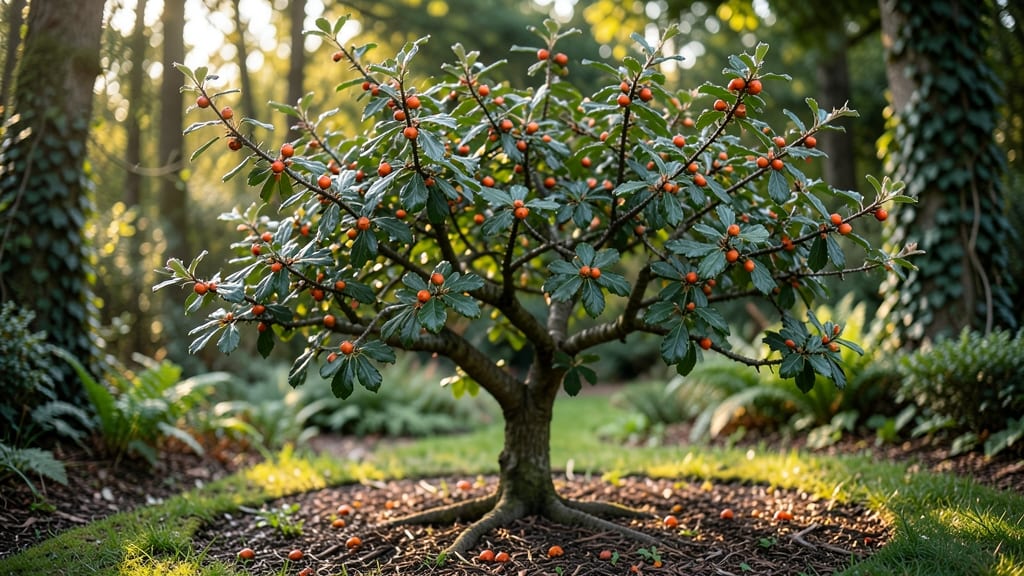
A thorn tree with yellow fruit that feeds birds all winter. 🌿 I’ve grown thorny trees like hawthorn and pyracantha for years—their vibrant yellow berries brighten even the dullest winter days while keeping pests at bay.
These cold-hardy plants thrive in tough conditions, from rocky slopes to city sidewalks, and their thorns make them natural privacy barriers. The secret to their success? Well-draining soil, full sun, and minimal fuss once established. They handle drought better than most ornamentals, and their flowers attract pollinators year-round.
My favorite variety, Pyracantha coccinea, produces berries that persist through frost, feeding birds when little else is available. You’ll end up with a tree that’s equal parts functional and stunning—disease-resistant, low-maintenance, and packed with wildlife value.
The thorns might sound intimidating, but they’re actually a gardener’s best friend, keeping deer and rabbits away from your other plants. Perfect for hedges, focal points, or wildlife-friendly borders. Let’s get yours growing!
Behind The Yellow Fruit Color
If you’ve spotted a thorny tree bearing bright yellow fruit and wondered why nature chose that specific hue, the answer lies in a fascinating mix of biology, survival strategies, and environmental cues.
While some yellow-fruited trees—like the Hawthorn or Crabapple varieties—simply follow genetic programming, others respond dynamically to their surroundings. Here’s why those vibrant yellow fruits appear when (and where) they do.
Many thorny trees with yellow fruit rely on evolutionary color coding to lure animals into dispersing their seeds. Yellow is a universal signal in nature: it stands out against green foliage, catches the eye of birds and mammals, and often indicates ripeness. For example:
- Hawthorn trees (Crataegus spp.) produce yellow berries that ripen in late summer to early fall, a time when migratory birds are actively seeking high-energy foods. The bright color ensures they’re noticed from a distance.
- Crabapple varieties (Malus spp.) like ‘Dolgo’ or ‘Centennial’ develop yellow fruit as a direct result of selective breeding. Gardeners and nurseries prioritize fruit color for aesthetic appeal, but the trait also subtly improves pollination success.
Actionable insight: If you’re growing a yellow-fruited thorn tree for wildlife, plant it near shrubs with dense foliage. The contrast will make the fruit even more visible to foraging animals.
Yellow fruit isn’t just about genetics—it’s also a chemical response to sunlight. Trees produce carotenoids (the pigments responsible for yellow, orange, and red hues) as a byproduct of photosynthesis. When a tree receives optimal sunlight, it ramps up sugar production in the fruit, which triggers carotenoid synthesis.
| Factor | Effect on Fruit Color |
|---|---|
| Full sun (6+ hours/day) | Intensifies yellow pigmentation due to higher sugar and carotenoid levels. |
| Partial shade (3–6 hours/day) | May produce paler yellow or greenish fruit (less sugar = diluted pigment). |
| Low light (<3 hours/day) | Fruit may remain green or develop weak yellowing; growth slows, reducing pigment production. |
Pro tip: If your thorn tree’s yellow fruit is duller than expected, it might need more light. Prune nearby overgrowth or transplant it to a sunnier spot before flowering season.
Cold-hardy thorn trees often require a chilling period to trigger fruit maturation. While some varieties (like Hawthorn) can handle frost, others need a balance of warm days and cool nights to develop vibrant yellow hues. Here’s how temperature plays a role:
- Daytime warmth (70–85°F): Stimulates photosynthesis and sugar accumulation in the fruit.
- Nighttime chill (40–55°F): Slows respiration, preserving sugars and intensifying carotenoid production.
- Early frost or heatwaves: Can disrupt ripening. Extreme heat may cause fruit to over-ripen rapidly (turning brownish), while frost can halt color development entirely.
✨ Key takeaway: For consistent yellow fruit, monitor your tree’s microclimate. If summers are scorching in your area, consider mulching to regulate soil temperature or choose a variety bred for heat tolerance (e.g., Crataegus phaenopyrum, the Washington Hawthorn).
Believe it or not, stress from pests or disease can actually enhance yellow pigmentation in some trees. When a tree is under attack (e.g., by aphids, scale insects, or fungal infections), it may redirect energy toward producing secondary metabolites, including carotenoids, as a defensive mechanism.
However, this is a double-edged sword:
- Mild stress → Brighter yellow fruit (due to increased pigment production).
- Severe stress → Poor fruit development, stunted growth, or even fruit drop.
What to watch for: If your tree’s yellow fruit is unusually vibrant but the leaves show signs of damage (e.g., holes, discoloration), inspect for pests. A targeted treatment (like neem oil or horticultural soap) can restore balance without sacrificing fruit color.
Revive Your Thorn Tree’s Health
If your thorn tree with yellow fruit is struggling—whether it’s dropping leaves, showing stunted growth, or producing sparse fruit—don’t panic. Most issues have simple fixes, and with the right care, your tree can bounce back stronger than ever.
Below, we’ve mapped out common problems to practical solutions, so you can diagnose and treat issues like a pro. Plus, we’ll share prevention tips to keep your tree thriving for years.
A lack of essential nutrients often causes yellowing leaves, weak branches, or poor fruit production. Here’s how to diagnose and treat common deficiencies:
| Symptom | Likely Cause | Solution | Prevention Tip |
|---|---|---|---|
| Yellow leaves (older first) | Nitrogen deficiency | Apply a balanced 10-10-10 fertilizer or compost in spring. | Mulch with organic matter (like leaf litter or grass clippings) annually. |
| Pale green or yellow leaves | Iron deficiency (chlorosis) | Use an iron chelate spray or add sulfur to acidic soil. | Test soil pH every 2–3 years; aim for 6.0–7.0. |
| Small, weak fruit | Phosphorus deficiency | Fertilize with bone meal or a phosphorus-rich blend (5-10-10). | Plant cover crops like clover to boost soil phosphorus naturally. |
| Purple stems/leaves | Potassium deficiency | Apply a potassium sulfate or wood ash supplement. | Avoid overwatering; potassium leaches in soggy soil. |
💡 Pro Tip: Always water the soil before fertilizing to prevent root burn. For severe deficiencies, repeat treatments every 4–6 weeks until improvement is visible.
Overwatering or underwatering can stress your thorn tree, leading to fruit drop, wilting, or disease susceptibility. Follow these steps to get it right:
🔥 Fixing Overwatered Soil
- Signs: Yellowing leaves, mushy stems, or roots smelling rotten.
- Solution:
- Stop watering immediately and let the soil dry out.
- Improve drainage by amending soil with perlite or coarse sand.
- If roots are rotting, trim affected areas with sterilized pruners and repot in fresh, well-draining soil.
- Prevention: Water only when the top 2 inches of soil are dry. Use a pot with drainage holes if growing in containers.
🍳 Fixing Underwatered Tree
- Signs: Crispy leaf edges, drooping branches, or fruit shriveling.
- Solution:
- Water deeply 2–3 times per week (adjust for climate).
- Mulch around the base to retain moisture.
- If the tree is in a container, move it to a shadier spot to reduce evaporation.
- Prevention: Group plants together to create a microclimate that retains humidity. Use a moisture meter for accuracy.
Pests like aphids, scale insects, or fungal diseases (e.g., powdery mildew) can drain your tree’s energy. Act fast with these targeted fixes:
👨🍳 Treating Insect Infestations
- Aphids/Scale: Wipe leaves with a soapy water solution (1 tsp mild soap per quart of water). Repeat weekly until pests vanish.
- Borers: Prune infested branches and treat cuts with pruning paint. For severe cases, use neem oil as a natural repellent.
- Prevention: Encourage beneficial insects like ladybugs by planting companion flowers (e.g., marigolds). Inspect new plants before bringing them home.
🌡️ Managing Fungal Issues
- Powdery Mildew: Spray with a baking soda mix (1 tbsp baking soda + 1 quart water + a drop of soap). Ensure good air circulation.
- Root Rot: Remove infected soil, trim blackened roots, and repot in sterilized, fungicide-treated soil.
- Prevention: Avoid overhead watering; water at the base. Space trees properly for airflow.
If your thorn tree is flowering but not fruiting, it might need a little encouragement:
- Pollination Boost: Hand-pollinate by gently transferring pollen with a brush between flowers.
- Pruning for Light: Thin dense branches to improve sunlight penetration to inner buds.
- Fertilizer Adjustment: Switch to a low-nitrogen, high-phosphorus fertilizer (e.g., 2-5-3) to promote flowering.
- Seasonal Care: Apply a late-winter bloom fertilizer to stimulate early spring flowers.
🎯 Pro Tip: If your tree is young (<3 years old), be patient—it may need time to mature before bearing fruit consistently.
With these solutions, your thorn tree should regain its vigor and reward you with vibrant yellow fruit for seasons to come. Stay consistent with care, and your tree will thrive! 🌿🍊
Frequently asked questions
Which thorn trees produce bright yellow fruit?
The most common varieties include Pyracantha (firethorn), Crataegus (hawthorn), and some Malus (crabapple) species. Pyracantha coccinea is particularly prized for its clusters of vibrant yellow-orange berries that persist through winter, while Crataegus phaenopyrum (Washington hawthorn) offers bright yellow fruit along with striking fall color.
Are the berries from these trees safe for humans?
Most yellow fruit from thorn trees is not edible raw due to high acidity or bitterness, though some varieties like Pyracantha berries can be cooked into jams or preserves. Always research your specific species—some, like hawthorn, contain cyanogenic glycosides that can be toxic in large quantities. When in doubt, admire them for their wildlife value!
How do I prune a thorn tree to encourage more fruit?
Prune in late winter or early spring before new growth begins. Remove 1/3 of the oldest wood to improve airflow and sunlight penetration, then thin out crossing branches. Focus on shaping the tree while keeping its natural form—avoid heavy pruning after flowering, as this can reduce fruit production for that season.
Why aren't my thorn tree's berries turning yellow?
Yellow fruit development often requires full sun exposure (6+ hours daily) and proper nutrient balance. Check for iron deficiency (yellow leaves) or phosphorus deficiency (small fruit). If your tree isn't getting enough light, try transplanting it to a sunnier location or use an iron chelate spray to boost color intensity.
Can these trees grow in containers?
Dwarf varieties like Pyracantha 'Tiny Wine' or Crataegus 'Cocktail' thrive in containers, but ensure the pot has drainage holes and use well-draining soil. For best results, repot every 2–3 years and prune regularly to control size. Container-grown thorn trees may produce slightly smaller fruit but maintain their vibrant yellow color with proper care.