
Trees
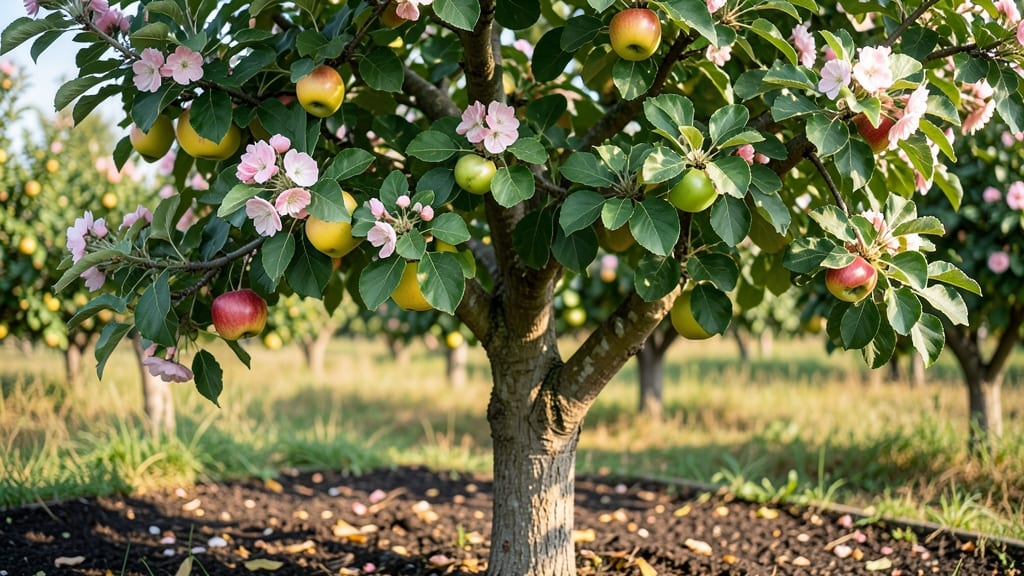
Can one apple tree produce fruit? Yes, but whether it bears abundant harvest depends on its pollination type (self-pollinating vs cross-pollinating), proper care like pruning and sunlight exposure, and even seasonal conditions.
Apple trees can absolutely produce fruit alone, but the amount varies wildly based on their genetics.
Self-pollinating varieties like 'Golden Delicious' or 'Gala' set fruit without help, while cross-pollinating types such as 'Granny Smith' need another compatible tree nearby for pollinators to transfer pollen. 🍏 Even self-sufficient trees benefit from good sunlight (at least 6-8 hours daily) and regular pruning to direct energy toward fruit production rather than excessive foliage.
What many gardeners overlook is that even self-pollinating trees sometimes produce sparse fruit if they're stressed—whether from poor soil, drought, or pest damage. I've seen 'Fuji' trees loaded with fruit one year and nearly bare the next, simply because spring weather disrupted pollinator activity.
The key is matching your variety to your climate and giving it consistent care.
💡 In This Article
- Self-Pollinating vs Cross-Pollinating Apple Tree Varieties
- Maximizing Fruit Production in a Single Apple Tree
Self-pollinating vs cross-pollinating apple tree varieties
The difference between self-pollinating and cross-pollinating apple trees comes down to their flower anatomy and genetic compatibility. Self-pollinating varieties like 'Anna' or 'Liberty' have flowers that produce both pollen and viable seeds within the same blossom.
Their pollen grains contain all the necessary genetic material to fertilize the ovules, creating fruit without external help. This is why you'll often see these trees bearing fruit even when planted alone in urban backyards or small gardens.
Cross-pollinating varieties, however, have flowers that require pollen from a different tree of the same species to set fruit. The classic example is 'Granny Smith,' which needs another compatible variety like 'Braeburn' within a 50-foot radius for bees to transfer pollen effectively.
The reason? Their pollen is genetically incomplete for self-fertilization, needing genetic diversity to trigger proper fruit development. This is why orchards often plant multiple varieties in close proximity—each tree acts as both pollinator and pollinatee, maximizing yield.
Here's how you can tell the difference: self-pollinating trees typically have smaller, more compact flowers with tightly clustered petals, while cross-pollinating varieties often feature larger, showier blossoms that attract more pollinators. 🌸 The key visual clue is the flower's center—self-pollinators often have more visible stamens (pollen-producing parts) compared to pistils (seed-bearing parts), while cross-pollinators show a more balanced structure.
This floral architecture explains why some trees produce fruit alone while others need companions.
What most gardeners don't realize is that even "self-sufficient" trees can benefit from cross-pollination. While they may set fruit alone, introducing a compatible variety nearby can increase fruit size by 20-30% through genetic diversity.
This is why commercial orchards often plant multiple varieties—it's not just about pollination, but about creating stronger, more uniform fruit. The trade-off? You'll need more space and potentially more maintenance for multiple trees, but the harvest rewards can be substantial.
Consider these common varieties and their pollination needs:
- Self-pollinating: 'Golden Delicious', 'Gala', 'Fuji', 'Anna', 'Liberty' (can produce fruit alone)
- Cross-pollinating: 'Granny Smith', 'Braeburn', 'McIntosh', 'Honeycrisp' (need compatible partner)
- Partially self-fruitful: 'Red Delicious', 'Jonagold' (produce some fruit alone but better with pollination)
The best approach is to check your tree's variety label or consult local agricultural extensions—they often maintain databases of compatible pollination partners for your region. This small step can mean the difference between a modest harvest and a tree heavy with fruit. 🍎