
Blooming
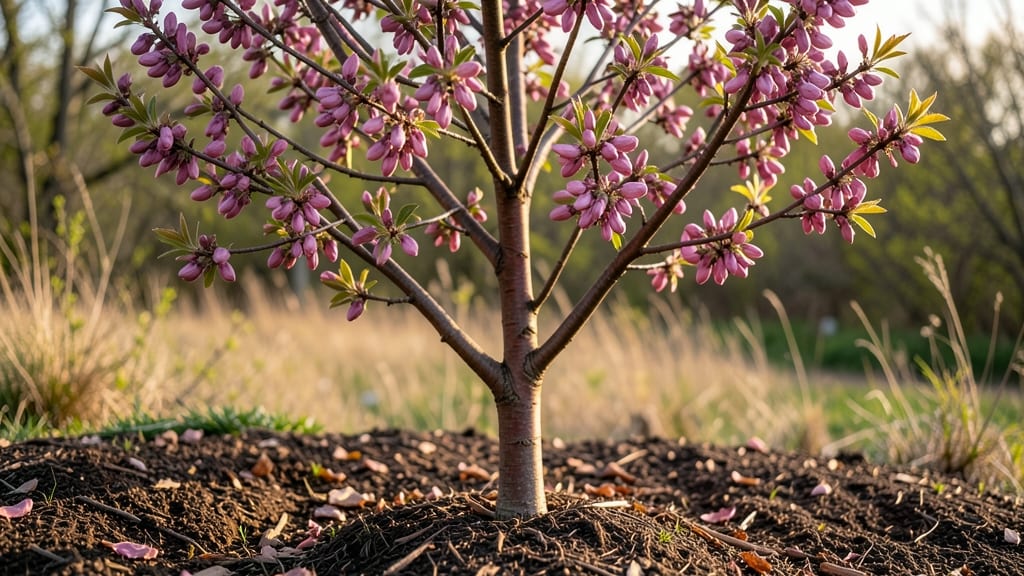
After your redbud tree's stunning pink blooms fade, the real work begins—pruning it right unlocks that lush summer foliage you're dreaming of. 🌿 I've watched my redbud go from sparse to shockingly vibrant after just a few strategic cuts, and the secret isn't complicated: timing, technique, and a little patience.
The worst mistake? Waiting too long or hacking at branches without a plan—both lead to weak regrowth or missed opportunities for fuller canopies.
Here's the game-changer: prune right after blooming (April-May) when you can see last year's growth clearly. Cut back dead or crossing branches first, then shape the tree by removing up to 25% of the oldest wood to encourage fresh growth.
Avoid heavy pruning in fall—it stresses the tree before winter. A sharp pair of pruners and a 50-foot tape measure (for taller trees) are all you really need, plus some elbow grease.
What you'll end up with is a redbud that bursts with deep green, heart-shaped leaves by summer, often accompanied by those unexpected late-season blooms on new growth. The foliage stays dense all season long, and you'll notice fewer bare spots where pests or disease once took hold.
Mulch around the base afterward to retain moisture—this tree drinks up water during hot spells.
This method works for redbuds in USDA zones 4-9, whether they're young saplings or mature specimens. The same principles apply whether you're pruning a single tree in your yard or managing a row of them along a property line.
Once you master this, your redbud will become the standout feature of your landscape every season.
📚 In This Guide
- What you need
- Instructions
- Tips and common mistakes
- Wrapping up and next steps
What you need
- ● Pruning shears: Bypass pruners (for cuts up to ½ inch thick), sharp and sterilized (rubbing alcohol or 10% bleach solution). Quantity: 1 pair.
- ● Loppers: For branches ½ to 1½ inches thick. Look for bypass or anvil-style with extended handles for leverage. Quantity: 1 pair.
- ● Pruning saw: Curved-tooth hand saw for thick branches (1½+ inches). Quantity: 1.
- ● Gloves: Leather or heavy-duty nitrile (protects from thorns and sap). Quantity: 1 pair.
- ● Disinfectant: 70% isopropyl alcohol or 10% bleach solution (1 part bleach to 9 parts water) to sterilize tools between cuts. Quantity: Small spray bottle or container.
- ● Rag or paper towels: For wiping tools and branches. Quantity: 2-3.
- ○ Ladder: Sturdy, extendable (if tree exceeds 6 feet). Ensure it’s rated for your weight and has non-slip feet. Optional but highly recommended.
- ● Heavy-duty trash bags: For collecting pruned branches. Quantity: 1-2.
- ○ Marking twine or flags: Colored twine or small tags to mark branches for future reference (optional but helpful for large trees). Quantity: Small spool or 5-10 flags.
- ● Timing: Prune immediately after blooms fade (late spring) or dormant season (late fall/winter). Avoid pruning during active growth or extreme weather.
- ● Weather check: Choose a dry, overcast day (humidity slows healing). Morning pruning is ideal to avoid midday heat stress.
- ● Safety gear: Safety glasses (to protect from debris) and closed-toe shoes (recommended but not always listed).
- ● Tree assessment: Inspect the tree for diseased or dead branches (they’ll appear brown, mushy, or hollow) before starting.
- ● Sterilize tools before and after pruning to prevent spreading disease. 🌡️
- ● Use sharp tools—dull blades tear wood, increasing infection risk. Test by snipping a small branch; it should cut cleanly. ✨
- ● For large trees, prune in layers (remove ⅓ of the canopy at a time) to avoid shocking the tree. 🎯
Instructions for pruning redbud trees after bloom
Here’s how I restore your redbud’s shape and boost next year’s flowers—without sacrificing its natural beauty.
✂️ Step 1: Time Your Pruning for Peak Regrowth
Wait until 4-6 weeks after flowering, when new leaves have fully unfurled but before summer heat sets in. This timing ensures you’re not cutting off next year’s bloom buds hidden in the leaf axils. I always prune on a cool, overcast morning—the tree handles stress better then.
Look for branches that bloomed heavily this spring. These will have clusters of spent flowers at their tips. If you prune too early, you risk removing flower buds that haven’t formed yet. If you wait too long, you’ll encourage excessive leafy growth at the expense of next year’s blooms.
✂️ Step 2: Remove Dead, Damaged, or Crossing Branches First
Start by eliminating any branches that are dead, broken, or rubbing against others. Dead branches snap easily when bent—if it cracks, it’s time to cut. For crossing branches, remove the one growing at a sharper angle to the trunk, as it’ll heal better. Use clean, sharp pruners to make 45-degree cuts just outside the branch collar.
Don’t worry about removing small twigs here—focus on the main structural branches. The goal is to open up the center of the tree for better airflow and sunlight penetration. I always step back after each cut to visualize the tree’s new shape.
☀️ Step 3: Thin Out Overcrowded Areas for Light Penetration
Next, thin out 20-30% of the canopy by selectively removing branches that are growing inward or too densely. Aim to maintain an open, vase-like shape—redbuds naturally grow this way. Start at the outer edges and work your way inward, cutting branches back to their point of origin or to a lateral bud.
Watch for branches that cast shade on others. These are prime candidates for removal. You’ll see new growth filling in the gaps within weeks. Avoid cutting more than 25% of the tree’s total foliage in one session—this prevents shock and encourages robust regrowth.
✂️ Step 4: Shape the Tree’s Natural Form
Now focus on refining the tree’s silhouette. Redbuds have a graceful, slightly weeping habit, so avoid heavy topping. Instead, prune to encourage a balanced, open center with branches evenly spaced. Cut back any overly long branches by ⅓ of their length, making cuts just above a leaf bud that faces outward.
Step back frequently to check your progress. The goal is to enhance the tree’s natural beauty, not force an unnatural shape. If a branch looks out of place, ask yourself: “Does this improve airflow or sunlight?” If not, reconsider the cut.
💧 Step 5: Clean Up and Fertilize for Recovery
After pruning, remove all debris from the area to prevent disease. Sterilize your pruners with 70% rubbing alcohol between cuts if you’re working with multiple trees. Apply a balanced, slow-release fertilizer (10-10-10) around the root zone to support new growth.
Water deeply but don’t overdo it—the tree needs moisture to heal, but soggy soil invites root rot. Mulch with 2-3 inches of organic mulch (like shredded bark) to retain moisture and protect roots. Avoid piling mulch against the trunk, as this can cause rot.
Tips & tricks for perfect redbud tree pruning after bloom
These simple tricks will help you prune your redbud like a pro—keeping it healthy, blooming beautifully, and looking its best for years to come.
Timing is Everything: The 4-6 week window after flowering is critical because that's when your redbud's flower buds for next spring are already forming in the leaf axils. I can't stress enough how important it is to avoid pruning too early—you'll accidentally remove next year's blooms before they even develop. Look for fully unfurled leaves as your green light to start.
Branch Identification Made Easy: Here's what nobody tells you—dead branches often have a different texture than live ones. Run your fingers along the branch: live branches feel firm and snap with a clean break, while dead branches crumble easily. For crossing branches, remember the "sharper angle wins" rule. The branch growing at the more acute angle will heal better when removed.
Visualizing the Canopy: Before you make any cuts, step back and look at your tree from all sides. Redbuds naturally grow in a graceful, vase-like shape. Imagine removing branches that would create "holes" in this shape—those are your targets. You'll notice how the tree's natural silhouette emerges as you visualize each cut's impact on the overall form.
Post-Pruning Care: After you've finished pruning, don't just walk away! That 10-10-10 fertilizer and 2-3 inches of organic mulch make all the difference. I've seen trees recover beautifully from pruning when given proper aftercare, but the ones that get neglected often struggle. Water deeply but avoid creating soggy conditions—your goal is to support healing, not create root rot.
Pro Tips for Redbud Tree After Bloom
- These simple tricks will help you prune your redbud like a pro—keeping it healthy, blooming beautifully, and looking its best for years to come.
- Timing is Everything: The 4-6 week window after flowering is critical because that's when your redbud's flower buds for next spring are already forming in the leaf axils.
- Branch Identification Made Easy: Here's what nobody tells you—dead branches often have a different texture than live ones.
Frequently asked questions
Got questions about your redbud tree after those stunning pink blooms fade? Here are some of the most common concerns—and their straightforward solutions!
When is the best time to prune a redbud tree after it blooms?
Prune your redbud tree immediately after blooming (late spring) to avoid cutting off next year’s flowers. Wait until all blossoms have fallen and new leaves emerge. This timing ensures you shape the tree without sacrificing its vibrant spring display.
Can I prune a redbud tree too late in the season?
While late pruning (summer or early fall) won’t kill the tree, it may reduce next year’s blooms or encourage weak growth. If you must prune later, focus on removing dead or diseased branches—avoid heavy shaping. For best results, stick to post-bloom pruning!
What should I do if my redbud tree isn’t blooming after pruning?
Lack of blooms often signals over-pruning or poor health. Check for:
- Too many cuts (limit to 10-20% of the canopy).
- Underwatering or nutrient deficiency (fertilize in early spring).
- Sunlight issues (redbuds need full sun).
Are redbud trees prone to pests or diseases after blooming?
Redbuds are generally hardy, but watch for:
- Japanese beetles (chew leaves)—handpick or use neem oil.
- Powdery mildew (white fungus)—prune for airflow and apply fungicide.
- Canker diseases (oozing bark)—remove infected branches immediately.
Can I shape a redbud tree into a hedge or topiary?
Redbuds aren’t ideal for hedges—they’re small trees (20-30 ft tall) with delicate branches. However, you can lightly trim to encourage a bushier form. For formal shapes, opt for a ornamental cherry or serviceberry instead—they handle shearing better.
Wrapping up and next steps
Your redbud tree’s post-bloom care doesn’t have to be intimidating—just a little strategic love! With the right pruning techniques, you’re setting the stage for vibrant summer foliage and even more stunning blooms next spring. 🌿
Now that you’re armed with the how-to, grab those shears and give your tree the attention it deserves. Start small if you’re new to pruning, and watch your redbud thrive with confidence!
Ready to transform your garden? Check out our seasonal care calendar for a full year of tree-tastic tips.