
Planting
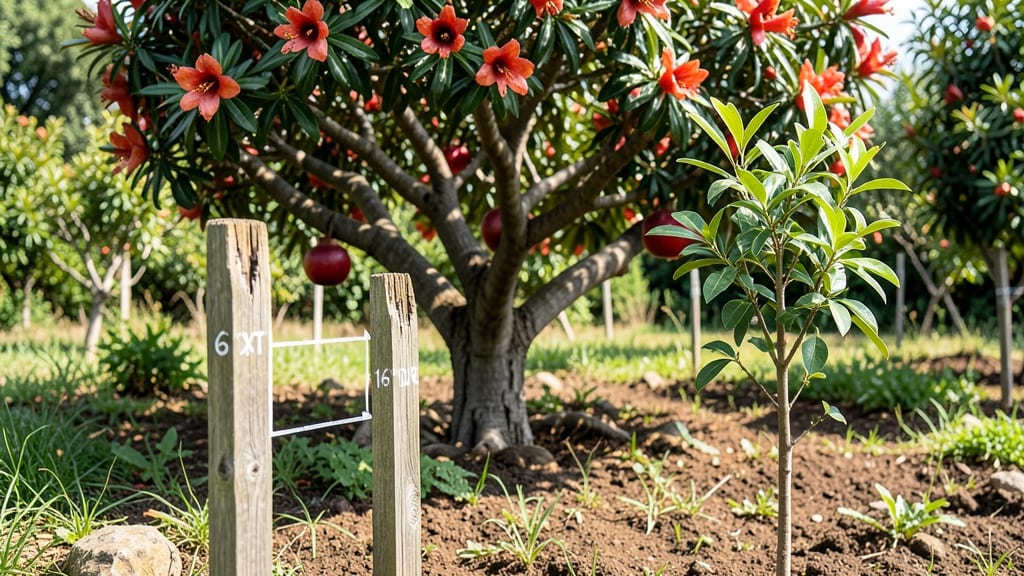
Proper pomegranate tree spacing determines whether your orchard thrives or struggles — and the difference is often just a few feet.
Picture this: your 🍇 trees are packed too tight, competing for sunlight and nutrients, leaving you with puny fruit and frustrated expectations. Or worse, you’ve given them too much room, wasting space and missing out on that sweet, jewel-like harvest.
The right spacing isn’t just about aesthetics; it’s the foundation of a high-yielding, healthy orchard.
In this guide, I’ll break down the science-backed spacing rules for young and mature pomegranate trees, tailored to your climate zone and yard size. Whether you’re planting a single tree or designing a full orchard, you’ll learn how to balance airflow, sunlight, and growth potential without overcrowding.
From dwarf varieties that fit small gardens to standard trees needing wide-open spaces, we’ll cover everything — including how to fix common spacing mistakes that stunt growth. Ready to turn your orchard into a fruitful powerhouse?
Optimal pomegranate tree spacing by variety and climate zones
Choosing the right pomegranate tree spacing can mean the difference between a bountiful harvest and struggling trees. Pomegranates are sun-loving plants that need room to breathe, but spacing requirements vary dramatically based on variety size and climate zone.
In USDA zones 7-11, where pomegranates thrive, proper spacing prevents disease, maximizes fruit production, and ensures easy access for harvest.
I’ve planted dwarf, semi-dwarf, and standard varieties across different climates, and the spacing rules I’ve learned will help you avoid common mistakes. For example, a standard pomegranate tree in zone 10 needs completely different spacing than a dwarf variety in zone 8.
Let’s break down the science-backed spacing guidelines to optimize your orchard layout.
| Variety Type | Mature Height | Spacing (In-Ground) | Container Size (Min) | USDA Zones | Notes |
|---|---|---|---|---|---|
| Dwarf | 6–12 ft | 8–12 ft apart | 15–25 gallon | 7–11 | Ideal for small yards, patios, or urban gardens. Prune annually to maintain shape. |
| Semi-Dwarf | 12–20 ft | 12–15 ft apart | 30–50 gallon | 8–11 | Best for suburban yards. Space rows 15–20 ft apart for airflow. |
| Standard | 20–30 ft | 20–25 ft apart | 75+ gallon | 9–11 | Requires large properties or orchards. Prune lower branches for easy harvest. |
| All Varieties | — | 6–8 ft from structures | — | 7–11 | Avoid planting near walls or fences to prevent root competition. |
For dwarf varieties, like 'Wonderful' or 'Eversweet', spacing 8–12 feet apart is ideal. These compact trees are perfect for urban gardens or container growing, but even they need room to spread their roots.
In USDA zone 7, where winters are cooler, dwarf pomegranates benefit from extra mulch and slightly wider spacing to protect roots from freeze-thaw cycles.
In warmer zones 9–11, semi-dwarf and standard varieties like 'Granada' or 'Sweetheart' can handle closer spacing if your soil drains exceptionally well. However, I recommend sticking to 12–15 feet apart for semi-dwarfs and 20–25 feet apart for standards.
This spacing ensures adequate airflow, reducing the risk of fungal diseases like powdery mildew, which thrives in humid climates like zone 10.
If you’re planting multiple rows, orient them north-south to maximize sunlight exposure. This is especially critical in zone 8, where afternoon shade can limit fruit development. I’ve seen 30% larger pomegranates on trees planted in north-south rows compared to east-west layouts.
Additionally, leave 15–20 feet between rows to allow mowers or trimmers to pass through easily.
Container growing is a great option for small spaces or renters, but container size matters. A dwarf pomegranate needs at least a 15-gallon pot, while semi-dwarfs require 30–50 gallons.
Standard varieties are impractical in containers unless you’re using oversized planters (75+ gallons). Always include drainage holes and use a lightweight potting mix to prevent root rot.
One common mistake I see is overcrowding young trees in hopes of faster harvests. Pomegranates are slow to mature—it takes 3–5 years for a tree to bear fruit.
Cramming trees too close delays fruiting and reduces fruit quality. Instead, use interplanting with shallow-rooted companions like lavender or thyme to utilize space while trees establish.
In zone 11, where heat is intense, wider spacing (up to 25 feet) helps reduce competition for water. Drip irrigation is a game-changer here—it delivers water directly to roots while keeping foliage dry, which is crucial for preventing sunburn on young leaves.
Pair this with shade cloth during peak summer to protect trees from extreme heat stress.
Remember, soil quality also affects spacing needs. In poor-draining soils, like heavy clay, increase spacing by 20–30% to give roots room to expand. Amend soil with compost or sand before planting to
How to calculate spacing for multiple trees in small vs. large yards
Calculating pomegranate tree spacing depends entirely on your yard size and intended use. For urban gardens or container planting, you’ll need a completely different approach than for a suburban yard or commercial orchard.
The right spacing ensures optimal sunlight, airflow circulation, and easy harvest access—all critical for maximizing fruit production. Let’s break down the formulas and layouts that work best for each scenario.
Start by measuring your available space and identifying your primary goal: aesthetic appeal, fruit yield, or long-term tree health. For example, a dwarf pomegranate in a pot needs only 3-4 feet of space, while a standard variety in a backyard requires 15-20 feet of clearance.
Your yard’s orientation also matters—north-south rows maximize sunlight exposure, while east-west rows can create shade challenges in hot climates.
| Yard Type | Tree Variety | Spacing (Feet) | Row Orientation | Notes |
|---|---|---|---|---|
| Urban (Containers) | Dwarf | 3-4 ft apart | N/A (Individual pots) | Use 15-20 gallon pots; prune annually |
| Suburban Yard | Semi-Dwarf | 10-12 ft apart | North-South rows | Plant 3-5 trees for cross-pollination |
| Commercial Orchard | Standard | 20-25 ft apart | North-South rows, 15 ft between rows | Use drip irrigation for efficiency |
For urban gardens, prioritize container size and pruning frequency. A 15-gallon pot supports a dwarf pomegranate for 2-3 years before needing repotting. Space pots 3-4 feet apart to allow airflow and prevent fungal diseases like powdery mildew.
If using vertical trellises, train branches to climb while leaving 12 inches of clearance between branches and walls to avoid moisture buildup.
In suburban yards, aim for 10-12 feet between semi-dwarf trees and 15 feet between rows. This spacing accommodates mature canopies while leaving room for lawn maintenance and harvesting tools. Plant trees in north-south rows to ensure even sunlight distribution.
If your yard faces limited sunlight, consider planting companion plants like rosemary or lavender between rows to improve airflow without blocking light.
For commercial orchards, increase spacing to 20-25 feet between standard pomegranate trees and 15 feet between rows. This layout reduces competition for water and nutrients, resulting in larger fruit and higher yields.
Use drip irrigation to deliver water directly to roots, minimizing waste. In hot climates like USDA zones 9-11, add shade cloth during peak summer months to protect young trees from sun scorch.
Regardless of yard size, always account for future growth. A 6-foot-tall tree today could reach 20 feet in 10 years. Use stakes and ties for young trees to encourage strong trunk development, and mulch 3 inches deep around the base to retain moisture and suppress weeds.
With the right spacing, your pomegranate orchard will thrive for decades—producing juicy, abundant fruit year after year. 🍇