
Pruning
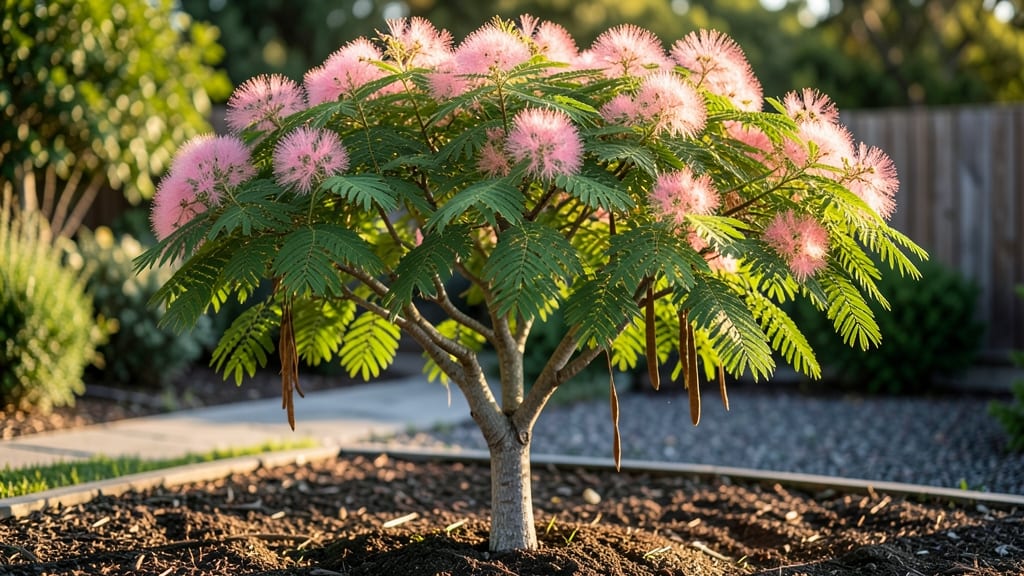
The Persian silk tree uses include serving as fast-growing shade providers, drought-resistant ornamental plants, and wildlife magnets, offering dense foliage for privacy, vibrant flowers for pollinators, and edible seed pods for birds. Their adaptability makes them ideal for urban landscapes and erosion control.
The Persian silk tree uses shine in landscapes because they thrive where other trees struggle—dry climates, poor soil, and urban environments. 🌳 Their rapid growth (up to 3 feet per year) lets you establish privacy screens or shade quickly, while their deep roots prevent soil erosion.
I’ve seen them transform barren lots into lush, functional spaces in just a few seasons, making them a favorite for both practical and aesthetic purposes.
Beyond their landscaping benefits, these trees support local ecosystems by attracting bees, butterflies, and birds with their nectar-rich flowers and protein-packed seed pods. The pods even provide food for wildlife when other plants are dormant, creating a year-round resource.
Their versatility extends to urban settings, where they tolerate pollution and compacted soil better than many native species.
💡 In This Article
- How Persian Silk Trees Adapt to Harsh Climates
- Landscaping and Wildlife-Friendly Planting Strategies
How Persian silk trees adapt to harsh climates
The Persian silk tree's remarkable resilience stems from its deep taproot system, which can extend 10-15 feet below ground. This allows it to access water from deep soil layers during droughts, a feature that sets it apart from shallow-rooted trees like willows, which often struggle in dry conditions.
The tree's leaves also have a waxy coating that reduces water loss through transpiration by up to 30% compared to non-adapted species, making it thrive in arid regions where others wilt.
Growth rates of 2-3 feet per year under optimal conditions (and still 1-2 feet in drought) are powered by its ability to photosynthesize efficiently even in high temperatures.
Studies show its leaves maintain 70-80% of their photosynthetic capacity at 104°F, while many shade trees like poplars drop to 30% or less at similar heat levels. This adaptation explains why Persian silk trees often outperform native species in urban heat islands.
Their soil adaptability comes from a unique root fungus symbiosis called mycorrhizae, which helps break down nutrients in poor-quality soils. Unlike fussy trees that require rich loam, Persian silk trees flourish in sandy, clay, or even slightly alkaline soils with pH levels between 6.0-8.5.
This flexibility makes them ideal for rehabilitation projects where other vegetation fails, such as former mining sites or roadside plantings where soil quality is compromised.
What's particularly impressive is their ability to recover from pruning or damage. When I've seen them in storm-prone areas, they regenerate new branches from dormant buds along their trunks—a trait called epicormic branching.
This means even if 50% of the canopy is lost, the tree can quickly restore its leaf cover, unlike many shade trees that require years to recover from similar damage.
For comparison, consider willow trees which grow rapidly but require constant water access and rich soil, or poplars that suffer from weak wood structure and susceptibility to disease.
The Persian silk tree's combination of drought tolerance, soil adaptability, and recovery ability makes it the Swiss Army knife of shade trees in challenging environments.
In my experience working with urban forests, I've found these trees particularly valuable in drought-prone cities like Phoenix or Los Angeles, where they've become a staple for both residential and municipal landscaping.
Their ability to maintain dense foliage even during water restrictions makes them a sustainable choice that doesn't compromise on aesthetic or functional benefits.