
Container Gardens
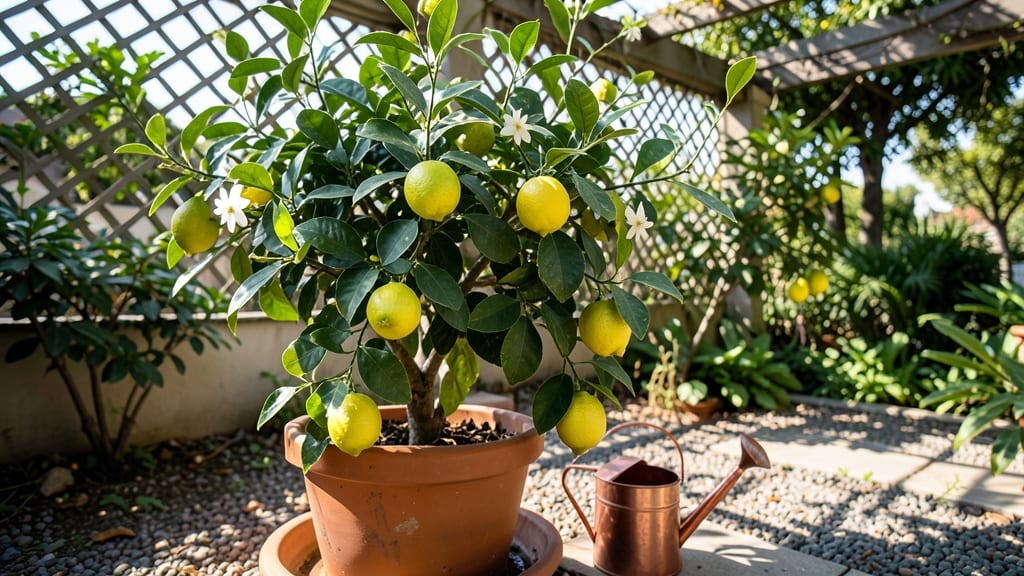
You can keep a lemon tree in a pot, particularly with dwarf varieties such as 'Meyer' or 'Improved Meyer,' though it demands regular pruning, frequent repotting, and bright, indirect sunlight to avoid root-bound stress and maintain fruit production.
Growing a lemon tree in a container is absolutely doable, especially when you choose the right dwarf variety. 🌱 These compact trees are bred to thrive in pots, making them perfect for patios, balconies, or even sunny windowsills.
The key to success lies in mimicking their natural growing conditions—providing ample sunlight, well-draining soil, and enough space for roots to expand gradually. Unlike full-size trees, dwarf varieties like 'Meyer' can produce fruit within just a few years, offering homegrown lemons without the space requirements of a yard.
However, container gardening does come with limitations. Lemon trees in pots need regular attention—repotting every 2-3 years to prevent root-bound stress and fertilizing every 4-6 weeks during growing season.
Without proper care, you might see slower growth or reduced fruit production. The good news? With the right approach, you can enjoy fresh lemons year-round, even in small spaces.
💡 In This Article
- Best Dwarf Lemon Tree Varieties for Pots
- Pot Size, Soil, and Maintenance for Potted Lemon Trees
Best dwarf lemon tree varieties for pots
When selecting a lemon tree for container growing, size isn't the only factor—growth habits and cold tolerance matter just as much.
The 'Meyer' lemon tree stands out as the most popular choice for pots, reaching only 6-10 feet tall at maturity, with a compact, bushy shape that adapts well to confined spaces.
Its thin, glossy leaves and sweet-tart fruit (often with a pinkish hue when ripe) make it visually appealing and productive, yielding fruit within 2-3 years of planting.
The 'Improved Meyer' is a hybrid version with even better cold hardiness, tolerating brief dips to 20°F compared to the standard Meyer's 25°F limit. This makes it ideal for gardeners in USDA zones 9-11 who want reliable fruit production.
Both varieties produce abundant lemons, though 'Meyer' fruits are slightly larger (2-3 inches in diameter) while 'Improved Meyer' matures slightly faster. 🌿 The 'Eureka' lemon, while productive, grows taller (15-20 feet) and requires more aggressive pruning to stay pot-friendly.
What sets these dwarf varieties apart is their root system's adaptability to containers. Unlike full-size trees, they develop a fibrous root structure that spreads horizontally rather than deeply, making them less prone to root-bound stress when repotted every 2-3 years. The trade-off?
They'll never grow as large as their in-ground counterparts, but their compact size translates to easier care and faster recovery from pruning. For example, a 5-gallon pot can support a young 'Meyer' for 1-2 years before needing an upgrade to 15 gallons.
Cold sensitivity remains the biggest challenge for potted lemon trees. Even dwarf varieties can suffer leaf damage when temperatures drop below 30°F, though 'Improved Meyer' shows better resilience. During winter, move containers to sheltered areas or use frost blankets to protect roots.
The key difference between varieties lies in their recovery rate: 'Meyer' may drop leaves in cold snaps but regrows quickly, while 'Eureka' often suffers permanent damage.
For those in colder climates, consider the 'Ponderosa' lemon, a less common but highly cold-tolerant dwarf variety that handles 15°F temperatures. Its fruits are larger but less sweet, making it a compromise between hardiness and flavor.
The choice ultimately depends on your climate, space constraints, and whether you prioritize sweetness ('Meyer') or cold resistance ('Improved Meyer').
One often-overlooked factor is pollination. While dwarf varieties can self-pollinate to some extent, cross-pollination between trees increases fruit set. If you're growing just one tree in a pot, gently shake branches during bloom to aid pollination.
The scent of lemon blossoms—bright, citrusy, and slightly floral—will reward your efforts with the promise of homegrown fruit.