
Pruning
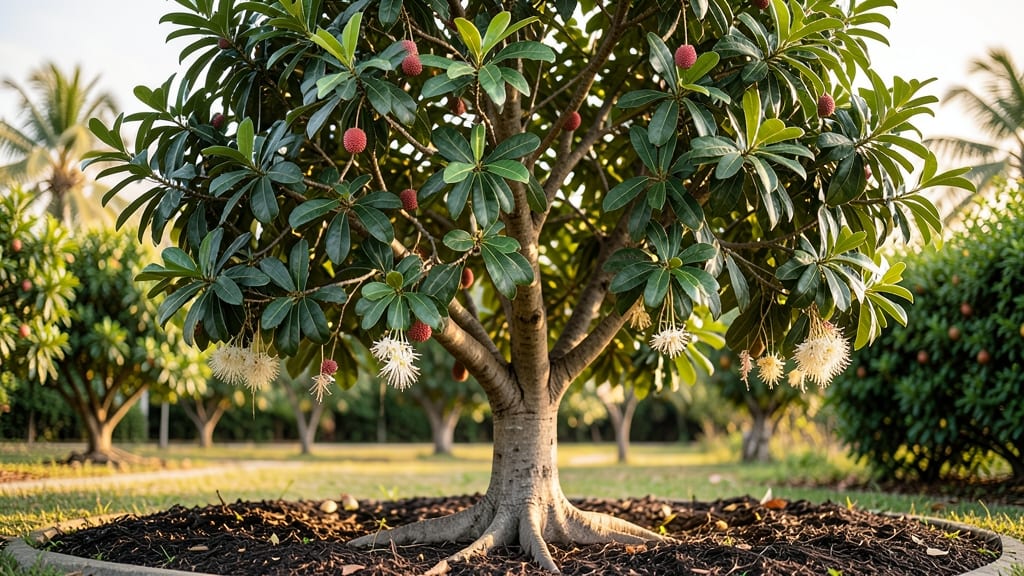
The height of a lychee tree can grow 30–50 feet tall—but that’s only if you let it. 🌿 My first lychee tree shot up like a jungle giant until I realized how much pruning it needed to stay manageable. The variety, climate, and how you prune determine whether it becomes a towering shade tree or a fruit-bearing bush you can actually reach. Most home gardeners grow dwarf or semi-dwarf varieties like ‘Brewer’ or ‘Wai Chee,’ which max out around 15–20 feet with proper pruning. Tropical climates let them grow faster, while cooler zones need extra care to keep them alive—let alone productive. The key is spacing: plant at least 20 feet apart if you want full-sized trees, or 10 feet for pruned varieties. With the right approach, you’ll end up with a fruit-laden tree that’s easy to harvest, not a 50-foot monster blocking your driveway. Prune in late winter to shape it early, and you’ll see new growth that’s denser and more productive by spring. The smell of blossoms alone makes it worth the effort. If space is tight, container growing works for dwarf varieties—just expect smaller fruit. The trade-off? Less height means more manageable pruning and better access to those sweet, slippery fruits. Here’s how to keep it in check without sacrificing harvests.
📚 In This Guide
- What you need
- Instructions
- Tips and common mistakes
- Wrapping up and next steps
What you need
- ● Pruning shears: Bypass pruners (for small branches, 4-6 inch cuts)
- ● Loppers: 1 pair (for branches ½–1½ inches thick)
- ● Pruning saw: 1 (for thick branches 1½+ inches)
- ● Disinfectant: 70% isopropyl alcohol or 1-part bleach to 9-parts water (for tools)
- ○ Pruning sealant: Optional (for large cuts to prevent disease)
- ● Gloves: Heavy-duty gardening gloves (to protect from thorns and sap)
- ● Ladder or step stool: Sturdy, tall enough to reach 12–15 feet (lychee trees can grow this high!)
- ● Trash bags: 2–3 (for debris disposal)
- ● Extension pole: For high branches (saves ladder use!)
- ● Sharpener: For keeping blades clean and sharp
- ● Label markers: To tag pruned branches if training for shape
- ● Compost bin: For repurposing small pruned branches
Understanding lychee tree height: how varieties and climate shape growth
Here's how to predict your lychee tree's mature height—and what factors really control it.
🌿 Step 1: Know Your Variety’s Natural Growth Range
Lychee trees (Litchi chinensis) vary widely by type. The Tai So variety typically matures at 20-25 feet with a broad canopy, while Brewster stays more compact at 15-20 feet. Dwarf varieties like Groff max out around 12-15 feet, making them ideal for containers or small yards.
Check your tree's label or ask your nursery about its parentage—hybrids often fall somewhere in between. The key is recognizing that rootstock influences height too: trees grafted onto rough-leaf lychee rootstock tend to grow taller than those on Chinese sandpaper rootstock, which naturally stays shorter.
☀️ Step 2: Factor in Your Climate’s Impact on Height
Tropical climates push lychee trees toward their maximum genetic height—think 25+ feet in Florida or Hawaii. But in subtropical zones like Southern California or Australia’s Gold Coast, trees often stay 10-15 feet due to cooler winters slowing growth.
Watch for bud dormancy in winter—if your tree sheds leaves completely, growth slows dramatically. In frost-free areas, trees grow 12-18 inches annually, while in marginal climates, they might only add 6-12 inches per year. This explains why identical trees in different regions can look completely different.
✂️ Step 3: Prune Strategically to Control Height
Pruning doesn’t permanently reduce a lychee’s mature height, but it shapes growth direction. To keep a 20-foot tree under control, remove suckers at the base and selective branches from the lower trunk. Focus on open-center pruning—thinning 20-30% of the canopy annually encourages outward growth over upward.
Here’s the trick: Prune in late winter (just before buds swell) to avoid stressing the tree. Never cut more than one-third of the canopy at once—lychees are sensitive to heavy pruning. If you see water sprouts (fast-growing vertical shoots), remove them immediately—they’ll steal energy from fruit production.
🪴 Step 4: Container Growth Limits Height Dramatically
If you’re growing lychee in a 15-gallon pot or larger, expect 50% reduction in mature height—typically 8-12 feet for standard varieties. The key is root restriction: lychee roots spread 3-4 times the canopy width, so containers limit both height and spread.
Use well-draining potting mix (equal parts peat moss, perlite, and sand) and fertilize lightly (½-strength citrus fertilizer every 6 weeks). Watch for root circling—if roots grow in tight circles around the pot, the tree will stay stunted. Repot every 2-3 years into a 2-4 inch larger container to encourage gradual height increases.
⏰ Step 5: Monitor Growth Rates Year by Year
Track your tree’s height annually in early spring before new growth starts. A healthy, mature lychee grows 12-18 inches per year in ideal conditions. If growth stalls below 6 inches, check for nutrient deficiencies (yellow leaves = nitrogen), pests (scale or aphids), or poor drainage (root rot).
Real talk: First 5 years are critical. Trees under 10 feet at age 5 rarely recover full height potential. If you’re in a cooler climate, consider winter protection (burlap wraps) to prevent winter dieback, which can permanently stunt growth. Patience pays off—lychees hit 50% of mature height by year 5 and 75% by year 10.
Tips & tricks for predicting lychee tree height
These practical insights will help you manage your lychee tree's growth like a pro—no guesswork required.
Variety Matters: The Tai So variety's 20-25 foot mature height makes it perfect for spacious yards, while Brewster's 15-20 foot range suits smaller properties. I learned this the hard way after planting a Tai So in my suburban backyard—it's now brushing my roof! For containers, Groff's 12-15 foot maximum is ideal. Always check your tree's label or ask your nursery about rootstock too—rough-leaf rootstock can push your tree 5-10 feet taller than Chinese sandpaper rootstock.
Climate Adjustments: Tropical zones like Florida or Hawaii will push your lychee to its maximum height potential (25+ feet), but cooler climates like Southern California often cap growth at 10-15 feet. Watch for bud dormancy in winter—complete leaf drop means growth slows dramatically. In frost-free areas, you'll see 12-18 inches of growth annually, while marginal climates might only add 6-12 inches per year. This explains why identical trees in different regions can look completely different.
Pruning Strategy: Pruning won't permanently reduce height, but it shapes growth direction. Focus on open-center pruning by thinning 20-30% of the canopy annually to encourage outward growth. The key timing is late winter—just before buds swell—to avoid stressing the tree. Never cut more than one-third of the canopy at once, and remove water sprouts immediately as they'll steal energy from fruit production. I've found that removing suckers at the base and selective lower branches keeps taller varieties like Tai So under control.
Container Growth: If you're growing in a 15-gallon pot or larger, expect 50% height reduction—typically 8-12 feet for standard varieties. The secret is root restriction: lychee roots spread 3-4 times the canopy width, so containers naturally limit growth. Use well-draining potting mix and fertilize lightly (½-strength citrus fertilizer every 6 weeks) to prevent stunting. Watch for root circling—if roots grow in tight circles, your tree will stay stunted. Repot every 2-3 years into a container that's 2-4 inches larger to encourage gradual height increases.
Pro Tips for Lychee Tree Height
- These practical insights will help you manage your lychee tree's growth like a pro—no guesswork required.
- Variety Matters: The Tai So variety's 20-25 foot mature height makes it perfect for spacious yards, while Brewster's 15-20 foot range suits smaller properties.
- Climate Adjustments: Tropical zones like Florida or Hawaii will push your lychee to its maximum height potential (25+ feet), but cooler climates like Southern California often cap growth at 10-15 feet.
Frequently asked questions
Got questions about managing your lychee tree’s height? You’re not alone! Here are answers to the most common concerns—whether you’re pruning a young sapling or troubleshooting an overgrown giant.
How tall does a lychee tree grow in ideal conditions?
A mature lychee tree typically reaches 40–60 feet tall in tropical climates, but dwarf varieties (like ‘Tai So’ or ‘Brewer’) stay between 15–25 feet. In cooler regions, growth slows—expect 20–30 feet max unless grown in containers. Pruning early can control height while maintaining fruit production.
Can I prune a lychee tree to keep it short?
Yes! Lychee trees respond well to structural pruning in late winter/early spring. Remove 1/3 of the canopy to encourage bushier growth, and trim vertical shoots to redirect energy to fruit-bearing branches. Avoid heavy pruning after flowering—it can reduce yield. Pro tip: Use sterilized tools to prevent disease!
Will cold weather stunt my lychee tree’s height?
Lychees thrive in USDA Zones 10–12—cold snaps (<32°F) can kill branches or the entire tree if unprotected. In colder zones, grow trees in containers (move indoors in winter) or plant near heat sources. Dwarf varieties tolerate chilly temps better but still need winter care.
Does pruning for height affect fruit production?
Not if done correctly! Prune to open the canopy for sunlight (critical for fruit set) and remove water sprouts (vigorous but non-fruiting shoots). Focus on scaffold branches—the main limbs—rather than random cuts. Over-pruning can delay fruiting by 1–2 years, so balance form and function.
Are there lychee alternatives for smaller spaces?
If space is tight, consider:
- Dwarf lychee varieties (e.g., ‘Wai Chee’): Grow 10–15 feet tall.
- Longan trees (related fruit): Reach 20–30 feet but produce faster.
- Container-grown lychees: Use large pots (20+ gallons) for patio growth.
Wrapping up and next steps
Understanding your lychee tree’s mature height—whether it’s the towering Bengal or the compact Salathiel—is key to nurturing it with care. From pruning strategies to climate considerations, every detail shapes its growth and fruit yield.
Now that you’re equipped with insights, roll up your sleeves and give your tree the attention it deserves! 🌿✨
Your next step? Monitor growth, adjust pruning, and watch your lychee tree thrive! Happy gardening!