
Pruning
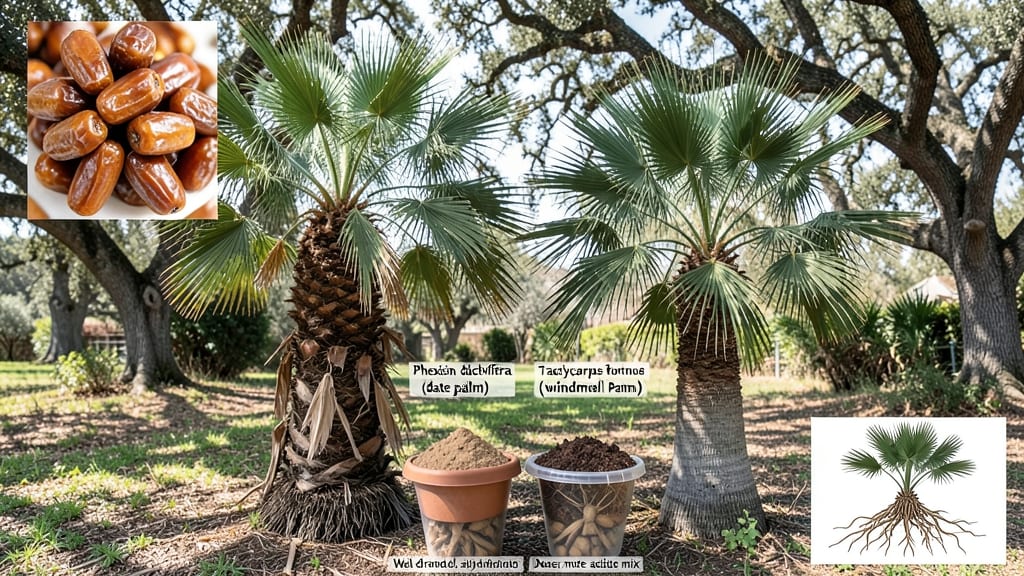
Are palm trees and date trees the same? No—while both belong to the palm family, date trees (Phoenix dactylifera) are just one specialized species among over 2,600 palm varieties. Their distinct leaf shapes, fruit types, and cultivation purposes set them apart.
Palm trees represent a vast botanical family, while date trees focus on a single, fruit-bearing species with unique adaptations. 🌿 The key difference lies in their purpose: palms thrive as ornamental plants or timber sources, whereas date palms are cultivated exclusively for their nutrient-rich fruit.
Even their growth patterns vary—date palms develop long, arching fronds, while many ornamental palms have fan-shaped leaves. This distinction explains why you'd never find a date palm in a tropical landscape unless you're growing them for harvest.
Understanding these differences matters if you're choosing plants for your garden or considering commercial uses. Date palms require specific care for fruit production, while ornamental palms prioritize drought resistance and aesthetic appeal.
The confusion often stems from their shared classification, but their specialized traits make them worlds apart in practical applications.
💡 In This Article
- Botanical Differences Between Palm Trees and Date Trees
- Cultivation and Practical Uses of Date Trees vs. Ornamental Palms
Botanical differences between palm trees and date trees
The scientific distinction begins with taxonomy: all palm trees belong to the Arecaceae family, which contains over 2,600 species.
Date trees, however, are just one specialized species called Phoenix dactylifera—a single member of this vast family. 🌱 What sets them apart is their leaf structure: date palms produce arching, pinnate fronds (feather-like leaves) that can grow up to 15 feet long, while many ornamental palms have fan-shaped leaves (like the Kentia palm) or even palmate fronds (like the Coconut palm).
These structural differences reflect their evolutionary adaptations.
Their reproductive cycles also differ dramatically.
Date palms produce small, white flowers that develop into the familiar sweet fruit, while ornamental palms often focus on showy inflorescences or seed pods rather than edible fruit. 🌺 The date palm's fruit is a drupe containing a single large seed, while many palms produce fibrous fruits or seeds that are inedible.
Geographically, date palms thrive in arid climates (like the Middle East and North Africa), while ornamental palms often prefer tropical or subtropical regions with higher humidity.
Ecologically, date palms play a critical role in their native habitats by providing food for wildlife and stabilizing desert soils.
Ornamental palms, on the other hand, are often cultivated for their aesthetic value—think of the Canary Island date palm (Phoenix canariensis), which is unrelated to the fruit-bearing species but prized for its dramatic height and architectural form.
This ecological specialization explains why you won't find date palms growing wild in Florida's swamps or coconut palms in the Sahara Desert.
Another key difference lies in their growth rates. Date palms can take 5-7 years to bear fruit, while many ornamental palms grow much faster but focus on leaf production.
The date palm's slow maturation is an adaptation to its harsh environment—conserving energy to produce fruit in water-scarce conditions. 🌵 In contrast, ornamental palms like the Areca palm prioritize rapid leaf expansion to maximize photosynthesis in lush environments.
Even their root systems vary: date palms develop deep, extensive roots to access groundwater in deserts, while many ornamental palms have shallow, fibrous roots suited for tropical soils. These differences make them unsuitable for each other's natural environments.
For example, a coconut palm (Cocos nucifera) would struggle to survive in the dry heat of a date palm's native habitat, just as a date palm would fail in a coconut's water-rich coastal ecosystem.