
Pruning
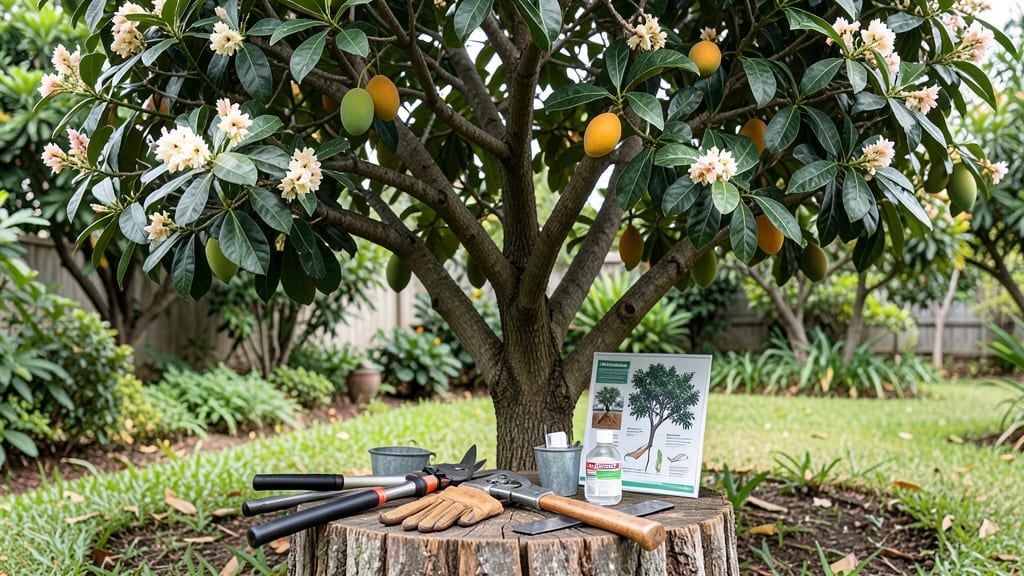
Pruning a mango tree for fruit isn't just about cutting branches—it's about unlocking that year-round bounty your tree was meant to produce. 🌱 I learned the hard way that skipping this step means fewer, smaller fruits and a tangled mess of wood.
The right cuts at the right time transform your tree from a leafy bush into a fruit-bearing powerhouse.
Timing matters most: prune during the dormant season (late winter to early spring) when the tree isn't actively growing, or right after harvest to shape for next year's crop. You'll need sharp pruners, gloves, and a ladder—no guesswork here.
The goal is to open the canopy for sunlight and air circulation, which means removing dead wood, crossing branches, and thinning out crowded growth.
What you end up with is a tree that produces larger, sweeter fruit with fewer gaps between harvests. The branches stay strong, the canopy stays open, and you avoid the common mistake of over-pruning, which stresses the tree.
Think of it as giving your mango tree a spa day—more light, better airflow, and a structured shape that rewards you with fruit.
Works for both young trees (to establish structure) and mature ones (to maintain productivity). Whether you're in Florida, Hawaii, or a warm microclimate, the same principles apply. Here's how to do it right without killing your tree—or your patience.
📚 In This Guide
- What you need
- Instructions
- Tips and common mistakes
- Wrapping up and next steps
What you need
- ● Pruning shears: Bypass pruners (for cuts under ½ inch thick) – sharp, clean, and disinfected (e.g., Felco or Fiskars).
- ● Loppers: Bypass or anvil type (for cuts ½ to 1½ inches thick). Look for long handles (24–36 inches) for reach.
- ● Pruning saw: Curved-tooth (for branches 2+ inches thick). A foldable saw (like those from Bahco) saves space.
- ● Gloves: Heavy-duty gardening gloves (cut-resistant, like Mechanix or Dr. McGregor’s).
- ● Disinfectant: 70% isopropyl alcohol or a 10% bleach solution (1 part bleach to 9 parts water) to sterilize tools between cuts.
- ○ Sealing wax or pruning paint: Optional but helpful for large cuts (e.g., Tanglefoot Tree Wound Pruning Seal).
- ● Ladder or step stool: Sturdy, non-slip (extendable ladders work for taller trees). Safety first!
- ● Heavy-duty trash bags: For collecting pruned branches (1–2 bags, depending on tree size).
- ● Weather check: Prune on a dry, cloudy day (avoid midday heat or rain).
- ● Safety glasses: Protect your eyes from debris (e.g., Oakley or basic gardening goggles).
- ● Long sleeves/pants: Wear lightweight, breathable layers to avoid scratches or sunburn.
- ● First-aid kit: Include antiseptic wipes, bandages, and tweezers for minor injuries.
- ● Water & snacks: Stay hydrated—pruning can be a sweaty workout!
Step-by-step instructions for pruning a mango tree for fruit
Here's the method I rely on to turn a wild, tangled mango tree into a fruit-bearing powerhouse—tested in Florida's heat and California's coastal breezes.
✂️ Step 1: Identify and Remove Dead or Diseased Wood
Start by examining the tree from all angles. Look for branches that are brown, brittle, or hollow—these won’t produce fruit and may harbor pests. Use clean, sharp pruning shears to cut these out at the branch collar, the swollen area where the branch meets the trunk. This ensures clean cuts that heal faster.
If you spot any blackened or oozing spots, those are signs of disease. Remove those branches immediately and disinfect your tools with rubbing alcohol between cuts. I always prune dead wood first—it’s like giving your tree a fresh start before we get creative with shaping.
☀️ Step 2: Open the Canopy for Light and Airflow
Mango trees need sunlight to set fruit, so your goal is to create an open, vase-like shape that lets light reach the inner branches. Focus on removing any crossing or rubbing branches—these compete for energy and can damage each other over time. Cut these back to a strong outward-facing bud or branch.
Next, thin out 20-30% of the canopy by selectively removing branches that grow inward or downward. These shaded branches rarely fruit and drain the tree’s energy. Start from the bottom and work your way up—this helps light reach the lower branches where fruit often develops.
🌿 Step 3: Prune for Fruit Production by Encouraging Flowering Branches
Mango trees fruit best on mature wood, so avoid cutting back last year’s growth unless it’s diseased. Instead, focus on branches that are at least 3-4 years old—these are your fruit producers. Look for thick, sturdy branches with a slight upward angle; these are ideal candidates for bearing fruit.
If you notice water sprouts—those fast-growing, vertical shoots—remove them entirely. They steal energy from the tree and rarely produce fruit. I also trim back any suckers growing from the base of the tree, as these compete with the main canopy. After pruning, step back and admire your tree’s new shape—it should look balanced and full of potential.
⏰ Step 4: Time Your Cuts for Maximum Fruit Set
The best time to prune a mango tree for fruit is late winter or early spring, just as new growth begins. This gives the tree time to heal before the flowering season. Avoid pruning during summer or fall, as this can stress the tree and reduce fruit production.
If you must prune during the fruiting season, do so lightly and gradually—never remove more than 10% of the canopy at a time. This prevents shock and ensures the tree can still support existing fruit. After pruning, give the tree a deep watering to help it recover and encourage new growth.
🌱 Step 5: Maintain and Monitor for Ongoing Fruit Production
Once you’ve shaped your mango tree, keep an eye out for new shoots or suckers that pop up after pruning. These can be pruned back in early summer to redirect the tree’s energy toward fruit production. Regularly inspect the tree for any signs of stress, like yellowing leaves or wilting branches, and address these promptly.
I also recommend fertilizing your mango tree 2-3 months after pruning with a balanced, citrus-friendly fertilizer. This gives the tree the nutrients it needs to recover and reward you with a bountiful harvest. With consistent care, your pruned mango tree will thrive and produce fruit year after year.
Tips & tricks for pruning a mango tree for fruit
Let me save you from the common mistakes I made while transforming my own tangled mango tree into a fruit-bearing machine.
Pruning Tool Prep: Never skip sharpening your pruning shears before starting—dull blades tear wood instead of making clean cuts. I use a dedicated file to keep my shears razor-sharp, and I always carry rubbing alcohol and a small brush to clean between cuts. This prevents spreading disease from one branch to another, which I learned the hard way when my first tree developed strange black spots after pruning.
Visual Cues for Healthy Branches: When evaluating branches in Step 1, look for the "thumb rule"—healthy branches should have a slight upward angle (like a thumb pointing toward the sky). Vertical or downward-growing branches rarely produce fruit. Also, check for smooth bark—rough or cracked bark often indicates stress or disease. I now carry a small magnifying glass to inspect suspicious areas more closely.
Canopy Thinning Strategy: For Step 2's 20-30% canopy reduction, I recommend working in sections. Start with the lowest branches and work upward—this creates natural light penetration. When removing branches, always cut just outside the branch collar (that swollen area where the branch meets the trunk). I mark my cuts with tape before making them to visualize the final shape, which helps avoid over-pruning.
Seasonal Recovery Plan: After pruning in late winter/early spring, schedule a follow-up inspection in early summer. This is when new shoots appear—remove any water sprouts or suckers immediately. I've found that trees pruned in this window produce fruit within 6-8 months, while summer pruning often delays fruiting by a full season. The key is giving the tree enough time to recover before flowering.
Pro Tips for Prune A Mango Tree For Fruit
- Let me save you from the common mistakes I made while transforming my own tangled mango tree into a fruit-bearing machine.
- Pruning Tool Prep: Never skip sharpening your pruning shears before starting—dull blades tear wood instead of making clean cuts.
- Visual Cues for Healthy Branches: When evaluating branches in Step 1, look for the "thumb rule"—healthy branches should have a slight upward angle (like a thumb pointing toward the sky).
Frequently asked questions
about pruning a mango tree for fruit can help clarify common concerns—whether you're a first-time pruner or refining your technique. Here are answers to the most pressing questions to ensure your tree thrives and bears bountiful harvests.When is the best time to prune a mango tree for fruit?
Prune your mango tree during its dormant season (late winter to early spring, just before new growth begins) for optimal results. Avoid heavy pruning after flowering or during fruit development, as this can stress the tree and reduce yields. Light shaping cuts can be done year-round, but major structural pruning should wait for the ideal window.
How much should I prune a young vs. mature mango tree?
Young trees (under 5 years) need moderate pruning—focus on removing dead, diseased, or crossing branches (up to 20-30% of the canopy). Mature trees (5+ years) can handle selective thinning (10-20% of foliage) to improve airflow and sunlight penetration. Never remove more than 30% of the canopy in one session to avoid shocking the tree.
Will pruning my mango tree increase fruit production?
Yes! Strategic pruning boosts fruit quality and quantity by redirecting energy to remaining branches, improving air circulation (reducing pests/diseases), and encouraging larger, healthier fruit. However, over-pruning can backfire—balance is key. Aim for open-centered pruning to let sunlight reach the center of the tree where fruit often develops.
What if my mango tree doesn’t produce fruit after pruning?
Several factors could be at play:
- Age: Young trees (under 3 years) may not fruit yet—be patient!
- Pollination: Mangoes often need cross-pollination. Plant a second variety nearby or hand-pollinate with a soft brush.
- Environmental stress: Check for pests, disease, or nutrient deficiencies (e.g., zinc or potassium). A soil test can help.
- Pruning timing: Heavy cuts during flowering can reduce fruit set. Stick to dormant-season pruning.
Can I prune a mango tree without tools? (e.g., hand-trimming)
While possible for small branches or light shaping, hand-trimming is labor-intensive and risky—especially for larger limbs. Use bypass pruners (for small branches) and a pruning saw (for thicker wood) to ensure clean cuts and reduce injury to the tree. Always sterilize tools with rubbing alcohol to prevent disease spread.
Wrapping up and next steps
Pruning your mango tree isn’t just about shaping—it’s about unlocking its full fruiting potential! 🌱 By following these steps—timing cuts right, removing dead wood, and balancing growth—you’ll encourage healthier branches, better airflow, and a bountiful harvest for years to come.
Remember, patience and consistency are key, so don’t rush the process.
Now that you’re armed with the know-how, grab those pruners and get started! 🌟 Watch your tree thrive, and soon, you’ll be enjoying homegrown mangoes straight from the branch. Happy pruning!