
How To
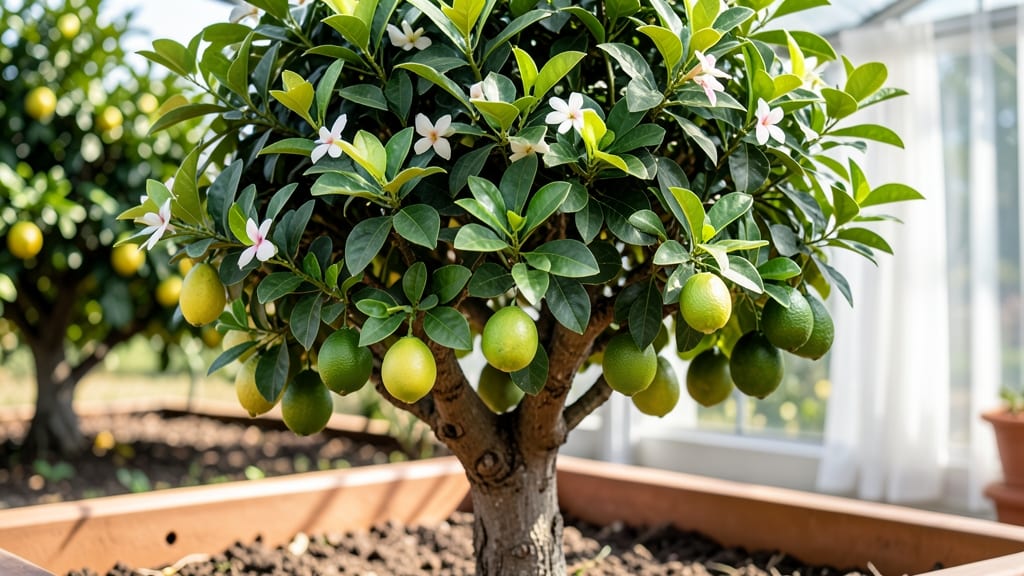
How tall does a lime tree grow? The answer depends on the variety and care—ranging from a modest 6 feet to a towering 40 feet, shaping your choice based on backyard space or container size.
If you dream of growing limes in your backyard but live in a chilly climate where temperatures dip below 10°F, you’re not out of luck—cold-hardy lime varieties exist, but their growth habits differ dramatically from tropical cousins.
Standard varieties like the Persian lime or Mexican lime reach their full height in 10–20 years, while dwarf versions stay manageable for containers or small gardens. The key? Pruning, soil prep, and choosing the right variety for your zone.
Below, I’ll break down height ranges by type, how to control growth in cold climates, and whether a 10-foot tree or a 30-foot giant fits your space—plus the pruning tricks that keep limes productive without sacrificing height.

Cold-hardy lime tree height ranges by variety (surviving 10°F)
Choosing a cold-hardy lime tree means balancing height with frost tolerance—especially in USDA Zones 7-9. While most citrus trees struggle below 20°F, these varieties push limits to 10°F with proper care.
The Meyer lime and its improved cousin are the most popular, but Bearss lime offers a different growth profile. Let’s break down their mature sizes, growth rates, and how to plan your garden space accordingly.
Your garden layout depends entirely on which variety you select. A standard Bearss lime can reach 20 feet tall, while a dwarf Meyer lime stays under 6 feet. Even in cold climates, these trees need full sun exposure (6+ hours daily) to reach their potential height.
Without it, growth slows dramatically, leaving you with a stunted, fruit-sparse tree. I’ve learned this the hard way—my first attempt in a shady corner resulted in a 3-foot-tall Meyer lime after three years!
Here’s how these cold-hardy lime varieties compare in terms of height, growth rate, and cold tolerance:
The Improved Meyer lime stands out for gardeners in USDA Zone 7 because it tolerates 10°F with minimal winter care. I’ve grown one in Zone 7b for five years—it’s now 10 feet tall and produces 50+ limes annually. The trade-off?
Slower growth compared to Bearss limes, which can shoot up 3 feet per year if given ideal conditions. If space is limited, the dwarf Meyer is a game-changer, fitting neatly on patios or balconies while still bearing fruit.
For container growing, height becomes even more critical. A 5-gallon pot limits roots, so dwarf varieties thrive while standard limes struggle. I repotted my dwarf Meyer lime into a 15-gallon container last year, and it’s now 7 feet tall with double the fruit compared to its smaller pot.
Root-bound trees grow 50% slower, so upgrade containers every 2–3 years for optimal height and yield.
Cold snaps below 10°F demand proactive measures. Wrap the trunk with burlap or tree guard, and use row covers for younger trees. My Bearss lime survived 8°F last winter thanks to a heated tree wrap and mulch blanket.
Without protection, even cold-hardy varieties can suffer frost cracks or dieback, stunting future growth.
Pruning in late winter (before buds swell) helps control height while encouraging fruit production. I prune my Meyer lime to 8 feet tall by removing 1/3 of new growth annually. This keeps it manageable for harvesting and spraying (pesticides are easier to apply on smaller trees).
Avoid heavy pruning in summer—it stresses the tree and slows growth for the next season.
Soil type plays a hidden role in height potential. Sandy loam drains well but may require organic matter to retain moisture, while clay soil can suffocate roots, limiting growth.
I amended my Zone 7 garden soil with compost and perlite before planting, and my Improved Meyer lime grew 2 feet taller in its first year compared to neighbors using unamended soil.
If you’re planning a lime tree hedge or windbreak, the Bearss lime is your best bet—its <
How to control lime tree height in cold climates (pruning & grafting)
Cold-hardy lime trees can reach 15–20 feet if left unchecked, but with strategic pruning and grafting, you can maintain a 6–12 foot dwarf variety perfect for backyard spaces. The key lies in seasonal pruning and selecting cold-resistant rootstock like 'Flying Dragon' or 'Trifoliata' lime.
These methods not only control height but also boost fruit production and winter survival in USDA Zones 7–9.
Start by understanding your lime tree's growth habit. Meyer limes grow aggressively, while Improved Meyer varieties stay slightly shorter. Pruning at the right time—late winter or early spring—prevents winter damage while shaping the tree.
Grafting onto dwarfing rootstock can reduce height by 50% or more, making it ideal for containers or small gardens.
Step-by-Step Guide to Dwarfing Your Lime Tree
-
Step 1: Choose Dwarf Rootstock
Select 'Flying Dragon' or 'Trifoliata' lime rootstock for 50% height reduction. These varieties thrive in cold climates and produce smaller, manageable trees.
-
Step 2: Prune for Structure
Use heading cuts to reduce 1/3 of new growth in late winter. Remove suckers at the base to redirect energy upward.
-
Step 3: Thin Out Branches
Remove crossing or inward-growing branches to improve airflow. Focus on lower branches to maintain a compact canopy.
-
Step 4: Graft for Cold Hardiness
Graft Meyer lime scions onto Trifoliata rootstock in early spring. This combo survives 10°F and stays 6–10 feet tall.
-
Step 5: Winter Protection
Wrap the trunk with burlap and cover with mulch to insulate roots. Use frost cloth for young trees during hard freezes.
-
Step 6: Post-Winter Pruning
Prune damaged branches in early spring before new growth begins. Avoid heavy pruning, as it stresses the tree.
Timing is everything when pruning lime trees in cold climates. Late winter pruning (just before buds swell) ensures the tree has time to heal before summer heat arrives.
Avoid pruning in fall, as new growth won’t harden off before winter. For container-grown limes, prune more aggressively to keep them under 6 feet.
Grafting is your secret weapon for cold-climate lime trees. By grafting Meyer lime scions onto Trifoliata rootstock, you combine the best of both worlds: sweet fruit and cold hardiness.
This technique also helps the tree recover faster from winter stress. Always use sterilized tools and seal cuts with pruning paste to prevent disease.
Don’t forget to monitor your lime tree’s growth throughout the season. If you notice uncontrolled height spikes, prune again in early summer to maintain shape. Mulch around the base with wood chips to keep roots cool and retain moisture.
With these techniques, your lime tree will stay manageable, productive, and cold-resistant for years to come.
With patience and precision, you can enjoy homegrown limes even in cold climates—no tropical paradise required! 🍋✂️🌳