
How To
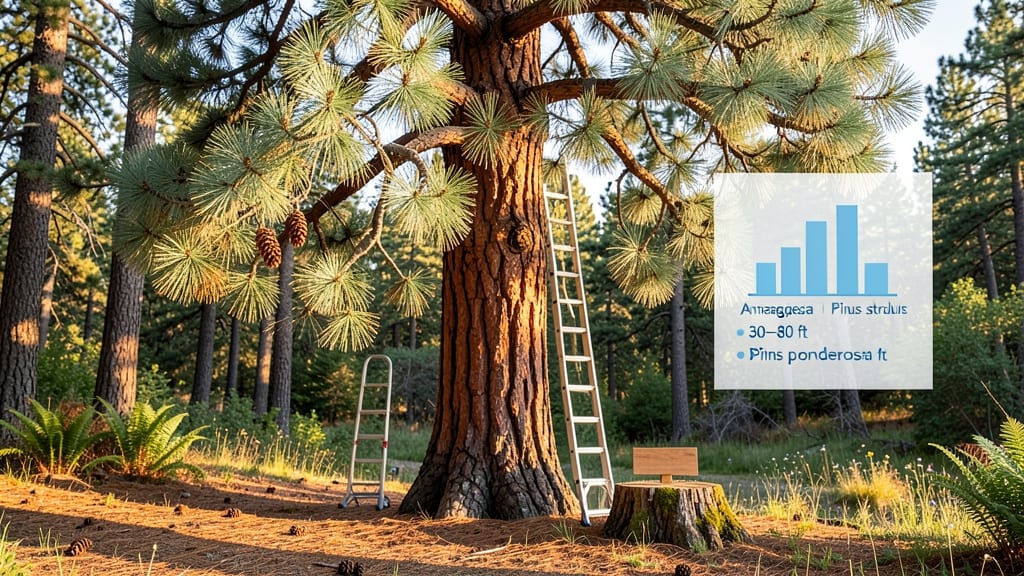
How tall can a pine tree grow? The answer might surprise you—some towering giants stretch over 200 feet under ideal conditions, dwarfing even the tallest buildings 🌲.
If you’ve ever gazed up at a towering pine tree and wondered just how massive these giants can grow, you’re not alone. Some pine species stretch toward the sky like natural skyscrapers, while others remain more manageable—making the difference between a backyard staple and a forest-dominating colossus.
But what makes one pine tower over another? Genetics, climate, and soil quality play a huge role. Coastal redwoods, for example, thrive in foggy, nutrient-rich soils, while mountain pines grow slower due to harsher conditions.
Below, we break down the tallest species, how climate zones shape their growth, and how you can manage their size in your own yard.
You’ll discover record-breaking heights, tips for choosing the right species for your space, and even dwarf varieties that fit smaller gardens. Whether you’re dreaming of a towering forest in your backyard or just curious about nature’s skyscrapers, this guide has you covered.

Tallest pine tree species: record heights and growth characteristics
When it comes to pine trees, few things rival the sheer majesty of their towering heights. Some species grow so tall they challenge our perception of what's possible in nature. The Ponderosa Pine and Coastal Redwood stand out as the ultimate giants, reaching heights that dwarf even the tallest buildings.
But what makes these trees grow so massive? Let's explore the tallest pine species, their record heights, and the factors that fuel their extraordinary growth.
Pine trees are among the most diverse tree genera, with over 120 species worldwide. While most stay between 30 to 100 feet tall, a select few defy expectations. The Pinus ponderosa (Ponderosa Pine) and Sequoia sempervirens (Coastal Redwood) are the undisputed champions.
These species don't just grow tall—they grow monumentally, with some individuals surpassing 200 feet. Their growth is influenced by a perfect storm of genetics, climate, and soil conditions that create ideal growing environments.
| Species | Record Height | Mature Height Range | Growth Rate | Key Growth Factors |
|---|---|---|---|---|
| Ponderosa Pine (Pinus ponderosa) | 250 ft (record) | 150-250 ft | 1-2 ft/year | Dry climates, deep soil, full sun |
| Sugar Pine (Pinus lambertiana) | 270 ft (record) | 150-270 ft | 1-3 ft/year | Mountainous regions, high humidity |
| Coastal Redwood (Sequoia sempervirens) | 380 ft (record) | 200-380 ft | 2-3 ft/year | Coastal fog, mild winters, rich soil |
| Coulter Pine (Pinus coulteri) | 120 ft (record) | 80-120 ft | 0.5-1 ft/year | Arid slopes, well-drained soil |
The Sugar Pine (Pinus lambertiana) holds the record for the tallest pine species, with individual trees reaching up to 270 feet. These trees thrive in the mountainous regions of California and Oregon, where cool temperatures and high humidity create perfect growing conditions.
Their needles can grow up to 20 inches long, and their cones are among the largest of any pine species, weighing up to 4 pounds. The Sugar Pine's rapid growth rate of 1-3 feet per year allows it to reach staggering heights in just a few centuries.
If you're wondering how tall a Ponderosa Pine can grow, the answer is 250 feet or more. These trees are native to the western United States and are known for their thick, fire-resistant bark. They grow best in dry, sunny climates with deep, well-drained soil.
Unlike the Coastal Redwood, which relies on fog for moisture, the Ponderosa Pine thrives in drier conditions, making it one of the most adaptable tall pine species. Their growth rate of 1-2 feet per year means they can reach maturity in about 200 years.
The Coastal Redwood, while not a true pine, is often grouped with them due to its similar evergreen nature and towering height. The tallest recorded specimen, named Hyperion, stands at a breathtaking 380 feet.
These trees dominate California's coastal regions, where the combination of mild winters, coastal fog, and rich soil creates an ideal environment. Their rapid growth rate of 2-3 feet per year allows them to reach their impressive heights in as little as 500 years.
The fog plays a crucial role, providing moisture without the need for heavy rainfall.
For those interested in growing tall pine trees, understanding these factors is key. Genetics play a significant role, but climate and soil conditions are equally important.
For example, the Coulter Pine (Pinus coulteri), while not as tall as the Sugar Pine or Coastal Redwood, can still reach heights of 120 feet in ideal conditions. This species thrives on arid slopes and well-drained soil, growing at a slower rate of 0.5-1 foot per year.
Its massive cones, which can weigh up to 2 pounds, are a testament to its ability to thrive in challenging environments.
If you're considering planting a tall pine tree in your yard, it's essential to match the species to your local climate and soil type. While some pines can adapt to a variety of conditions, others, like the Coastal Redwood, require specific environments to reach their full potential.
For home gardeners, smaller varieties like the Mugo Pine or Dwarf Pines are more manageable, typically reaching only 10-25 feet at maturity. These dwarf varieties offer the beauty of pine trees without the space requirements of their towering cousins.
One of the most fascinating aspects of tall pine trees is how their growth is influenced by microclimates. For instance, a Ponderosa Pine growing in a high-elevation, sunny location will grow differently than one in a lower, shadier area.
The same species can exhibit varying heights and growth rates depending on these conditions. This variability is why some individual trees
How climate zones affect pine tree height: from Coastal giants to mountain dwarfs
Climate zones play a dramatic role in determining how tall pine trees can grow. The same species can become a forest giant in one region while remaining a stunted shrub just a few miles away.
Temperature, elevation, and precipitation create these extremes by influencing growth rates, nutrient availability, and stress levels. Understanding these factors helps explain why coastal redwoods reach 379 feet while alpine pines stay under 10 feet.
In coastal regions like California's Redwood National Park, foggy, mild climates provide year-round moisture and moderate temperatures. These conditions allow coastal redwoods (Sequoia sempervirens) to grow 3-4 feet per year during their prime, creating the world's tallest trees.
Meanwhile, in the Rocky Mountains, harsh winters and thin soils limit growth, forcing pines like bristlecone (Pinus longaeva) to grow slowly—some living over 4,000 years but rarely exceeding 15 feet.
Microclimates further complicate predictions. For example, a Ponderosa pine (Pinus ponderosa) in Arizona's Grand Canyon may grow 150 feet tall on sun-exposed slopes but stay under 50 feet in sheltered canyon floors.
Similarly, Mediterranean pines like the Stone Pine (Pinus pinea) thrive in hot, dry summers but struggle in regions with prolonged droughts or heavy frost.
Elevation is another critical factor. Alpine pines grow slowly due to shorter growing seasons and thin, rocky soils. At 10,000 feet in Colorado, a Ponderosa pine might reach only 30 feet over 200 years, while at 5,000 feet, the same species could hit 100 feet.
This elevation gradient explains why mountain ranges often feature dwarf pine forests near their peaks.
Precipitation patterns also shape pine growth. In coastal regions, consistent fog and rainfall allow rapid growth, while inland areas with seasonal droughts produce shorter, hardier trees.
For instance, the Loblolly Pine (Pinus taeda) in the Southeastern US grows 2-3 feet per year with ample rainfall but slows dramatically in drier climates, capping at 60-70 feet.
If you're planting pines in your yard, consider your local microclimate. A Scots Pine (Pinus sylvestris) might grow 100 feet in Scotland's mild climate but only 30 feet in a harsh Midwestern winter.
Matching species to climate ensures healthy growth—and avoids disappointment when your "giant" pine stays the size of a shrub! 🌲