
Pruning
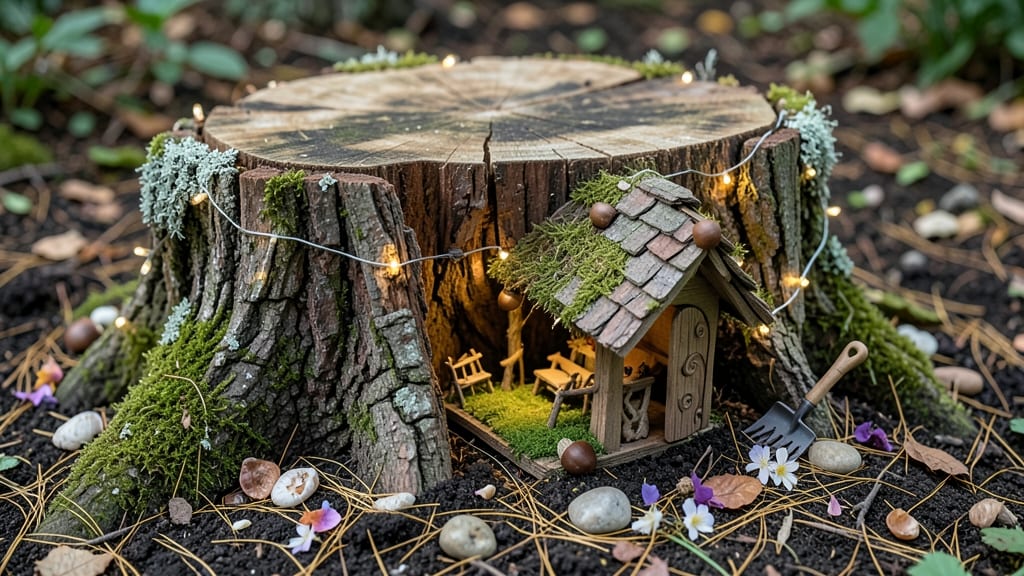
A fairy house out of a tree stump transforms a natural stump into a tiny woodland home by carving a hollow center, adding a miniature door, and adorning it with moss, acorns, and twigs. Choose a rot-resistant stump for durability and secure decorations with wood glue or hot glue.
Transforming a tree stump into a fairy dwelling lets you blend nature with creativity. 🌿 The key is working with the stump's natural shape—its curves become walls, and its hollowed center forms the living space.
I always start by selecting a stump with at least 6-8 inches of height and a diameter of 4-6 inches for proportion. For extra charm, use a wood-burning tool to etch tiny windows or a chimney, then seal everything with outdoor varnish to protect against rain.
The magic happens in the details: a tiny door made from bark shingles or a moss-covered roof instantly makes it feel lived-in.
Most people overlook weatherproofing, but it's what keeps your fairy house standing for years. 🌧️ A quick coat of waterproof sealant on the exterior and a layer of pebbles around the base prevents rot and erosion.
For the roof, I recommend overlapping bark pieces secured with hot glue—they shed water naturally and look like natural shingles. Pro tip: Add a few glow-in-the-dark paint accents to the door or windows for a magical nighttime effect!
💡 In This Article
- Selecting and Preparing Tree Stumps for Fairy Houses
- Decorating Tree Stump Fairy Houses with Natural Elements
Selecting and preparing tree stumps for fairy houses
The foundation of any enchanting fairy dwelling starts with the right tree stump. Look for stumps made from oak, maple, or cedar—these woods resist rot and insects better than softer varieties like pine.
A stump with a natural hollow or one that’s already partially decayed (but structurally sound) gives you a head start, as you’ll need to carve out a 3-4 inch deep chamber for the interior space. 🌳 The ideal size is 6-10 inches in diameter and 8-12 inches tall, as this creates a proportional fairy-sized home without overwhelming the space.
Safety is critical when preparing your stump. Begin by removing loose bark and debris with a wooden mallet or chisel, then use a jigsaw with a fine-tooth blade to carve the interior walls, leaving at least ½-inch thick walls for stability.
For the entrance, sketch a 2-3 inch wide door outline with a pencil before cutting—fairy doors should be just big enough for a tiny resident! If the stump is too dense, pre-drill holes with a ½-inch bit to guide the jigsaw and prevent splintering.
Natural materials can reinforce your stump’s structure. Fill any cracks with a mix of wood glue and sawdust for a seamless finish, or use epoxy resin for extra durability.
For stumps with uneven surfaces, apply a thin layer of clay or mud mixed with water to smooth out imperfections—this also mimics natural erosion and adds texture. 🌿 Pro tip: Sand the exterior with 120-grit sandpaper to create a rough surface for better adhesion when adding decorations later.
Consider the stump’s placement before finalizing your design. A stump near a garden path or under a tree canopy will blend seamlessly into the landscape, while one in a sunny spot may require more frequent sealing.
Test the stump’s stability by gently pressing down on the sides—if it wobbles, anchor it with concrete footings or bury it partially in the ground. For added whimsy, position a few small rocks or pebbles around the base to create a fairy pathway leading to the door.
Weatherproofing is the final step to ensure your fairy house lasts through seasons. Apply a waterproof outdoor sealant to all exposed wood surfaces, focusing on the roof and door frame.
For a natural look, use a linseed oil and turpentine blend, which penetrates the wood without leaving a glossy finish. Let it dry for 24 hours before adding decorations—this prevents glue or paint from peeling off prematurely.
Here’s what to avoid: Using stumps with active mold or termite damage, as these can spread to your decorations.
Also, skip stumps with sharp edges or protruding roots—sand them down to prevent accidents, especially if children or pets will be nearby. 💫 The goal is to create a safe, enduring home that feels like it’s always been part of the forest.