
Trees
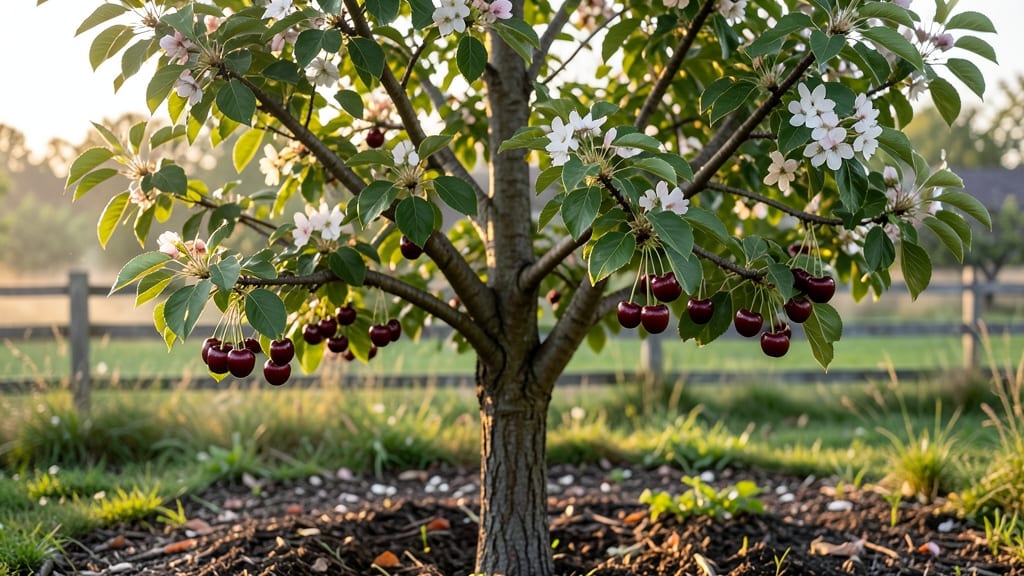
The lifespan of cherry trees ranges from 15 to 100+ years, depending on the variety—standard trees typically live 25 to 50 years, while dwarf cultivars last 15-30 years and wild species often succumb sooner to environmental pressures.
The age of a cherry tree depends heavily on its genetics and growing conditions. 🌳 Standard varieties like Stella or Montmorency thrive for decades when planted in well-drained soil with proper sunlight, while heirloom types such as Black Tartarian can outlive most with consistent care.
Disease resistance and climate suitability play equally critical roles—trees in regions with harsh winters or high humidity may face shorter lifespans due to stress-related vulnerabilities.
For example, a Rainier cherry tree in a dry, temperate climate might easily reach 40 years, whereas one planted in a swampy area could struggle past 20. Understanding your local growing zone and soil type helps predict longevity before planting.
Regular pruning and pest management further extend a tree's productive years by preventing structural weakness and disease entry points.
💡 In This Article
- Factors That Influence Cherry Tree Longevity
- Prolonging a Cherry Tree’s Life with Pruning and Care
Factors that influence cherry tree longevity
Cherry trees' lifespan is fundamentally shaped by their genetic makeup. For instance, the Black Tartarian variety can live over a century because its roots develop deep and extensive, accessing water and nutrients far below the surface.
In contrast, dwarf varieties like Balaton have stunted growth patterns due to genetic modifications that limit their root systems and overall size, which naturally caps their lifespan at 15-30 years.
The difference lies in their cellular structure—tall varieties produce more lignin, a tough polymer that strengthens cell walls and resists decay.
Soil composition plays a critical role too. Cherry trees thrive in slightly acidic soil with a pH between 6.0 and 6.5, where nutrients like nitrogen and phosphorus are most available.
Poor drainage causes root rot, while alkaline soil (pH >7.0) locks out essential minerals, both of which accelerate aging. 🌱 For example, a Stella cherry tree planted in clay-heavy soil may only reach 20 years due to oxygen deprivation in its roots, whereas the same tree in loamy soil could easily surpass 50 years.
Organic matter like compost improves soil structure, creating air pockets that prevent compaction and root suffocation.
Climate resilience determines how well a tree adapts to seasonal stresses. Cold-hardy varieties like Montmorency survive -30°F winters by producing antifreeze proteins in their cells, while tender types such as Rainier struggle below 15°F.
Drought-tolerant species develop deeper root systems to access groundwater, but prolonged dry spells still reduce their lifespan by 10-20 years compared to well-watered counterparts. Humidity levels also matter—high moisture promotes fungal diseases like powdery mildew, which weakens trees over time.
Disease resistance is another key factor. Bacterial canker, caused by Pseudomonas syringae, can kill a cherry tree in as little as 3-5 years if left unchecked. Resistant varieties like Lapins have natural chemical defenses that repel pathogens, while susceptible types require constant monitoring.
Even minor infections create entry points for secondary pests, accelerating decay. Pruning to improve airflow reduces humidity on leaves, lowering disease risk by up to 40%.
Wild cherry trees often live shorter lives due to their lack of selective breeding for resilience. Without human intervention, they face constant threats from pests, extreme weather, and poor growing conditions.
For example, a wild Prunus avium might only reach 15-25 years compared to a cultivated Black Tartarian that can live for generations with proper care. The difference lies in centuries of agricultural selection for traits like disease resistance and adaptability.
Understanding these factors helps predict a cherry tree's lifespan before planting. For instance, pairing a cold-hardy variety with well-draining soil in a temperate climate maximizes its potential to reach 50+ years.
Regular soil testing and variety selection based on your local climate are the first steps to ensuring a long-lived tree. 🌿