
Container Gardens
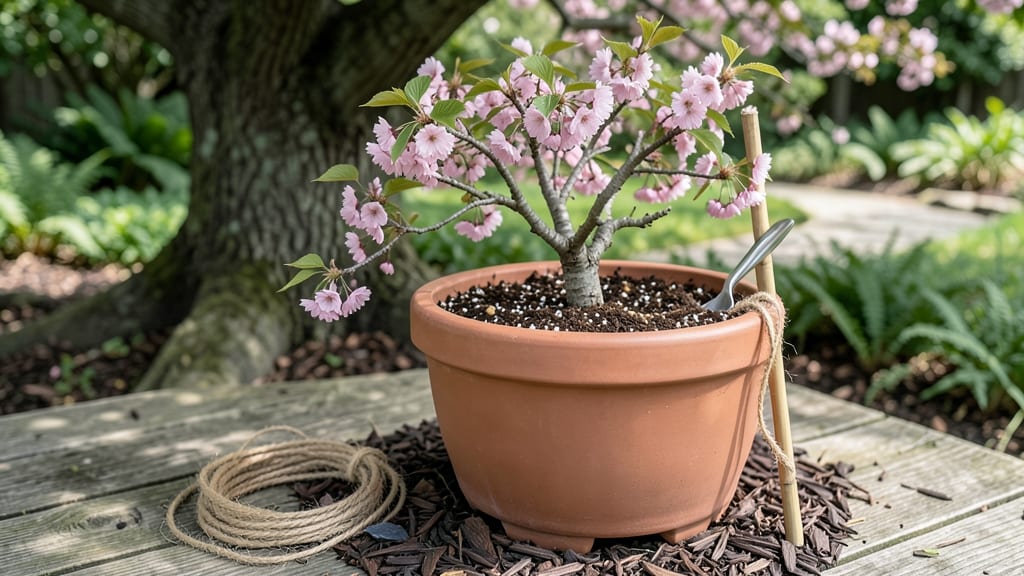
You can grow a cherry blossom tree in a pot using dwarf varieties or young saplings, but you'll need spacious containers (at least 15 gallons), fast-draining soil blends, and consistent pruning to manage root expansion. Most blossom types also require full sun exposure and seasonal protection from frost.
Cherry blossom trees thrive in containers when you choose the right cultivar—dwarf varieties like 'Kanzan' or 'Tokyo Hills' stay compact enough for patio pots while still producing stunning spring blooms.
The key is replicating their natural growing conditions: a soil mix with perlite or sand prevents root rot, and containers with drainage holes are non-negotiable. 🌸 I've found that repotting every 2-3 years keeps roots healthy, while winterizing with burlap wraps or moving pots to sheltered areas extends their lifespan in colder zones.
What many gardeners overlook is the sun requirement—these trees need at least 6-8 hours of direct sunlight daily to flower properly. In smaller spaces, south-facing balconies or raised planters work best.
Pruning isn't just about size control; it also encourages stronger blooms by removing dead wood and thinning crowded branches in late winter.
💡 In This Article
- Best Cherry Blossom Tree Varieties for Pots
- Container Gardening Tips for Potted Cherry Blossoms
Best cherry blossom tree varieties for pots
Cherry blossom trees aren't naturally suited for containers, but specific dwarf cultivars like Prunus serrulata 'Kanzan' or Prunus x yedoensis 'Shimane' thrive in large pots. These varieties mature at 15-20 feet tall but grow 3-4 feet per year when properly pruned—ideal for patio spaces.
The key difference? Dwarf types have naturally slower growth rates due to genetic mutations that restrict their height while maintaining the same stunning 5-inch pink blooms that standard trees produce.
The root systems of these cultivars are also more compact, making them better suited for 15-gallon or larger containers. For example, 'Kanzan' develops a root ball about 2 feet deep when mature, while 'Tokyo Hills' stays shallower at 18 inches.
This matters because deeper-rooted varieties need containers that are at least 18 inches deep to prevent root binding. Cold hardiness varies too—'Kanzan' handles zones 5-8, while 'Shimane' thrives in zones 6-9, making them better for warmer climates.
What sets these varieties apart is their flowering behavior. Unlike standard cherry blossoms that bloom for 1-2 weeks, dwarf types often produce 2-3 weeks of continuous blooms when given proper care.
The double-pink flowers of 'Kanzan' create a dramatic visual impact in containers, while 'Shimane' offers single white blossoms that contrast beautifully with dark green foliage. This extended bloom period is due to their ability to produce multiple flower buds along the branches, a trait enhanced by regular pruning.
For urban gardeners, Prunus x yedoensis (Yoshino cherry) is another excellent choice, though it grows slightly taller at 25-30 feet in the ground. In containers, it stays around 10-15 feet with aggressive pruning. The trade-off?
Yoshino cherries produce 10x more flowers per branch than 'Kanzan', creating a spectacular canopy effect even in smaller pots. The downside is their zone 5-8 hardiness, which requires extra winter protection in colder regions.
When selecting a nursery tree, look for 1-2 year old saplings rather than mature specimens. Younger trees establish better in containers and recover more easily from transplant shock. Avoid trees grafted onto standard rootstock—they'll eventually outgrow their pots.
Instead, choose those labeled as dwarf cultivars or patio-sized varieties. The root ball should be no larger than 12 inches in diameter to fit comfortably in 18-inch diameter pots.
One common mistake is choosing trees based solely on height. Always verify the mature spread—some dwarf varieties like 'Kanzan' can reach 15 feet wide with proper care. This means you'll need at least 3 feet of clearance around the pot for branches to spread naturally.
For smaller spaces, consider columnar varieties like 'Mount Fuji', which grow 6-8 feet tall and only 3-4 feet wide, making them perfect for narrow balconies.