
Trees
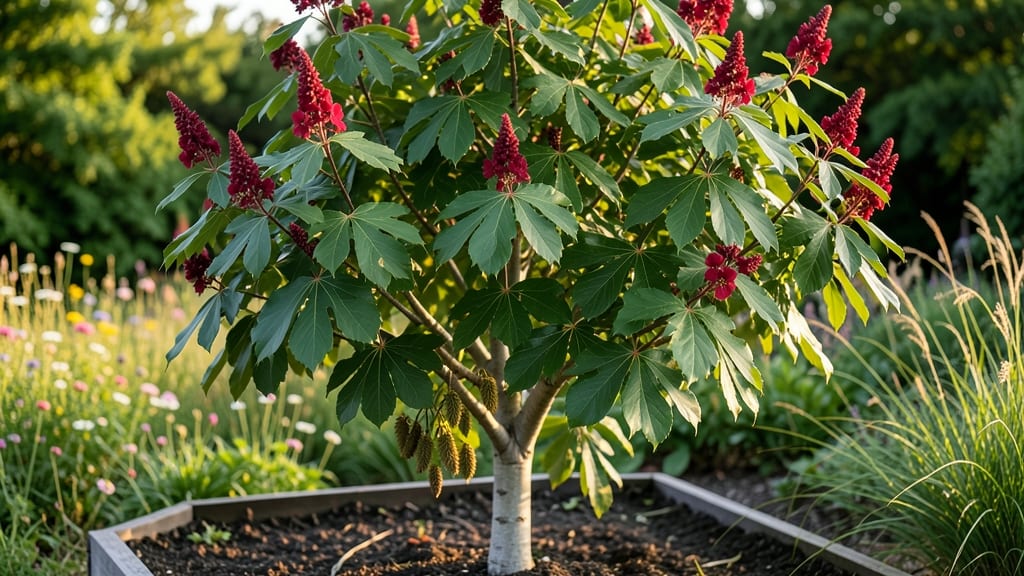
Growing buckeye trees in Colorado requires choosing cold-hardy species like the California buckeye (Aesculus californica) or Ohio buckeye (Aesculus glabra), both adapted to USDA zones 4-9. These trees need well-draining soil, partial shade, consistent moisture, and protection from Colorado’s heavy clay and rocky terrain.
Colorado’s climate—with its dry air, altitude swings, and rocky soil—can challenge buckeye trees, but the right species can thrive. 🌳 The California buckeye handles drier conditions better than its Ohio cousin, making it ideal for the Front Range, while Ohio buckeyes may need extra mulch in high-altitude areas.
I’ve found that amending soil with compost helps break down clay, and regular watering in the first year establishes strong root systems for these deep-rooted trees.
These trees also offer stunning seasonal interest: vibrant yellow-green foliage in summer, showy clusters of white flowers in spring, and glossy brown seed pods in fall. Their adaptability makes them a great choice for Colorado landscapes, provided you meet their basic needs.
💡 In This Article
- Colorado’s Best Buckeye Varieties and Their Growing Conditions
- Planting and Maintaining Buckeye Trees in Colorado Gardens
Colorado’s best buckeye varieties and their growing conditions
Colorado’s climate—ranging from arid Front Range valleys to high-altitude forests—demands buckeye species with specific adaptations. The California buckeye (Aesculus californica) thrives in USDA zones 6-9 and handles drier conditions better than most, making it ideal for Denver and Boulder’s 5,000-7,000 ft elevations.
Its glossy leaves and drought tolerance come from deep root systems that tap into moisture below the surface.
Meanwhile, the Ohio buckeye (Aesculus glabra), suited for zones 4-9, prefers slightly more moisture and does better in Colorado’s northern mountains (6,000-9,000 ft), where summers are cooler and humidity higher.
The key difference lies in their soil preferences. California buckeyes tolerate sandy loam soils common in Colorado’s plains, while Ohio buckeyes prefer richer, loamy soils with organic matter—critical in rocky mountain regions. Both species hate heavy clay, which compacts easily and suffocates roots.
I’ve seen Colorado gardeners amend clay soils with 3-4 inches of compost or pine bark fines to improve drainage and aeration. 🌿 For best results, plant in partial shade (4-6 hours of sun daily), as direct afternoon sun can scorch leaves in Colorado’s intense UV exposure.
Watering needs vary by species and elevation. California buckeyes in Front Range areas require 1-1.5 inches of water weekly during growing season, while Ohio buckeyes in mountain regions may need 2 inches weekly due to faster evaporation at higher altitudes.
Mulching with 3-4 inches of wood chips helps retain moisture and regulate soil temperature—critical during Colorado’s temperature swings (from -20°F winters to 90°F summers). Young trees benefit most from consistent moisture, as their root systems establish over 2-3 years.
Colorado’s wind patterns also influence buckeye health. The state’s Chinook winds can desiccate leaves, so planting near natural windbreaks (like evergreens or fences) helps. Both species develop smooth, gray bark as they mature, providing some natural protection against winter winds.
The California buckeye’s yellow-green leaves turn golden in fall, while Ohio buckeye leaves turn yellow-brown—a stunning contrast against Colorado’s aspen backdrops.
One often-overlooked factor is pH tolerance. Buckeyes prefer slightly acidic to neutral soil (pH 6.0-7.5), but Colorado’s native soils often lean alkaline (pH 7.5-8.5). Testing soil and amending with sulfur or peat moss can help create optimal conditions.
I’ve found that container-grown buckeyes (purchased from nurseries) adapt better to Colorado soils than wild-collected seedlings, as they’ve been pre-acclimated to calcareous conditions.
For best results, plant buckeyes in early spring (March-April) or fall (September-October), when temperatures are mild. Avoid transplanting during Colorado’s extreme summer heat (July-August), as the shock combined with low humidity can stress young trees.
With proper care, these trees can reach 20-40 feet tall, providing shade and wildlife benefits—including food for squirrels and birds that feast on their seed pods.