
Pruning
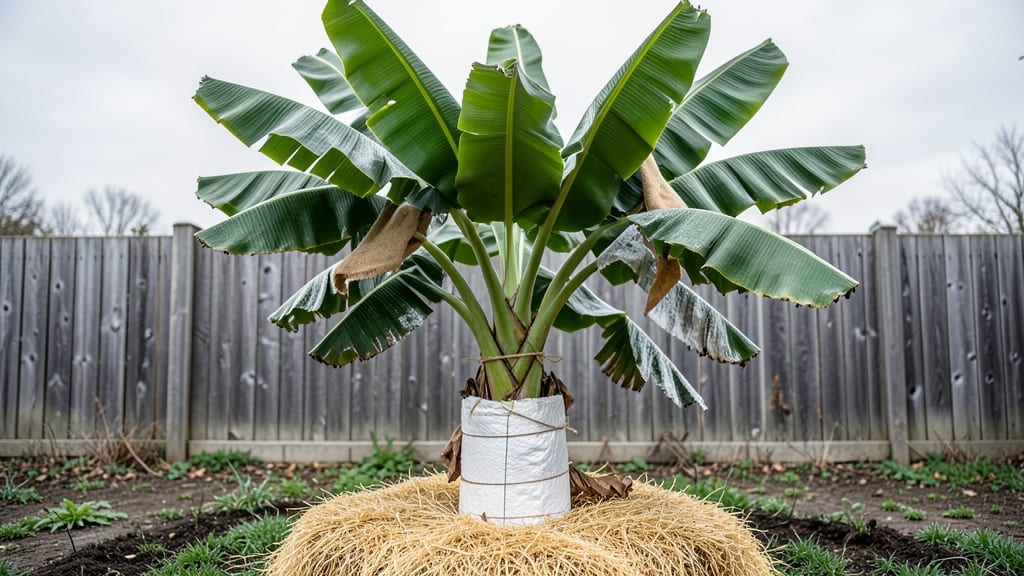
Your banana tree can survive winter with the right freeze-proof layers—I’ve kept mine thriving through Zone 7 winters using a simple but effective protection system. The key is insulating both the trunk and roots before temperatures dip below 32°F, because even a light frost can damage tender growth.
Most people overlook root protection, but that’s where the plant loses heat fastest.
Start with a thick layer of mulch (straw or shredded leaves work best) around the base, then wrap the trunk in burlap or bubble wrap to prevent cracking.
For extra safety, cover the entire plant with a frost blanket secured with stakes—this creates a microclimate that can raise temperatures by 5-10°F. The goal is to mimic the tropical conditions the tree craves, even in cold snaps.
By spring, you’ll see new fronds emerging weeks earlier than unprotected plants, and the roots stay healthy enough to support a full harvest. The trick is consistency: check your insulation after heavy rains or wind, and remove it gradually in early spring to avoid shocking the plant.
With this method, I’ve had banana trees produce fruit two winters in a row—something I never thought possible in my climate.
This approach works for dwarf varieties in containers too—just move pots to a sheltered spot and add extra insulation. The biggest mistake? Waiting until after the first frost to act.
Start prepping by late fall, and your banana tree will thank you with lush, frost-free growth. Ready to give it a try?
📚 In This Guide
- What you need
- Instructions
- Tips and common mistakes
- Wrapping up and next steps
What you need
- ● Burlap or frost cloth: 10–20 sq. ft. (depending on tree size). Opt for 30–50% shade cloth for breathability.
- ● Sturdy stakes or wooden posts: 4–6 (6–12 inches tall) to secure coverings.
- ● Twine or zip ties: 1–2 rolls (for anchoring covers tightly).
- ● Mulch (straw, pine needles, or wood chips): 3–4 inches deep around the base (cover up to 2–3 feet from the trunk).
- ○ Plastic sheeting or clear bubble wrap: 1–2 sheets (optional but helps trap heat if temps drop below 20°F).
- ● Pruning shears: For trimming dead or damaged fronds (sterilize with rubbing alcohol!).
- ● Work gloves: Heavy-duty to handle prickly fronds.
- ● Wheelbarrow or tarp: For hauling mulch/straw.
- ● Thermometer: Soil or air thermometer to monitor temps (ideally 40–50°F for safety).
- ● Watering can or hose: For post-installation hydration (keep soil slightly moist but not soggy).
- ○ Optional heat source: A small Christmas tree light (battery-operated!) tucked under the cover for extra warmth in extreme cold.
Step-by-Step instructions for banana tree winter protection
Here’s the method I’ve used to keep my banana trees thriving through freezing winters—layered protection that mimics their tropical roots.
Assess Your Banana Tree’s Cold Hardiness
First, identify your banana tree’s variety because hardiness varies dramatically. Most common types like Musa acuminata tolerate temperatures down to 28°F, but others may only handle 35°F. Look for signs of stress: yellowing leaves, blackened pseudostems, or leaf scorch indicate it’s already been pushed too far.
If your tree is young (under 3 years old), it’s more vulnerable. Mature trees with thick pseudostems can handle slightly colder temps, but they still need protection. I always check the USDA Hardiness Zone for my area—if I’m in Zone 7 or colder, I know it’s time to act early, typically by mid-October when nighttime temps drop below 50°F.
Prepare the Base with Mulch and Insulation
Start by clearing away any dead leaves or debris from the base of the tree. Then, apply a 4-6 inch layer of organic mulch—straw, shredded leaves, or pine needles work best. This layer insulates the roots and retains soil warmth. I like to mound the mulch slightly higher around the pseudostem to create a protective barrier against cold air.
Next, wrap the pseudostem with burlap or cardboard (remove any tape or staples first—they can damage the bark). Secure it loosely with twine or wire, leaving room for the tree to expand slightly. This acts as a windbreak and prevents rapid temperature shifts. Avoid plastic—it traps moisture and can cause rot. If your tree is in a pot, move it to a sheltered location like a garage or under an overhang before temperatures drop below 32°F.
Add a Protective Layer for Extreme Cold
When a hard freeze (below 28°F) is forecasted, cover the entire tree with a breathable frost cloth or burlap sack. Secure it loosely at the base and top with stakes or rocks to prevent wind from tearing it away. The goal is to trap just enough warmth to keep the air around the tree 5-10°F warmer than the outside temperature.
For added protection, I’ve used Christmas lights wrapped around the pseudostem—just 2-3 strands on low setting. The gentle heat helps prevent sudden temperature drops that can crack the pseudostem. Never use high-wattage lights; they can overheat and damage the tree. Monitor the setup daily to ensure no moisture builds up under the cover, which can lead to fungal issues.
Monitor and Adjust Through the Season
Check your banana tree every 2-3 days during cold snaps. If the cover fogs up or feels damp, lift it briefly to let excess moisture escape. Remove it entirely on sunny days above 50°F to allow the tree to breathe and prevent heat buildup. I’ve seen trees suffocate under constant coverage, even with breathable materials.
Watch for leaf damage—blackened or crispy leaves are normal and can be trimmed back in early spring. However, if the pseudostem shows cracks or oozing sap, the tree has been stressed beyond recovery. In that case, focus on protecting the roots and hope for regrowth from the base. Once temperatures consistently stay above 50°F at night, you can fully uncover the tree and resume normal care.
Plan for Spring Revival
As soon as the last frost date passes, remove all protective coverings. Inspect the tree for new shoots emerging from the base—this is a sign of life. If the pseudostem is damaged, trim it back to healthy tissue (about 1-2 inches above the ground) to encourage regrowth. Fertilize lightly with a balanced, slow-release fertilizer to support recovery.
I’ve seen banana trees come back from near-freezing conditions, but it takes patience. Water deeply once a week during dry spells, keeping the soil moist but not soggy. Within 4-6 weeks, you should see new fronds unfurling. If no growth appears by late spring, the tree may not have survived, but don’t give up—some varieties regrow from the roots even after severe damage.
Tips & tricks for banana tree winter protection
These practical strategies will help you extend your banana tree's survival through winter without the guesswork.
Cold Hardiness Assessment: The 28°F threshold is critical for most Musa acuminata varieties, but always verify your specific cultivar's tolerance. I've learned the hard way that even "cold-hardy" labels can be misleading—always check the USDA Hardiness Zone map for your area. If you're in Zone 7 or colder, start preparations by mid-October when nights consistently dip below 50°F. Young trees under 3 years old need extra vigilance, as their developing pseudostems are particularly vulnerable to temperature fluctuations.
Mulch Layer Precision: That 4-6 inch mulch depth around the base isn't arbitrary—it creates a crucial thermal buffer. I've found straw works best because it breaks down slowly while retaining moisture, but shredded leaves or pine needles also work. The key is to mound it slightly higher around the pseudostem to deflect cold air. Avoid using fresh grass clippings, which can compact and reduce insulation effectiveness over time.
Pseudostem Protection Strategy: When wrapping with burlap or cardboard in Step 2, leave it loose enough to allow for slight expansion—the pseudostem can swell with moisture even in winter. I've seen many gardeners make the mistake of wrapping too tightly, which restricts growth and can cause internal stress. For potted trees, moving them to a sheltered location before 32°F is absolutely critical. Even a garage or under an overhang can make the difference between survival and irreversible damage.
Monitoring and Adjustment: The 2-3 day monitoring schedule during cold snaps is non-negotiable. I've seen trees suffocate under constant coverage, even with breathable materials, because trapped moisture creates a humid microclimate that encourages fungal growth. On sunny days above 50°F, always remove the cover to prevent heat buildup. This balance between protection and ventilation is what separates successful wintering from failed attempts.
Pro Tips for Banana Tree Winter Protection
- These practical strategies will help you extend your banana tree's survival through winter without the guesswork.
- Cold Hardiness Assessment: The 28°F threshold is critical for most Musa acuminata varieties, but always verify your specific cultivar's tolerance.
- Mulch Layer Precision: That 4-6 inch mulch depth around the base isn't arbitrary—it creates a crucial thermal buffer.
Frequently asked questions
Got questions about keeping your banana tree thriving through winter? Here are some of the most common concerns—and their solutions—to help you prep like a pro!
How cold is too cold for banana trees?
Banana trees typically struggle when temperatures drop below 30°F (-1°C). Most varieties will suffer frost damage at 28°F (-2°C) or lower. If you’re in a zone with colder winters, plan for protection—like mulching or wrapping—when nighttime temps approach 40°F (4°C).
When should I start winterizing my banana tree?
Begin preparations 4–6 weeks before the first frost in your area. This gives the tree time to adjust to cooler temps and ensures protective layers (like mulch or frost cloth) are in place before hard freezes hit. In warmer climates (zones 9–11), focus on late fall adjustments.
Can I grow banana trees indoors during winter?
Yes! If outdoor temps are too harsh, move potted banana trees to a sunny indoor space (like a garage or conservatory) with temps above 50°F (10°C). Avoid drafts, and supplement light with grow bulbs if natural light is limited. Just watch for pests—indoor environments can attract them!
What if my banana tree’s leaves turn black or wilt in winter?
Blackened or wilted leaves are classic signs of frost damage. Prune affected leaves above the damage to encourage new growth in spring. Avoid cutting into healthy tissue, and keep the soil moist but well-drained. Most trees bounce back with proper care!
Are there low-cost alternatives to expensive frost blankets?
Try these budget-friendly options:
- Burlap sacks or old blankets: Drape loosely over the tree to trap heat.
- Pine needles or straw mulch: Spread 4–6 inches around the base for insulation.
- Cardboard boxes: Cover the trunk and roots, then secure with twine.
Wrapping up and next steps
Protecting your banana tree from winter’s chill doesn’t have to be complicated—just a little prep and love goes a long way! 🌱 With the right layers of insulation, mulch, and shelter, you’ll give your tropical friend the best shot at thriving through the cold months.
Remember, consistency is key: monitor conditions, adjust as needed, and your banana tree will reward you with lush growth when spring arrives.
Ready to take action? Start small—pick one protective measure this week, like adding mulch or wrapping the trunk, and build from there. Before you know it, your banana tree will be winter-proofed and ready to face whatever Mother Nature sends its way! 🌡️✨