
Trees
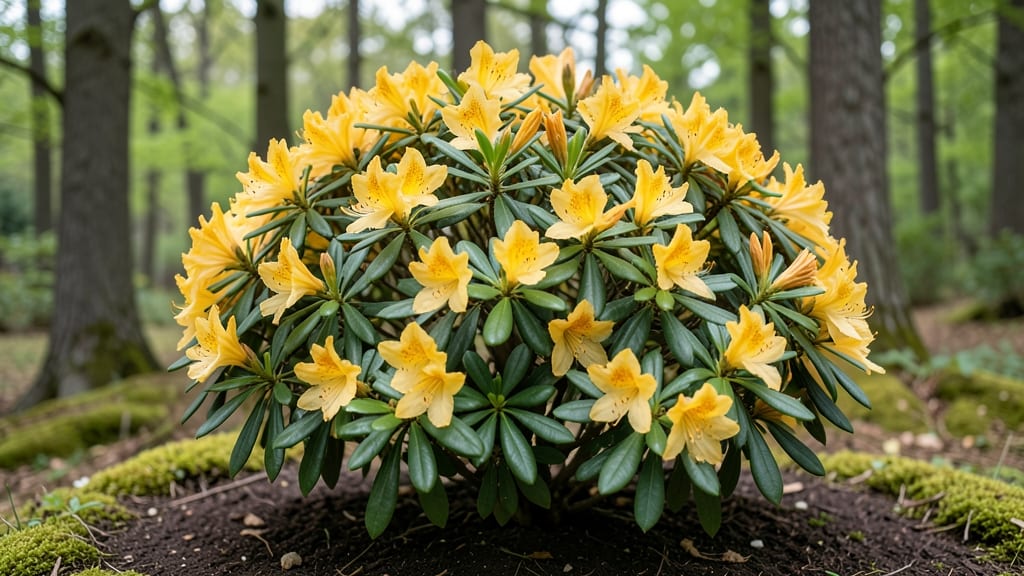
Your azalea tree’s bright green leaves turning yellow isn’t just cosmetic—it’s a cry for help from the roots up. 🌿 I’ve diagnosed this exact issue in my own azaleas, and the culprit is almost always hidden in the soil: either too much water drowning roots or a lack of iron that leaves foliage pale and weak.
The good news? Fixing it is simpler than you’d think once you know what to look for.
Start by checking the soil—it should feel like a damp sponge, not a soggy rag. Yellow leaves with green veins often point to iron deficiency (chlorosis), while uniform yellowing suggests overwatering or poor drainage.
My azaleas perked up within weeks after I added chelated iron and adjusted their watering to once a week—no more guesswork. The key is matching care to your azalea’s acidic soil needs.
You’ll see new growth within 4-6 weeks if you address the root cause. Healthy azaleas should have glossy, deep-green leaves by late spring, and the flowers will come back bigger than ever.
The secret is consistency: test your soil pH (aim for 4.5-5.5), use acid-loving fertilizer, and keep roots moist but never waterlogged.
Works for both evergreen and deciduous azaleas, and the same principles apply whether you’re dealing with a potted plant or a mature tree. Here’s how to diagnose and fix it—no more sad, yellowing leaves ruining your spring blooms.
Root Causes Of Yellowing Azaleas
When your azalea’s leaves turn a pale yellow instead of their usual vibrant green, it’s often a cry for help from the roots—or something even more subtle. Azaleas are finicky about their environment, and yellowing (chlorosis) usually points to underlying issues with nutrient uptake, soil chemistry, or even pests.
Let’s dig into the most common reasons your azalea’s leaves are losing their luster—and how to fix them at the source.
Azaleas thrive in acidic soils with high organic matter, but when the pH drifts or nutrients become locked away, they can’t produce enough chlorophyll—the pigment that gives leaves their green hue. Yellowing between leaf veins (a classic sign of interveinal chlorosis) is often a red flag for:
- Iron deficiency (Fe): The most common culprit. Iron is essential for chlorophyll production, but in alkaline soils (pH > 7.0), iron becomes unavailable to the plant, even if it’s present in the soil. Azaleas need acidic conditions (pH 4.5–6.0) to absorb it.
- Manganese or zinc shortages: These micronutrients work alongside iron. A deficiency can mimic iron chlorosis but often appears as yellowing on new growth or brown spots.
- Nitrogen imbalance: Too little nitrogen causes overall pale yellowing, while too much can burn roots, preventing nutrient uptake.
💡 Pro Tip: Test your soil’s pH with a home kit or send a sample to a local extension office. If pH is above 6.0, amend the soil with sulfur or peat moss to lower it gradually. For a quick fix, apply chelated iron (like Ironite or Sequestrene) every 2–3 months during growing season.
Azaleas are acid-loving plants, and when soil pH strays from their ideal range (4.5–6.0), they can’t access critical nutrients—even if the soil looks rich. Here’s how pH affects yellowing:
| pH Level | Effect on Azaleas | Symptoms |
|---|---|---|
| Above 7.0 (Alkaline) | Iron, manganese, and zinc become locked in the soil, making them unavailable. | Yellowing between veins (interveinal chlorosis), stunted growth. |
| Below 4.0 (Too Acidic) | Aluminum and manganese toxicity can occur, damaging roots. | Yellowing with brown or blackened leaf edges, poor flowering. |
| 4.5–6.0 (Ideal) | Optimal nutrient availability—azaleas absorb iron, nitrogen, and phosphorus efficiently. | Healthy green foliage, vibrant blooms. |
🔥 Fix It: If your soil is too alkaline, mix in sphagnum peat moss or pine bark fines (1–2 inches) into the top 6–12 inches of soil. For overly acidic soil, add lime (though azaleas rarely need this—test first!). Never use garden lime (calcium carbonate)—opt for dolomitic lime sparingly.
Not all yellowing is nutrient-related—sometimes, pathogens are the real culprits. Fungal and bacterial diseases can disrupt a tree’s ability to transport nutrients, leading to yellowing, wilting, or leaf drop. Common offenders include:
- Phytophthora root rot: A water-loving fungus that thrives in soggy soil, blocking water and nutrient uptake. Leaves turn yellow, then brown, and the tree may ooze a dark, tarry sap at the base.
- Azalea lace bug: These tiny pests suck sap from leaves, causing yellow stippling (tiny white/yellow dots) before leaves turn crispy and fall.
- Bacterial leaf spot: Causes irregular yellow patches with dark borders, often in humid conditions.
🛡️ Prevention & Treatment:
- ✅ Improve drainage: Raise the tree’s base with a mound of soil or install a French drain if water pools.
- ✅ Prune infected branches 6 inches below the yellowing area with sterilized shears.
- ✅ Apply copper fungicide (like Copper Soap) if bacterial spots appear.
- ✅ Spray horticultural oil (like Neem Oil) for lace bugs—repeat every 7–10 days.
Azaleas hate “wet feet.” When roots sit in waterlogged soil, they suffocate, unable to absorb oxygen or nutrients. This leads to:
- Root rot: Fungal infections thrive in anaerobic (oxygen-free) soil, causing yellowing leaves that eventually wilt or drop.
- Nutrient leaching: Excess water washes away essential minerals like nitrogen and potassium.
- Salt buildup: If you’re using tap water with high minerals, salts accumulate in the root zone, further stressing the plant.
🌡️ Check for Overwatering:
- 👉 Stick your finger 2 inches into the soil—if it’s soggy, hold off on watering.
- 👉 Yellowing with drooping leaves or a musty smell at the base = root rot.
🔧 Fix It: Amend the soil with perlite or coarse sand to improve drainage. If the tree is in a pot, ensure it has drainage holes and use a mix of peat moss and pine bark. For in-ground plants, consider raising the planting bed or installing a gravel layer beneath the root zone.
🎯 Key Takeaway: Yellow azalea leaves are almost always a soil or root-zone issue. Start with a pH test, check for waterlogging, and inspect for pests or disease. Once you identify the root cause, you can restore your azalea’s health—and those stunning blooms—with targeted fixes!
Fixing Yellow Azalea Leaves Naturally
When your azalea’s leaves turn yellow, the first step is identifying the root cause—whether it’s nutrient deficiency, poor soil pH, or environmental stress. Once you pinpoint the issue, these practical, science-backed solutions will help restore your tree’s vibrant green foliage. Let’s break it down by problem and fix.
Yellowing leaves often signal a lack of essential nutrients. Here’s how to replenish them:
🔥 Boost Iron with Chelated Fertilizers
If yellowing starts between leaf veins (a classic sign of iron chlorosis), your azalea needs chelated iron. Regular iron supplements won’t cut it—this nutrient must be in a form the tree can absorb, especially in alkaline soils.
- How to apply:
- Use a liquid iron chelate (like Ironite or a garden-specific formula).
- Follow label instructions for concentration (typically 1–2 tbsp per gallon of water).
- Spray foliage thoroughly on a cloudy day to prevent leaf burn.
- Repeat every 2–4 weeks until leaves regain color.
- 💡 Pro Tip: Mix chelated iron with a foliar spray for faster results. Azaleas are acid-loving plants, so pairing iron with sulfur (to lower pH) enhances absorption.
🍳 Add Nitrogen for Overall Leaf Health
Yellowing that starts at the leaf tips or edges may mean nitrogen deficiency. Azaleas need this nutrient for lush, green growth.
- How to fix:
- Apply a slow-release, acid-loving plant fertilizer (look for 10-6-4 or 12-4-8 NPK ratios).
- Work into the soil 6 inches deep around the root zone (avoid direct contact with stems).
- Water deeply after applying to activate nutrients.
- Fertilize in early spring (when new growth begins) and late summer for a second boost.
- ✨ Quick Fix: Use fish emulsion or compost tea as a natural nitrogen source. Dilute to 10% strength and spray on soil (not leaves).
🌡️ Correct Magnesium Deficiency (Yellow Between Veins)
If yellow patches appear older leaves first, magnesium may be lacking. This micronutrient helps chlorophyll production.
- How to apply:
- Epsom salt (magnesium sulfate) is a budget-friendly fix.
- Dissolve 1 tbsp Epsom salt in 1 gallon of water and spray on leaves until dripping.
- Repeat monthly until improvement is seen.
- Avoid overuse—too much magnesium can cause calcium deficiency.
Azaleas thrive in acidic soil (pH 4.5–6.0). If the pH is too high (alkaline), iron and other nutrients become locked away, leading to yellowing.
👨🍳 Lower pH with Elemental Sulfur
- How to do it:
- Test your soil first with a home pH kit or send a sample to a local extension office.
- If pH is above 6.0, apply elemental sulfur (not aluminum sulfate, which can harm azaleas long-term).
- Dosage: 1–2 lbs of sulfur per 100 sq ft (follow package instructions).
- Water thoroughly after applying—sulfur needs moisture to activate.
- Wait 2–3 months to retest pH before reapplying.
- 💡 Pro Tip: Mix sulfur into the top 6 inches of soil and mulch with pine needles or peat moss to maintain acidity naturally.
🥘 Avoid Over-Liming (The Worst Offender)
Many gardeners add lime to lower acidity, but this backfires for azaleas. Lime raises pH, worsening chlorosis.
- What to do instead:
- Stop using lime entirely.
- Use organic matter like composted pine bark or leaf mold to gradually acidify soil.
- Mulch with acidic materials (pine straw, oak leaves) to prevent pH drift.
Overwatering or poor drainage can starve roots of oxygen, leading to yellow leaves.
⏰ Adjust Watering for Healthy Roots
- Signs of overwatering: Yellowing with wilting or mushy stems.
- Fix:
- Let the top 2–3 inches of soil dry out between waterings.
- Water deeply but less frequently (1–2 times per week, depending on climate).
- Improve drainage by amending soil with perlite or sand if planting in heavy clay.
🔪 Prune Damaged Roots (If Needed)
If roots are rotting (common in waterlogged soil), prune affected areas:
- How to prune:
- Use sterilized shears to cut away black, mushy roots.
- Replant in well-draining soil with a mix of peat moss and pine bark.
- Avoid watering for 3–5 days post-pruning to prevent further rot.
Once your azalea is back to green, keep it thriving with these long-term strategies:
| Problem | Prevention Tip |
|---|---|
| Nutrient depletion | Fertilize twice a year (spring & summer) with acid-loving plant food. |
| High pH soil | Mulch annually with pine straw or composted bark. |
| Poor drainage | Raise planting beds slightly or add gravel to improve airflow to roots. |
| Pest/disease stress | Inspect leaves monthly for mites or fungal spots; treat early with neem oil. |
| Overwatering | Use a moisture meter to track soil dampness accurately. |
Final Thought: Yellow azalea leaves don’t have to be a permanent problem—soil science and targeted care can bring them back to life. Start with iron chelates and pH adjustment, then maintain with proper watering and mulching.
Your azalea will thank you with bold, glossy green leaves in no time! 🌿✨
Frequently asked questions
Why do my azalea leaves turn yellow only between the veins?
This classic pattern is called interveinal chlorosis and almost always means your azalea can't access iron—even if it's in the soil. The most common cause is alkaline soil (pH > 7.0), which locks away iron. Test your soil pH and amend with elemental sulfur if needed. Chelated iron sprays work fast for visible results.
Can I use Epsom salt to fix yellow azalea leaves?
Yes, but only if the yellowing affects older leaves first—this suggests a magnesium deficiency. Mix 1 tablespoon Epsom salt in 1 gallon of water and spray until dripping. Repeat monthly until improvement appears. For iron issues, Epsom salt won't help—use chelated iron instead.
How often should I fertilize an azalea with yellow leaves?
Start with a balanced acid-loving fertilizer (10-6-4 NPK ratio) applied twice a year: once in early spring when new growth begins, and again in late summer. For chlorosis, supplement with chelated iron every 2-3 weeks until leaves green up. Avoid over-fertilizing—too much nitrogen can burn roots.
Will my azalea recover if I fix the yellowing now?
With proper care, azaleas are resilient. You'll typically see new green growth within 4-6 weeks of addressing the root cause. The yellow leaves won't turn green again, but they'll drop naturally as healthy new leaves replace them. Focus on soil pH, iron availability, and proper watering for lasting results.
Can I save my azalea if the roots are rotting?
Yes, but act quickly. Prune away black, mushy roots with sterilized shears, then repot in well-draining soil (peat moss + pine bark mix). Hold off watering for 3-5 days to prevent further rot. If the tree is large, improve drainage by raising the planting bed or installing a gravel layer beneath the root zone.