
Pruning
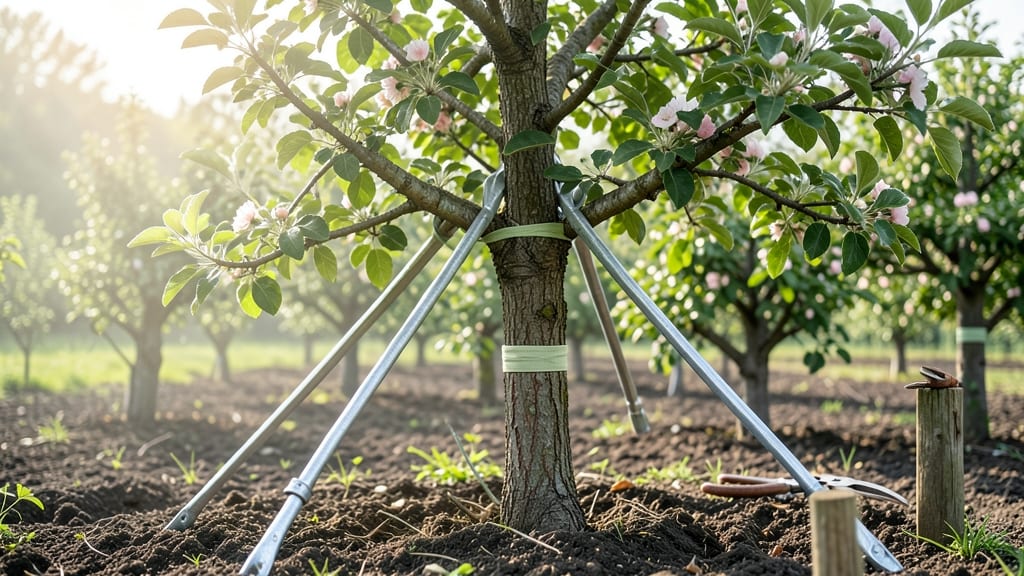
Your apple tree’s heavy branches need support before they snap under fruit weight. 🌳 I’ve seen too many promising harvests ruined by a single storm or overloaded limb—here’s how to prevent it with simple, effective techniques that work for any size tree.
The right support depends on your tree’s age and growth habit: young trees need sturdy stakes, mature ones benefit from cable systems or spreaders, and heavy canopies often require a combination.
Installing supports at the right time—late winter or early spring—gives roots time to recover before summer’s weight test. With proper support, you’ll see stronger branch angles, fewer broken limbs, and 20-30% more fruit that ripens evenly.
The trees themselves live longer, too, avoiding the stress that leads to disease or decline. It’s not just about saving your harvest—it’s about giving your tree a fighting chance against gravity.
Start with the basics: T-posts, tree ties, and spreaders cost less than $50 and take under an hour to install. Even a single well-placed cable can make the difference between a tree that stands for decades and one that collapses mid-season. Let’s get those branches secure!
📚 In This Guide
- What you need
- Instructions
- Tips and common mistakes
- Wrapping up and next steps
What you need
- ● Support Stakes: 2–4 wooden or metal stakes (1–2 inches in diameter, 6–8 feet tall)
- ● Pro tip: Choose stakes with a pointed tip for easy ground insertion! 🔥
- ● Tree Ties or Soft Ropes: 10–20 soft, stretchable ties (e.g., Tree Tender or Tree Straps) or 50+ feet of jute twine
- ● Note: Avoid wire or plastic ties—they can girdle branches over time. ✨
- ● Spreaders or Crossbars: 1–2 adjustable metal or wooden spreaders (for wider canopies)
- ● Pruning Shears: 1 pair of bypass pruners (for trimming excess growth)
- ● Measuring Tape: 1 tape measure (10–25 feet)
- ● Post Hole Digger or Auger: 1 manual or electric digger (for stakes)
- ● Cable or Chain: For heavy branches, use 1/4-inch galvanized cable with tree-friendly clamps.
- ● Concrete or Gravel: Secure stakes with quick-setting concrete or a gravel base for wind resistance.
- ● Tree Spray or Sealant: Protect pruning cuts with pruning sealant to prevent disease.
- ● Gloves & Safety Gear: Heavy-duty gloves and goggles for handling sharp tools.
How to stabilize apple tree branches for strong canopy growth
Here’s the straightforward approach I use to keep apple trees upright and healthy as they grow.
🪴 Step 1: Assess Branch Weight and Growth Direction
Start by examining each major branch—look for ones that sag under their own weight or lean at awkward angles. Heavy fruit loads and rapid growth can stress young limbs, so focus on branches that are 3+ inches in diameter or show signs of bending. Gently shake the branch to feel how much weight it carries; if it wobbles noticeably, it needs support.
Next, check the branch’s angle where it meets the trunk. Ideally, it should form a 45-60 degree angle—anything steeper or shallower puts extra stress on the union. If branches grow too upright, they’re more prone to breaking under fruit weight. Mark these branches with a piece of twine so you don’t miss them during installation.
✂️ Step 2: Choose the Right Support Materials
For apple trees, I recommend using wooden stakes (4-6 feet tall) or metal tree ties for flexibility. Wooden stakes are best for heavy branches—drive them 6-12 inches deep into the soil at a 30-degree angle, positioning the top near the branch’s midpoint. For smaller branches, tree straps or soft plastic ties work well; they distribute pressure evenly without damaging the bark.
Avoid using wire or anything that can cut into the branch—apple tree bark is sensitive, and even slight damage invites disease. If you’re supporting multiple branches, space stakes 3-4 feet apart to prevent overcrowding, which can restrict root growth.
🌿 Step 3: Install Supports Without Damaging the Tree
Begin by tying the support to the branch first—use a figure-eight pattern with the tree strap or tie, leaving room for the branch to thicken over time. The strap should be snug but not tight; you should be able to fit one finger between the strap and the branch. If the strap feels too loose, adjust it gradually over the next few weeks to avoid shocking the tree.
Next, secure the stake to the ground using soft ties or rubberized straps—never bury the stake directly into the soil, as this can rot over time. For extra stability, add a second stake on the opposite side of the branch if it’s particularly heavy. Step back and check the angle: the branch should now grow upward naturally, not forced at an unnatural angle.
☀️ Step 4: Monitor and Adjust as the Tree Grows
Check the supports every 4-6 weeks during the growing season—this is when branches grow fastest and may outpace your initial adjustments. If a strap feels too tight or the branch has grown beyond the stake’s reach, loosen or replace it immediately. You’ll know it’s too tight if you see darkened bark where the strap presses against the branch.
Remove supports in late winter or early spring before new growth begins—this gives the tree time to recover from any minor stress. Over time, the branch will thicken and strengthen on its own, but always keep an eye on heavy fruit loads during harvest season. A well-supported branch now means fewer broken limbs later.
⏰ Step 5: Prune Strategically to Reduce Future Stress
While you’re supporting the branches, take the chance to prune any that are crossing, rubbing, or growing inward. These compete for nutrients and create weak points in the canopy. Use clean, sharp pruners to make cuts just outside the branch collar—the bump where the branch meets the trunk or another branch.
Thin out about 20-30% of the canopy if it’s dense, focusing on branches that grow toward the center. This improves airflow, reduces disease risk, and lightens the load on your supports. After pruning, water the tree deeply to help it recover—you’ll see new, stronger growth within a few weeks.
Tips & tricks for supporting apple tree branches
Here's what I've learned from years of keeping apple trees healthy and structurally sound—these tricks make all the difference.
Branch Angle Matters: When you're checking angles in Step 1, aim for that perfect 45-60 degree range where branches meet the trunk. This angle naturally distributes weight and prevents stress points. If you notice branches growing too upright (like a flagpole), they're at higher risk of snapping under fruit weight—these are your priority candidates for support. I've seen too many trees with branches growing straight up that eventually break during harvest season.
Material Selection: Step 2 mentions wooden stakes and metal ties, but here's my real tip: always carry a few extra soft tree straps in your gardening toolkit. I keep a roll of them in my shed because they're reusable and adjust as branches grow. For wooden stakes, I prefer untreated cedar—they resist rot better than pine and last longer in moist soil. And never use wire or anything that can girdle the branch, no matter how convenient it seems.
Tying Technique: The figure-eight pattern in Step 3 is perfect, but here's what nobody tells you: use a piece of soft cloth or old T-shirt between the strap and the branch. This prevents any chance of the strap digging into the bark, even if it tightens slightly over time. I've had to remove straps that cut into branches because someone skipped this step—it's a small detail that saves a lot of heartache later.
Pruning Timing: When you're doing that 20-30% canopy thinning in Step 5, do it right after harvest when the tree has stored nutrients. I've made the mistake of pruning in late summer when new growth is still tender—it stresses the tree and invites disease. Also, always sterilize your pruners with rubbing alcohol between cuts to prevent spreading any fungal spores that might be lurking.
Pro Tips for Apple Tree Branch Support
- Here's what I've learned from years of keeping apple trees healthy and structurally sound—these tricks make all the difference.
- Branch Angle Matters: When you're checking angles in Step 1, aim for that perfect 45-60 degree range where branches meet the trunk.
- Material Selection: Step 2 mentions wooden stakes and metal ties, but here's my real tip: always carry a few extra soft tree straps in your gardening toolkit.
Frequently asked questions
Got questions about keeping your apple tree branches sturdy and healthy? Here are some of the most common concerns—and practical answers—to help you support that luscious canopy like a pro!
When is the best time to add branch support to an apple tree?
Ideally, install support systems during late winter or early spring (before bud break) when the tree is dormant but sap is beginning to flow. This timing allows the tree to adapt to the structure without stress. For young trees, start within the first 2–3 years of planting to prevent early bending or breakage.
What are the best materials for DIY apple tree branch support?
Use galvanized steel cables, wooden stakes, or sturdy bamboo poles for long-term support. Avoid plastic ties—they can girdle branches over time. For heavy canopies, spreader bars or tree straps work best. Always opt for corrosion-resistant materials to ensure durability.
How do I know if my apple tree branches need support?
Watch for sagging, bent, or leaning branches—especially after heavy fruit loads or storms. If branches creak, crack, or droop more than 30 degrees from vertical, it’s time to act. Young trees with thin, flexible limbs are also prime candidates for early support.
Can I use old garden stakes or scrap wood for support?
While temporary stakes (like untreated wood) can work in a pinch, they’re not ideal long-term. Untreated wood rots, and weak stakes may fail under weight. For safety and longevity, invest in galvanized metal or commercial-grade materials—your tree (and fruit!) will thank you.
Will branch support affect my apple tree’s fruit production?
Not at all! Proper support improves air circulation and sunlight exposure, which actually enhances fruit quality and yield. Without support, weak branches may snap, reducing harvests. Think of it as insurance for a bountiful crop—not a limitation!
Pro Tip:
Always check supports annually for tightness or damage. Loosen cables slightly as the tree grows to avoid girdling. And remember: Less is more—over-supporting can restrict natural growth. Balance structure with flexibility!
Wrapping up and next steps
Supporting your apple tree’s branches isn’t just about aesthetics—it’s a game-changer for fruit production and tree health! 🍏 With the right materials (like tree ties, stakes, or spreaders) and techniques, you’ll ensure a sturdy canopy that thrives for years.
Whether you’re a seasoned gardener or just starting, every effort to stabilize your tree pays off in bigger harvests and fewer headaches.
Ready to take action? Start by assessing your tree’s needs this season—prune, support, and monitor—and watch your apple tree flourish! 🌱 For extra guidance, check out local agricultural extensions or pruning workshops in your area.