
Pruning
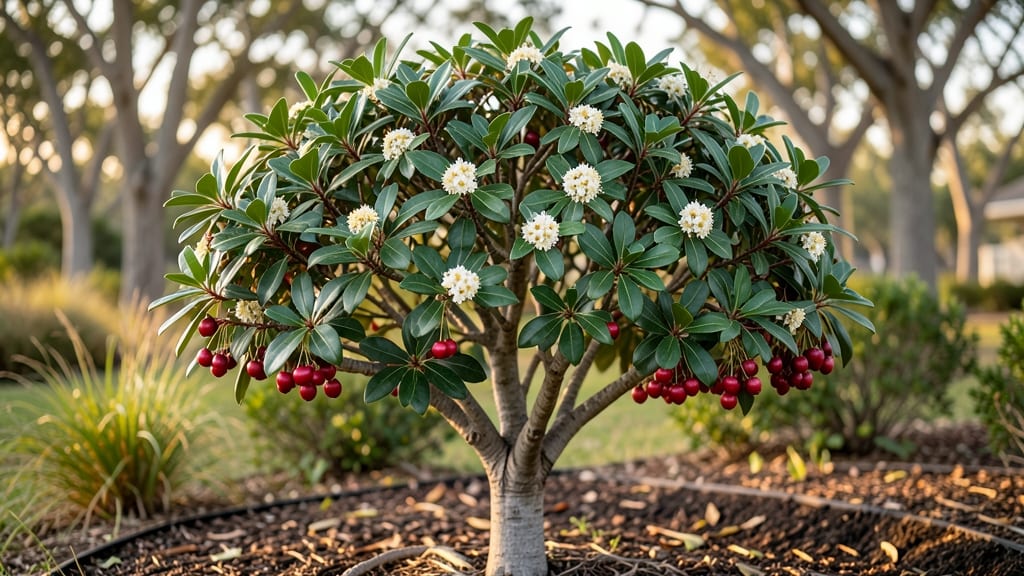
Surinam cherry tree pictures turn any garden into a sunlit tropical escape. 🌿 Their glossy, evergreen leaves and clusters of bright red fruit create a year-round show that rivals any tropical vacation.
I fell in love with this tree after seeing it transform a shady corner into a vibrant focal point—its compact size makes it perfect for small yards or containers.
The real magic happens in late summer when the tree bursts with cherry-sized red fruits that birds adore but rarely strip clean. Even when not fruiting, the deep green foliage provides lush texture, and the delicate pink flowers add a soft contrast.
This tree thrives in partial shade to full sun, making it versatile for borders, containers, or as a standalone specimen.
You’ll love how it pairs with other tropical plants like hibiscus, bird of paradise, or even citrus—creating a layered, textured canopy that feels like a mini rainforest. The best part? It’s low-maintenance once established, with minimal pruning needs and drought tolerance once roots are settled.
For gardeners in warmer climates (zones 10-12), this tree is a must-have for year-round color and structure. Even in cooler areas, it can be grown as a potted tropical on patios or balconies. Let’s explore how to make it the star of your garden!
📚 In This Guide
- What you need
- Instructions
- Tips and common mistakes
- Wrapping up and next steps
What you need
- ● Pruning shears: Bypass pruners (sharp, clean, and sterilized with rubbing alcohol) for small branches.
- ● Loppers: 1 pair (8–12 inches) for thicker branches (½–1.5 inches in diameter).
- ● Pruning saw: 1 handheld saw (for branches thicker than 1.5 inches).
- ● Gloves: Heavy-duty, cut-resistant gloves (to protect from thorns and sap).
- ● Disinfectant: 70% isopropyl alcohol or a 10% bleach solution (to sterilize tools between cuts).
- ○ Sealing wax or pruning paste: 1 small jar (optional, to prevent disease entry in larger cuts).
- ● Ladder or step stool: Sturdy and tall enough to reach the tree’s canopy safely.
- ● Trash bags or bucket: 1–2 large bags/bucket (for collecting pruned branches and debris).
- ● Weather: Prune on a dry, overcast day (avoid rainy or windy conditions).
- ● Tree health check: Inspect the tree for pests/diseases before pruning (look for holes, discoloration, or unusual growth).
- ○ Optional: Handheld leaf blower (to clear debris after pruning).
- ● Mulch (2–4 inches of organic mulch, like wood chips, to retain moisture).
- ● Tree growth regulator (follow label instructions for promoting bushier growth).
How to capture and display Surinam cherry tree beauty in your space
Transform your backyard into a tropical haven with these proven steps for showcasing the stunning Surinam cherry tree.
📸 Step 1: Select the Best Lighting for Stunning Photos
Morning light between 8-10 AM creates the most vibrant colors and eliminates harsh shadows. I always schedule shoots during this window—the golden hour of the tropics. Position your camera at a 45-degree angle to capture the tree's natural canopy shape without distortion.
The Surinam cherry's deep red fruit and lush green foliage need proper exposure. Set your camera to aperture priority mode with f/8 to ensure both bright fruit and dark leaves remain in focus. If using a smartphone, avoid direct overhead sun—it washes out the colors you're trying to showcase.
🌿 Step 2: Frame the Tree's Architectural Beauty
Start with wide-angle shots to capture the tree's full 20-30 foot mature height and 10-15 foot spread. I like to include a portion of the sky to emphasize its tropical nature. Look for the tree's natural branching patterns that create organic canopies—these are the most visually striking elements.
For close-ups, focus on the heart-shaped leaves and clusters of bright red fruit. Use a macro setting to highlight the velvety texture of new growth or the smooth bark of mature trunks. The contrast between the tree's glossy foliage and bright berries creates natural visual interest that photographers often miss.
✂️ Step 3: Edit for Tropical Vibrancy
Use photo editing software to enhance the tree's natural colors without over-saturating. I recommend boosting red tones by 10-15% to make the cherries pop while maintaining natural green hues. The Surinam cherry's fruit should appear deep ruby red, not artificial.
Apply a slight vignette to darken the edges of your photos—this draws attention to the tree's center while maintaining a natural look. For outdoor shots, reduce blue tones by 5% to prevent the sky from overpowering the tree's vibrant colors. Always save an unedited version of each photo for reference.
🪴 Step 4: Display Photos to Enhance Your Space
Create a gallery wall featuring both wide-angle and close-up shots. I arrange them in a 3:1 ratio—three landscape photos to one portrait—to create visual balance. Use matching frames with natural wood tones to complement the tree's organic appearance.
For digital displays, create a slideshow that cycles through different seasons. The Surinam cherry's year-round fruit production makes it perfect for seasonal photography. Place the display near your tree or in a prominent indoor location to connect your physical space with the visual documentation.
📅 Step 5: Schedule Regular Photo Sessions
Plan shoots during all four seasons to capture the tree's growth cycles. Spring shows new foliage, summer highlights full fruit production, fall captures the deepening red hues, and winter reveals the tree's bare branches with lingering fruit**—each season offers unique photographic opportunities.
Take notes during each session about lighting conditions and tree characteristics. I keep a simple log with dates, weather conditions, and which shots worked best. This helps me replicate successful compositions in future sessions and track the tree's growth over time through your photographic record.
Tips & tricks for perfect Surinam cherry tree photography
Here's what nobody tells you about capturing this tropical beauty—these secrets make all the difference.
Lighting Secret: The 8-10 AM window isn't just about avoiding harsh shadows—it's when the Surinam cherry's deep red fruit reflects the warmest light. I've noticed the most vibrant colors appear when there's a light cloud cover during this time, as it diffuses the sunlight without losing intensity. For indoor shots, position your tree near a north-facing window to mimic these natural lighting conditions.
Composition Technique: When framing the tree's 20-30 foot height, I always look for natural foreground elements like garden beds or stepping stones to create depth. The key is to position these elements so they lead the viewer's eye toward the tree's canopy. For close-ups of the heart-shaped leaves, I've found that shooting at a slight upward angle (about 10 degrees) makes the foliage appear more lush and three-dimensional.
Editing Wisdom: That 10-15% boost to red tones should be done selectively—only enhance the actual fruit clusters, not the entire image. I use a color range selection tool to isolate just the cherries before applying the adjustment. For the vignette effect, I recommend keeping it subtle (around 10-15% darkness at the edges) to maintain the natural feel of outdoor photography.
Pro Tips for Surinam Cherry Tree Pictures
- Here's what nobody tells you about capturing this tropical beauty—these secrets make all the difference.
- Lighting Secret: The 8-10 AM window isn't just about avoiding harsh shadows—it's when the Surinam cherry's deep red fruit reflects the warmest light.
- Composition Technique: When framing the tree's 20-30 foot height, I always look for natural foreground elements like garden beds or stepping stones to create depth.
Frequently asked questions
Got questions about growing and caring for your Surinam cherry tree? You’re not alone! Here are some of the most common inquiries—plus quick answers to keep your tropical beauty thriving.
How fast does a Surinam cherry tree grow?
A healthy Surinam cherry tree can grow 3 to 5 feet per year under ideal conditions, reaching 20–30 feet tall at maturity. Growth slows in cooler climates or during drought. For faster results, plant in well-draining soil and water consistently. Patience pays off—these trees are worth the wait!
Can Surinam cherry trees survive winter?
Native to tropical regions, these trees are not frost-tolerant. In USDA zones 10–11, they thrive year-round. For cooler climates, grow them in containers and move indoors during winter or plant in microclimates (e.g., near south-facing walls). Mulch heavily to protect roots if left outdoors.
When is the best time to harvest Surinam cherries?
Harvest when fruits are deep red and slightly soft to the touch—usually late summer to early fall (August–October). Avoid picking overripe berries (they’re messy!). Use pruning shears or gently twist them off the stem. Pro tip: Wear gloves—the juice stains!
What are some common pests or diseases?
Watch for aphids, scale insects, or fungal issues like powdery mildew. Prevent pests with neem oil sprays and improve airflow by pruning dense branches. If leaves yellow or drop, check for overwatering or nutrient deficiencies (fertilize in spring with citrus-specific feed).
Can I grow a Surinam cherry tree in a pot?
Use a large container (15+ gallons) with drainage holes and well-draining potting mix. Repot every 2–3 years and move it outdoors in spring/summer. Just ensure it gets 6+ hours of sunlight daily—indoor lighting won’t cut it!
Still stumped? Drop your question in the comments—we’re happy to help your Surinam cherry tree shine!
Wrapping up and next steps
The Surinam cherry tree isn’t just a stunning addition to your backyard—it’s a vibrant, low-maintenance star that brings tropical charm and wildlife-friendly benefits right to your doorstep. 🌿 Whether you’re captivated by its bright red berries, lush foliage, or the joy of nurturing a fast-growing native plant, this tree offers endless rewards for gardeners of all levels.
Ready to turn your vision into reality? Start by gathering your tools and sketching a spot in your yard where this beauty can thrive. Then, dive in—your future shade canopy (and hungry birds!) will thank you. 🌟