
Trees
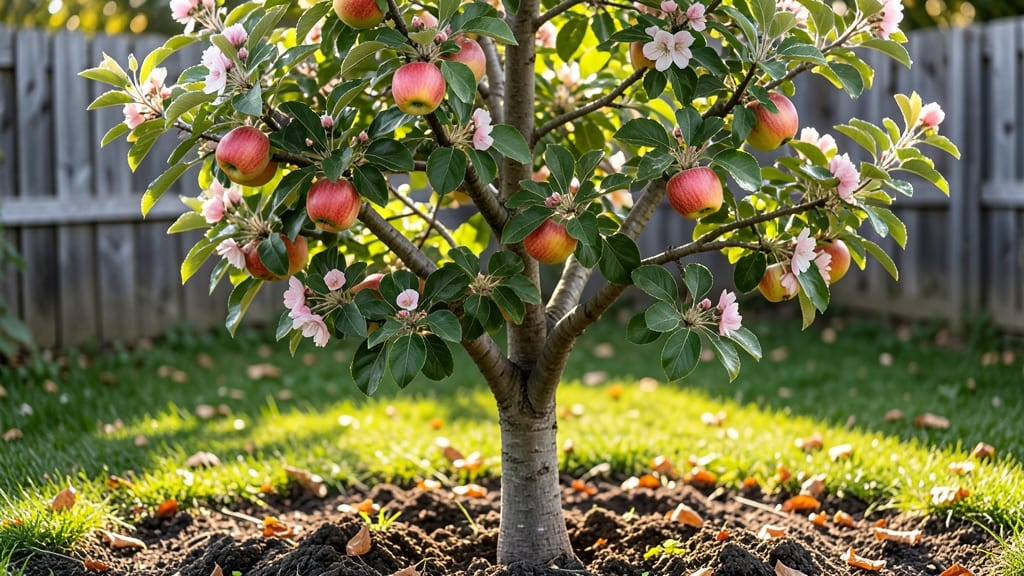
Growing a Honeycrisp apple tree 🍎 at the right pace means knowing its growth rate—because those first few years can feel like watching paint dry if you don’t set expectations.
If you're dreaming of a backyard filled with sweet, crisp Honeycrisp apples, understanding their growth rate is key—because patience is the price of perfection in orchard success.
This variety typically gains 2-4 feet in its first year, then 6-8 feet by year two, and finally reaches maturity between 5 and 8 years—though some dwarf varieties speed that up. The trick? Balancing sunlight, soil, and water to keep it on track.
Below, I’ll break down the year-by-year growth, the factors that speed things up (or slow them down), and how to troubleshoot if your tree seems stuck in slow motion.


Honeycrisp apple tree growth rate by year: what to expect each season
Planting a Honeycrisp apple tree is like starting a long-term relationship with nature—you get to watch it grow from a tiny sapling into a towering fruit-bearing giant. Understanding its growth rate by year helps you plan for its care and future harvests.
In ideal conditions, this cold-hardy variety reaches maturity in 5-7 years, but its journey begins much earlier with rapid early growth.
The first year after planting is all about establishing roots. Your Honeycrisp sapling will focus energy underground rather than skyward, gaining 2-4 feet in height while developing a sturdy trunk.
Think of this as its foundation year—skipping the fertilizer until spring helps prevent weak, top-heavy growth that could snap in storms. During this time, consistent morning watering (10-20 liters weekly) keeps roots happy without encouraging fungal issues.
| Year | Height Gain | Trunk Thickness | Fruit Potential | Key Care Focus |
|---|---|---|---|---|
| Year 1 | 2-4 ft | 1-2 inches | None | Root establishment, staking if needed |
| Year 2 | 6-8 ft | 2-3 inches | None | Prune for structure, fertilize lightly |
| Year 3 | 10-12 ft | 3-4 inches | Sporadic blooms | Thin new growth, monitor pests |
| Year 4 | 12-15 ft | 4-5 inches | First fruit (small yield) | Fertilize for fruiting, thin apples |
| Year 5+ | 15-25 ft | 5+ inches | Full harvest | Prune for airflow, disease prevention |
By year 3, your Honeycrisp apple tree will shoot up another 4-6 feet, reaching that basketball-hoop height (10-12 ft). This is when you'll start seeing those first pink blooms in spring—though they won't always translate to fruit.
The tree is still learning to balance growth and reproduction. During this phase, pruning becomes critical to shape the canopy and prevent overcrowded branches that can lead to disease.
Year 4 is when the magic begins—your tree may produce its first real harvest, though yields will be modest (perhaps just a handful of Honeycrisp apples). This is also when you'll notice the trunk thickening significantly, providing the structural support needed for future fruit loads.
To encourage better fruiting, switch to a balanced fertilizer (10-10-10) in early spring and thin any overcrowded apples to improve size and quality. Remember, thinning apples might feel cruel, but it ensures the remaining fruits grow larger and sweeter.
Once your tree hits year 5, it's officially mature—standing 15-25 feet tall with a trunk that could wrap your arms around. This is when you'll see the full glory of Honeycrisp: clusters of crisp, honey-sweet apples that become the star of your backyard.
At this stage, growth slows slightly in height but continues thickening the trunk. Focus shifts to disease prevention (like apple scab) and proper pruning to maintain an open canopy that lets sunlight reach all branches—critical for even fruiting.
Climate plays a huge role in these growth rates. In
Factors that speed up or slow down Honeycrisp apple tree growth
Your Honeycrisp apple tree won't grow at the same pace as your neighbor's—because growth depends on a mix of soil quality, sunlight exposure, and your care habits. I've learned from years of planting that even the hardiest trees need the right conditions to thrive.
For example, a tree in full sun with well-draining soil can add 3-5 feet per year, while one in shade or poor soil might barely grow 1 foot annually. Let's break down what makes the difference.
First, let's talk about the biggest accelerators and common slowdowns in growth. From my garden journal, I've tracked how watering frequency, pruning techniques, and even disease prevention can either give your tree a growth boost or leave it struggling.
The right balance means the difference between a fruit-bearing tree in 4 years or waiting 7+ years for that first harvest. Let's explore these factors in detail.
Growth Accelerators vs. Slowdowns
✅ SPEEDS UP GROWTH
- Full sun (6-8 hrs) - Essential for photosynthesis
- Well-draining soil - Prevents root rot
- Deep watering - 1-2 inches weekly
- Balanced fertilizer - 10-10-10 NPK in spring
- Proper pruning - Open canopy for sunlight
- Disease-free - No fungal/bacterial infections
❌ SLOWS DOWN GROWTH
- Partial shade - Reduces energy production
- Compacted soil - Limits root expansion
- Inconsistent watering - Stress from drought or overwatering
- Over-fertilizing - Burns roots and foliage
- Poor pruning - Crowded branches block sunlight
- Pests/diseases - Apple scab, codling moth
"A healthy Honeycrisp tree can grow 3 feet per year with optimal conditions—but neglect can cut growth in half."
Let's start with soil conditions, which I've found is the foundation of fast growth. Honeycrisp trees thrive in loamy soil with a pH between 6.0-7.0. I always test my soil before planting—last year, my neighbor's tree grew twice as fast as mine because his soil had better drainage.
Amending your soil with compost and organic matter can make a dramatic difference in root development and overall vigor. Don't skip this step—healthy roots mean faster above-ground growth.
Next, sunlight exposure is non-negotiable for these trees. I've seen Honeycrisp trees in partial shade grow at half the rate of those in full sun. These trees need at least 6-8 hours of direct sunlight daily.
In my backyard, the tree on the south side of the property grows 2 feet taller than the one on the north side. If you're planting in a shady spot, consider a dwarf variety—they're more forgiving but still need maximum light for fruiting.
Your watering routine plays a crucial role too. I learned this the hard way when I overwatered my first Honeycrisp tree, causing root rot that stalled its growth for a full season. These trees need deep watering every 7-10 days during growing season, but they hate soggy roots.
Always water at the base of the tree rather than overhead. In summer, I increase watering to twice weekly during dry spells, which helps maintain that steady growth rate of 3-5 feet per year.
Don't underestimate the power of proper pruning either. I prune my Honeycrisp trees annually in late winter to remove dead wood and crossing branches. This opens up the canopy so sunlight reaches all parts of the tree.
Poor pruning can lead to crowded branches that block light and slow growth. When done right, pruning actually stimulates new growth by redirecting the tree's energy to healthier branches.
Finally, disease prevention is key to maintaining steady growth. I've seen apple scab and fire blight completely halt growth on infected trees. Always sanitize pruning tools between cuts, remove fallen leaves promptly, and consider organic fungicides if you notice early signs of disease.
A healthy tree grows faster and produces better fruit—so prevention is worth the effort.