
Watering
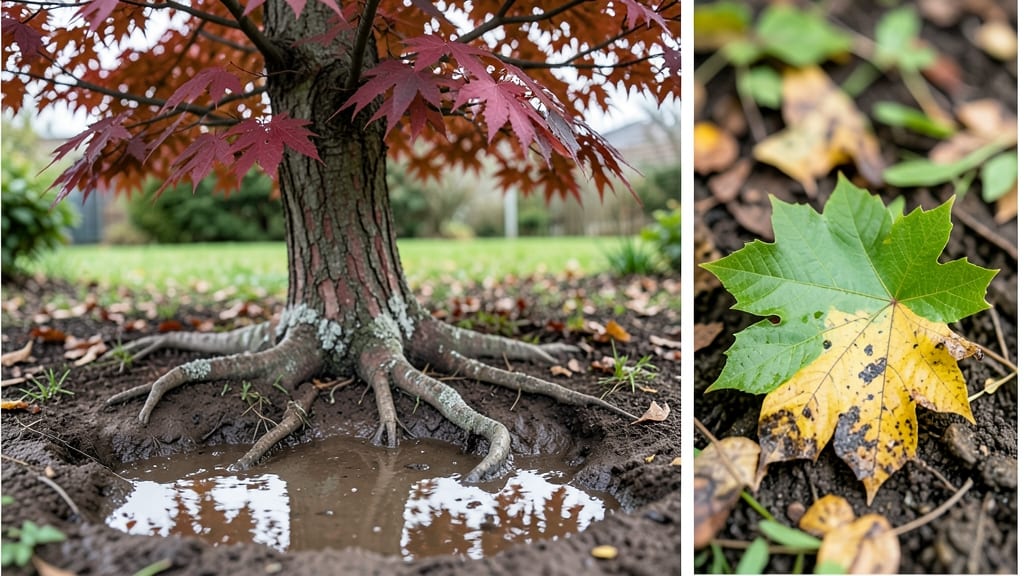
Your overwatered maple tree’s drooping leaves aren’t just a summer slump—they’re screaming for help from root rot caused by too much water. 🌳 I've saved more trees from this silent killer than I'd like to admit, and the fix starts with a few simple checks that reveal the real problem hiding underground.
The signs are easy to miss: yellowing leaves, mushy stems when you tug gently, and soil that smells like wet socks. Most people assume they need more water when the opposite is true—your tree's roots can't breathe, and that's what's killing it. The good news?
You can turn this around with a few adjustments that take less than an hour. By the time you're done, you'll have pruned away the worst damage, improved drainage so water flows out instead of pooling, and a watering schedule that actually works for your tree's needs.
The first new green leaves will appear within weeks, and you'll never second-guess your watering again. This works for both young saplings and mature trees—just scale the tools to your tree's size. Let's get those roots breathing again.
Root Causes Of Soggy Maple Leaves
When your maple tree’s leaves start wilting, yellowing, or dropping prematurely, overwatering is often the silent villain behind the scenes. But why does excess water trigger such a dramatic response? Let’s dig into the science—and uncover the real reasons your tree is drowning in its own moisture.
🌱 Poor Soil Drainage Traps Water
Maple trees thrive in well-draining soil, but compacted, clay-heavy, or organic-rich soils act like a sponge, holding onto water long after the roots have had their fill. When excess moisture lingers, it starves the roots of oxygen—a critical component for nutrient absorption and cellular respiration.
- Why it matters: Roots in waterlogged soil switch from aerobic (oxygen-dependent) to anaerobic (oxygen-starved) respiration, producing ethanol and ethylene—toxic byproducts that disrupt nutrient uptake and trigger leaf stress.
- Signs to watch: Mushy, dark brown roots; leaves that yellow between veins (a classic chlorosis signal); or soil that stays soggy for days after watering.
- Actionable fix: Amend soil with perlite, sand, or compost to improve aeration. For severe cases, consider raised beds or mound planting to elevate roots.
💧 Overzealous Watering Confuses Roots
Maple trees have deep, extensive root systems that evolved to access moisture from lower soil layers. But frequent shallow watering—like daily sprinklers or hose blasts—tricks the tree into thinking it’s always thirsty, leading to overhydration.
- Why it matters: Roots near the surface absorb water rapidly, but deeper roots remain dormant, creating an imbalance. This disrupts the tree’s hydraulic lift system, where roots pull nutrients upward—leaving leaves nutrient-deficient despite wet soil.
- Signs to watch: Wilting leaves that don’t perk up after watering (a sign of root stress); brown, crispy edges on younger leaves; or a tree that grows too fast (a red flag for overwatering-induced stress).
- Actionable fix: Water deeply but infrequently—aim for 1–1.5 inches per week (including rain) and let the top 2–3 inches of soil dry out between sessions. Use a soil moisture meter to avoid guesswork.
🌧️ Heavy Rain + Poor Drainage = Double Trouble
If your maple is planted in a low-lying area or a spot prone to runoff, natural rainfall can overwhelm its drainage system. Unlike drought-tolerant species, maples are mesophytes, meaning they prefer moderate moisture—not standing water.
- Why it matters: Prolonged saturation leads to root rot, caused by fungi like Phytophthora or Pythium, which thrive in anaerobic conditions. These pathogens block water and nutrient transport, causing leaves to yellow, brown, and drop.
- Signs to watch: Mushrooms or mold at the base of the trunk; a sour, rotten smell from the soil; or leaves that darken and fall even when the tree isn’t wilting.
- Actionable fix:
- Install French drains or swales to redirect excess water away from the root zone.
- Mulch with wood chips (2–4 inches deep) to insulate roots and regulate moisture.
- Avoid planting maples in depression areas or near downspouts—opt for higher ground.
🌡️ Temperature Swings Worsen Water Stress
Hot or cold extremes can amplify the damage of overwatering. For example, heat waves increase transpiration (water loss through leaves), while cold snaps slow root activity—both creating a perfect storm for moisture buildup.
- Why it matters: In heat, roots struggle to keep up with leaf demand, leading to hydraulic failure (when the tree can’t pull water from the soil fast enough). In cold, roots become physiologically inactive, trapping excess water in the soil.
- Signs to watch: Scorched leaf edges (heat stress) paired with yellowing; or buds that fail to open in spring (cold-related root dormancy issues).
- Actionable fix:
- During heatwaves, water early in the morning to reduce evaporation.
- In winter, avoid ice buildup around the trunk—use a tree wrap or mulch to protect roots from freeze-thaw cycles.
- Monitor soil temperature: Ideal root-zone temps for maples are 50–75°F.
Understanding the why behind overwatered maple leaves is the first step to revival. The good news? Most cases are reversible with the right adjustments. Next, we’ll explore diagnosing the damage and how to prune and drain for a comeback.
Revive Your Maple Tree Today
Overwatering can turn your maple tree’s lush leaves into a sad, droopy mess—but don’t despair! With the right steps, you can nurse it back to health and prevent future soggy soil disasters.
Below, we’ve mapped out practical fixes based on the root cause of your tree’s waterlogged woes, plus tips to keep it thriving.
---
Problem: Your tree is drowning in excess moisture. Fix: Adjust your watering habits immediately.
- 🔥 Pause Watering: Skip watering for 7–10 days to let the soil dry out. This breaks the cycle of oversaturation and gives roots a chance to breathe. - 🍳 Check Soil Moisture: Stick your finger 2–3 inches deep into the soil. If it’s damp, wait longer before watering again.
Aim for moist but not soggy—think of a wrung-out sponge. - 👨🍳 Deep and Infrequent: When you do water, soak the root zone deeply (12–18 inches down) but only once every 1–2 weeks (adjust for climate). Shallow, frequent watering is the enemy of healthy roots.
> 💡 Pro Tip: Use a moisture meter ($10–$20) to avoid guesswork. If it reads "wet" after a few days, you’re overdoing it.
---
Problem: Compacted or clay-heavy soil traps water, suffocating roots. Fix: Give your tree’s roots room to breathe.
| Issue | Solution | Tools/Materials | |--------------------------|-----------------------------------------------------------------------------|---------------------------------------------| | Clay Soil | Amend with organic matter (compost, peat moss, or coconut coir). | Garden fork, compost, mulch | | Poor Drainage | Create raised beds or swales (shallow trenches) to redirect water. | Shovel, landscape fabric, gravel (optional) | | Compacted Soil | Aerate with a garden fork or core aerator to break up density. | Manual fork or rental aerator | | Low Spots | Build a berm (mound of soil) around the base to elevate the root zone. | Soil, wheelbarrow |
> ✨ Prevention Hack: Mulch 3–4 inches deep (wood chips or straw) around the tree’s drip line (where branches extend). This insulates roots, regulates moisture, and discourages weeds that compete for water.
---
Problem: Overwatered stress weakens the tree, making it vulnerable to disease and pests. Fix: Prune strategically to reduce stress and improve airflow.
- 🍃 Remove Dead/Dying Branches: Use sterilized pruners to cut back any limbs with yellowing, curling, or mushy leaves—these are red flags for rot or fungal issues. - 🌿 Thin the Canopy: If the tree looks crowded, remove 10–20% of the smallest branches to boost air circulation.
Focus on crossing branches or those rubbing together. - ⏰ Best Time to Prune: Late winter or early spring (when the tree is dormant) for major cuts. For minor trims, avoid extreme heat or cold.
> 🎯 Safety First: Wear gloves and eye protection—maple sap can irritate skin, and branches may be heavy!
---
Problem: If your tree has black, mushy roots or a foul smell at the base, root rot may have set in. Fix: Act fast with these emergency measures.
1. 🔥 Excavate the Roots: - Gently dig around the outer roots (6–12 inches deep) and trim away any black, slimy, or soft roots with sterilized pruners. - Healthy roots should be firm and light tan/brown.
2. 🌡️ Apply Fungicide: - Spray the remaining roots with a copper-based fungicide (like Bordeaux mixture or copper sulfate) to prevent further rot. - Follow label instructions—do not overapply!
3. 🌱 Replant with Care: - Backfill the hole with a mix of native soil + perlite/sand (50/50) to improve drainage. - Water lightly just once to settle the soil, then wait 5–7 days before watering again.
> 💡 Warning: If more than 50% of the roots are rotted, the tree may not recover. Consider consulting an arborist for professional advice.
---
Once your maple tree is back on track, prevent relapse with these habits:
- 📊 Monitor Soil: Test your soil’s drainage and pH (ideal for maples: slightly acidic, 6.0–7.0).
Adjust with lime (to raise pH) or sulfur (to lower it) if needed. - 🥗 Mulch Annually: Refresh mulch every spring to maintain moisture control. - 🌡️ Watch the Weather: If your area gets heavy rains, divert water away from the tree’s base using French drains or gutter extensions. - 🍎 Feed Smart: Fertilize only in spring with a balanced, slow-release fertilizer (10-10-10).
Over-fertilizing can stress roots further.
--- Your maple tree can bounce back—but speed is key. Start with drainage fixes, then prune and monitor. With patience and the right care, those droopy leaves will soon be vibrant and strong again! 🌳💚
Frequently asked questions
How can I tell if my maple tree is overwatered vs. underwatered?
Check the leaves and soil: Overwatered maples show yellowing between veins, mushy stems, and soil that smells sour or stays soggy for days. Underwatered trees have crispy brown edges, dry soil pulling away from roots, and leaves that wilt even after watering. The key difference? Overwatered roots feel mushy, while underwatered roots look dry and brittle.
Will my maple tree recover from root rot caused by overwatering?
It depends on the damage! If only surface roots are affected, pruning the rotten sections and improving drainage can save it. But if 50%+ of roots are black/mushy, recovery is unlikely. Start by digging carefully—healthy roots should be firm and light brown. For severe cases, consult an arborist before giving up.
How often should I water a mature maple tree?
Mature maples need deep watering every 1–2 weeks (1–1.5 inches total), but adjust for your climate. The real rule: Water only when the top 2–3 inches of soil are dry. Use a moisture meter or stick your finger in—if it's damp, wait longer. Young trees may need weekly watering in hot summers.
Can I fix poor drainage in my maple tree's soil without digging up the whole area?
Yes! Start by aerating with a garden fork (push it in and twist to loosen soil). Then mix compost or perlite into the top 6 inches. For long-term fixes, create shallow trenches (swales) around the tree to redirect water. Mulching with wood chips also helps regulate moisture. Small changes make a big difference!
Why are my maple leaves turning yellow even after I stopped overwatering?
Yellowing leaves after fixing overwatering often means nutrient deficiency from damaged roots. Test your soil—maples need iron, nitrogen, and potassium. Apply a balanced fertilizer (10-10-10) in spring, but avoid overdoing it. If yellowing persists, check for chlorosis (common in alkaline soils) and consider iron supplements.